In an article that appeared in the New York Times back in 2005, the U.S. Security Advisor Stephen J. Hadley and Homeland Security Advisor Frances Fragos admitted that “countries with huge standing armies equipped with lethal weapons are defenceless against terrorists.”
The U.S. administration, after just four years of intervention in Afghanistan, came to the conclusion that fighting terrorists was extremely challenging, as the U.S. forces were not going to exhaust terrorists, who quickly adapted to changing situations and learned to exist within societies.
That was the time when the whole world was under the scourge of terrorism. Following the September 11 attacks, the world witnessed a series of suicide bombings and attacks that included the Indian Parliament attack in December 2001; suicide attacks in Bali, Indonesia, in October 2002, killing 202 people; multiple bombings of Western targets in Casablanca, Kenya, killing 39 people; the multiple bombings in Riyadh, Saudi Arabia, killing 29 people; the bombing of the Marriott Hotel in August 2003, and the Australian Embassy in September 2004 in Jakarta, Indonesia; multiple bombings of commuter trains in Madrid, killing 200 people and injuring over 1,000; the explosion on the Super Ferry 14 in the Philippines in February 2004; and the July 2005 bombings in London.
Looking at the evolving nature of terrorism in the mid-2000s highlights the complexity of the global security environment. The U.S., despite its standing as the world’s most powerful nation, leading the global war on terrorism, was compelled to confess its inability to effectively countering terrorist threats. One can imagine how difficult it would be for Pakistan, with limited resources, surrounded by a five-times-larger enemy in the east and turbulent borders in the west.
In many parts of the world, these attacks could be of an isolated nature or inevitable consequences of the 9/11 tragedy, which several countries, one way or the other, had been able to deal with.
For Pakistan, this can never be an isolated episode. Like in the 1980s, when geopolitical compulsions brought Pakistan into a quagmire, siding with and supporting the Afghan Mujahideen in the so-called noble cause of dismantling the ‘Godless Regime’ to save the world from the menace of communism, the 9/11 once again brought Pakistan into another turbulent turn, at a time when Pakistan was reeling from the wounds of the 1980s and dealing with extremist ideologies, and the Kalashnikov culture.
Pakistan had no choice but to reverse its strategy of dealing with ‘terrorism’ to chase the ‘terrorists’, which, unfortunately, continues to date, resulting in Pakistan failing to uproot extremism in the country. For Pakistan, withdrawing recognition from the Taliban regime and cutting off the official supply lines was a costly decision.
As Pakistan, a front-line state, fighting for another noble cause of global war on terrorism, while placing its own security at considerable risk, New Delhi was engaged in building up a perception that ‘Pakistan was sold out to serve the interests of the United States’.
The Indian propaganda was not limited to that; there was a concerted effort at misleading the world, the U.S., and the people of Pakistan, aimed at eroding Pakistan’s regional authority as well as its standing in the Islamic world, fuelling anti-Pakistan and anti-American sentiments amongst the religious groups in Pakistan.
The Indian diaspora played a decisive role in building a ‘villain’ image of Pakistan. Most Indian-born Americans, also referred to as Non-Resident Indians (NRIs) had skilfully nursed the negative perception of Pakistan under guidance of the Indian government. They fed special interest groups with a relentless barrage of hostile propaganda in major journals and newspapers on almost any topic that could defame Pakistan.
This onslaught of propaganda had created doubts about Pakistan’s all-out support for the global war on terrorism amongst U.S. politicians and decision-makers. This scepticism somehow resulted in not only questioning military support to Pakistan but also putting pressure on Pakistan through the U.S.’s adoption of the ‘do more’ policy.
Despite widespread condemnation of the Mumbai attacks and assurances by the then President, Prime Minister, and Foreign Minister of Pakistan of all-out support to curb militancy, India chose the path of the blame game. Instead of providing concrete evidence, New Delhi remained non-cooperative on joint investigations to find the truth about the Mumbai attacks.
If we look at the joint statements issued after Modi’s visits to the U.S., even the latest Trump-Modi meeting, there is a common position that “called on Pakistan to expeditiously bring to justice the perpetrators of the 26/11, and Pathankot attacks and ensure that its territory is not used to carry out cross-border terrorist attacks.” This reflects how the Modi regime continues to exploit the Mumbai attacks, Pathankot, and even the recent one, the so-called Pahalgam attack, to its advantage.
This Indian policy towards Pakistan following 9/11 has not only misled the world about Pakistan but also complicated its battle against terrorism. Pakistan is a country whose role in the global war on terrorism has been far and away the most visible, the most extensive, and the most steadfast.
Its support for the U.S. and coalition operations in Afghanistan has also been strategically the most vital when compared to other regional countries. Pakistan’s support was indispensable to the efficiency of the U.S. sea-based and ground forces.
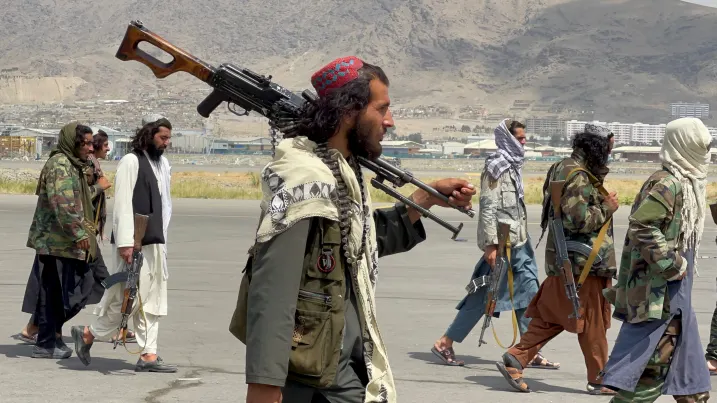
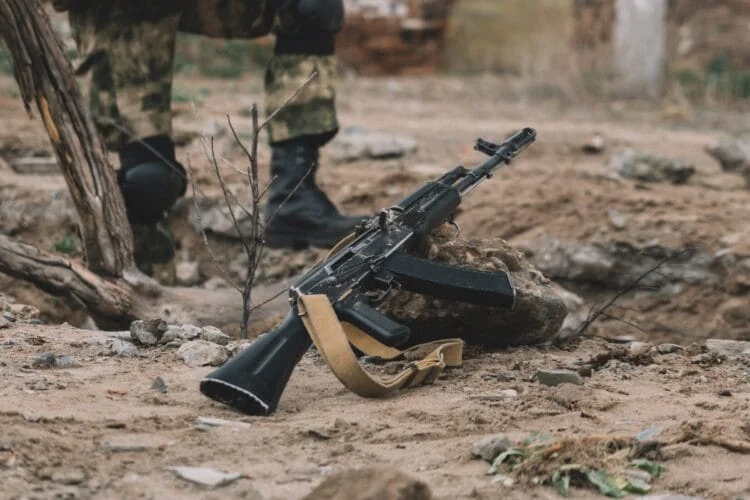
Now, Pakistan is under the third wave of terrorism, following the withdrawal of U.S. forces back in August 2021. The Taliban’s support to TTP and the proliferation of leftover weapons in Afghanistan have fuelled a surge in terrorism in Pakistan. The proliferation of NATO weapons left behind in Afghanistan has fuelled a surge in terrorism in Pakistan, exacerbating its two-decade struggle against terrorism.
Since the 2021 U.S. withdrawal, Pakistani security forces have conducted operations, recovering foreign weapons from the terrorists killed during the operations. The widespread availability of NATO weaponry among terrorist groups severely threatens Pakistan and regional stability.
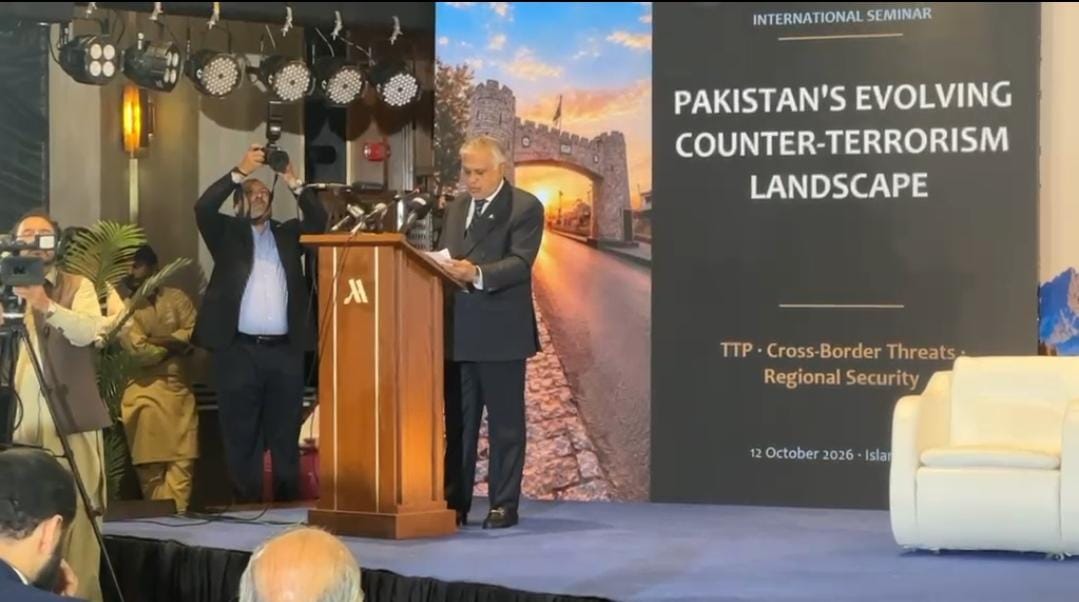
The country has witnessed a significant rise in cross-border terrorism, involving Afghan nationals alongside the TTP. Between June and September 2025, Pakistan recorded a 36% increase in organized terrorist infiltration groups (tashkeels) and a 48% rise in the total number of militants crossing from Afghan provinces into Khyber Pakhtunkhwa (KP) and Balochistan. Approximately 70 to 80% of these infiltrators were Afghan nationals—a stark increase from 5–10% in previous years. Afghan territory is also reportedly hosting more than 60 TTP camps and propaganda networks.
The complexities involved in dealing with terrorism as well as terrorists in Pakistan are still unfolding. Pakistan needs sustained regional and international support, as it is serving as the bulwark against the spill over. Failure of Pakistan in tackling terrorism means the failure of the entire region.
So, instead of exploiting Pakistan’s situation to its advantage, the regional countries, particularly New Delhi, as well as the international community, need to strengthen Pakistan in tackling terrorism, as Islamabad is the only country that has remained steadfast despite the loss of hundreds of thousands of lives and a depleting economy.

Syed Imran Sardar
Mr. Syed Imran Sardar is a Research Analyst at the Institute of Regional Studies. He joined the institute back in 2007 and has authored several articles on regional conflicts and human security issues. He has also authored a book on Conflict Transformation between India and Pakistan: A New Approach.
Mr. Sardar has taught Area Study courses at National University of Modern Languages. He also provides research guides and trainings at the institute. His research work has been cited and indexed nationally & internationally. He also contributes in the Daily Times, The News, The Pulse and others.
![Indian Christian community faces rising violence while Modi congratulates new Jacobite Catholicos in Lebanon. Rights groups sound alarm. [Image via Reuters]](https://southasiatimes.org/wp-content/uploads/2025/03/deccanherald_2025-02-12_8gxoemcr_file7zbn3w0b8kj1egk2eks4.webp)