Originally published by The Watchtower by Umer Farooq. Featured by South Asia Times (SAT) for informational purposes, with attribution to the original author and publisher.
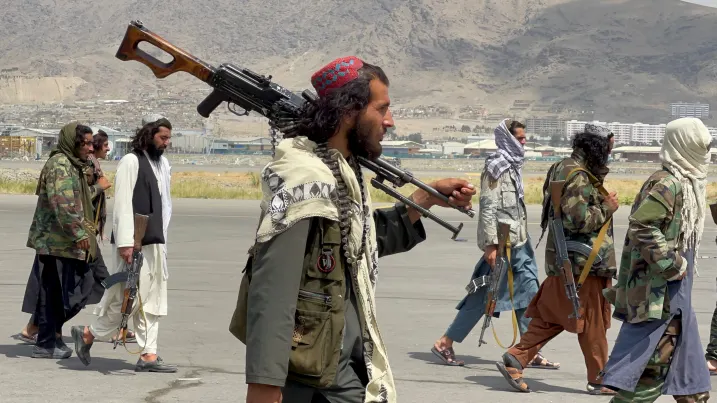
Taliban control the Afghan state. United States has withdrawn its military forces from Afghan society. The large-scale war has ended. Apparently, it is stable on the surface. But the underlying question about the distribution of political authority in Afghan society, which has historically caused instability in Afghanistan, is still there. The Taliban’s return to power has ended one phase of conflict, but the question that caused instability in Afghanistan political arrangement is still unresolved.
After they took control of Kabul in August 2021, the Taliban raised a political structure that concentrated power too heavily in Taliban elite from Kandahar city and its surrounding areas. Taliban supreme leader, Hibatullah Akhundzada and Kandahari leadership network around him control the power and administration in Afghan society. The ethnic nationalities like Tajiks, Uzbeks, Hazaras and Turkman are not at all or too poorly represented in the Taliban regime or the administrative structures of the state. There has been no meaningful power sharing at the local level. Political and administrative power is still concentrated in the hands of Kandahar Shura.
Thanks for reading The watchtower! Subscribe for free to receive new posts and support my work.Subscribe
A movement’s ability to seize power is not like its ability to establish a political order in which different segments of society have stake. There are several studies by international organizations which describe how the political and administrative power within the Taliban regime is too heavily concentrated in the hands of Kandahari Shura. A leading think-tank Middle Eastern Institute reported as recently as May 2026 that out of 1,215 individuals in the Taliban government leadership 90% Pashtuns, 5.2% Tajiks and 3% Uzbeks. One of the Afghan Diaspora Television Amu TV reported early this year that majority of the cabinet positions in Taliban government are occupied by Kandahar Pashtuns. There is no or little representation of ethnic communities in central administrative structures.
This in other words means that Taliban’s political structures are not accommodative of diverse communities and competing interests. The issue of exclusion of ethnic communities from political participation is not new in Afghan politics. It is as old as the formation of structures of modern state in Afghanistan. Political and administrative power has always been concentrated in the hands of ethnic Pashtuns since the formation of modern state in Afghan society. This has always left a deep sense of injustice among the ethnic minorities in Afghan society. A weak trust in the central government has always been the result. Not surprisingly, Tajik community in the north of Afghanistan has always supported armed revolt against Pashtun dominated central government in Kabul. Taliban rule has not changed much. Political conflicts in an ethnically fractured society don’t end just because one side in the conflict has managed to take control of the means of suppressing its opponents.
Historically, governance has been marked by the persistent marginalization of ethnic minorities, with successive governments in Kabul often concentrating political power in the hands of ethnic Pashtuns. “This longstanding pattern of centralized governance and unequal political representation has fueled ethnic grievances and deepened mistrust between Kabul and several peripheral communities. Against this historical backdrop, Taliban Regime’s concentration of authority has reinforced longstanding concerns about ethnic exclusion”.
At present, many of the armed groups which are waging a low-key insurgency against Taliban government are ethnically Persian speaking Tajiks. Since August 2021 takeover of Kabul, youth from ethnic minorities have joined Taliban ranks in large numbers. But Taliban state machinery and especially Taliban intelligence have treated Tajik members of the Taliban with a particularly high-handed approach, creating tensions between the Tajik members of Taliban intelligence services.
Some of these Tajik groups which are waging an armed struggle against Taliban regime are the following:
Afghanistan Freedom Front (AFF), led by Yasin Zia, a former Chief of General Staff of the Afghan National Army, is predominantly Tajik and draws on former security personnel. Its principal areas of activity are Badakhshan, Takhar and Nuristan, with additional operations claimed in Baghlan, Kapisa, Kabul, Kunar and Sar-e Pol.
National Resistance Front (NRF), led by Ahmad Massoud, is predominantly Tajik and has claimed operations in Panjshir, Herat, Baghlan, Parwan, Kapisa, Kunduz, Kabul and Badakhshan.
Sepahiyan-e Mihan (Homeland Soldiers Front), led by Qayyum Malang, is predominantly Tajik local resistance formation operating in Badakhshan. Malang is a native of Yaftal-e Payeen and former Afghan Army commando who also served with unit of National Resistance Front (NRF) associated with Khalid Amiri before establishing his own formation. On 17 July 2026, his group briefly seized Yaftal-e Sufla district centre disarmed Taliban personnel and raised its flag over building.
Afghan Green Trend, led by former Afghan Vice President and NDS chief Amrullah Saleh, is predominantly Tajik and is associated with activity in Takhar, Kunduz, Salang Valley and northern supply routes. Its armed wing claimed seven attacks since 8 August in Parwan, Takhar, Laghman, Baghlan, Panjshir, Badakhshan and Kapisa, resulting in 14 claimed Taliban fatalities.
Taliban rule appears stable not because its administrative and political structures are very effective. It appears stable because of two reasons: Firstly, the international media is not particularly focused on situation in Afghanistan. Therefore, the news about trouble inside Afghan Taliban never make it to the front page of international newspapers or headlines in the news channels. Secondly, the security apparatus and military establishments of world powers are not in the mood of intervening in Afghan situation. Therefore, the ethnic groups that are waging low-key insurgencies in Afghanistan are not getting the required level of support from international military and intelligence services. Not surprisingly, Taliban seems in control of the military situation in the war-torn country.
We must make a distinction between Taliban’s ability to control the state machinery and their capacity to resolve political conflicts in Afghan society. They are in control of the state but political conflicts which are play havoc with the fragile social structures in Afghan society are visible like festering wounds on the body polity of Afghan society. Afghan Taliban might have won the war but the longer question over who has the legitimate right to govern Afghanistan remained unresolved. War and conflict can bounce back ant movement.
Umer Farooq
Umer Farooq is an Islamabad-based Afghanistan specialist and senior journalist. A journalist since 1995, he has worked with Dawn and The Herald and covered Afghanistan and conflicts for Pakistani and international outlets. His analysis focuses on Pakistan–Afghanistan relations, the Taliban and the TTP, and regional security after the United States’ withdrawal.