The RAW–GDI Alliance and the TTP–BLA Nexus
India once accused the Taliban of bombing its embassy in Kabul. Today its embassy is back, and Pakistani intelligence reports describe a RAW–GDI alliance bringing the TTP and BLA together against Pakistan.
Executive Summary
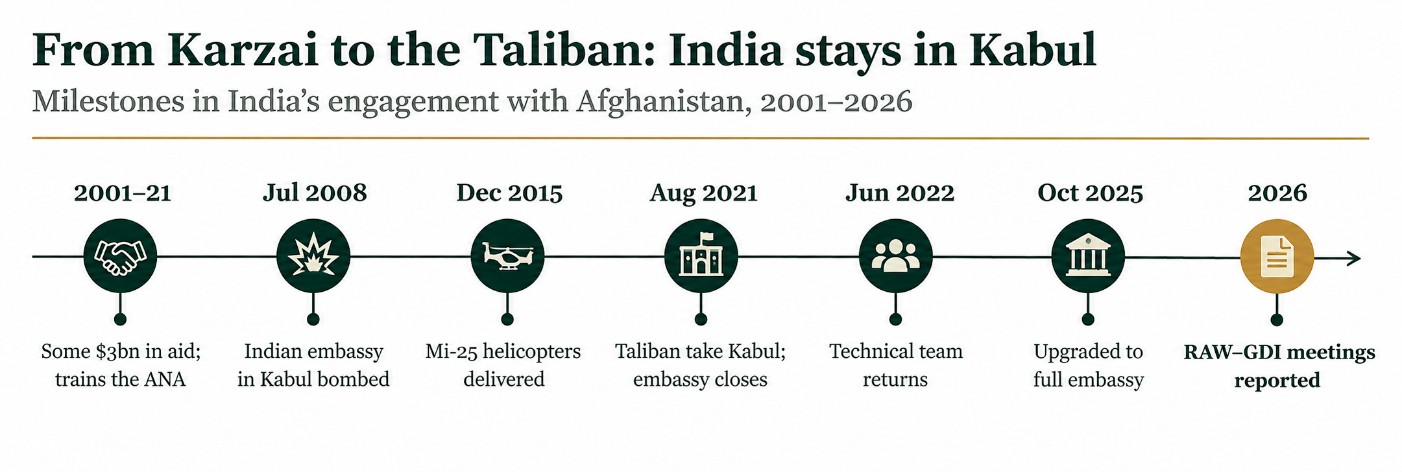
- India never abandoned Afghanistan as a strategic space. It closed its embassy in August 2021, sent a technical team back in June 2022, and restored a full embassy by October 2025.
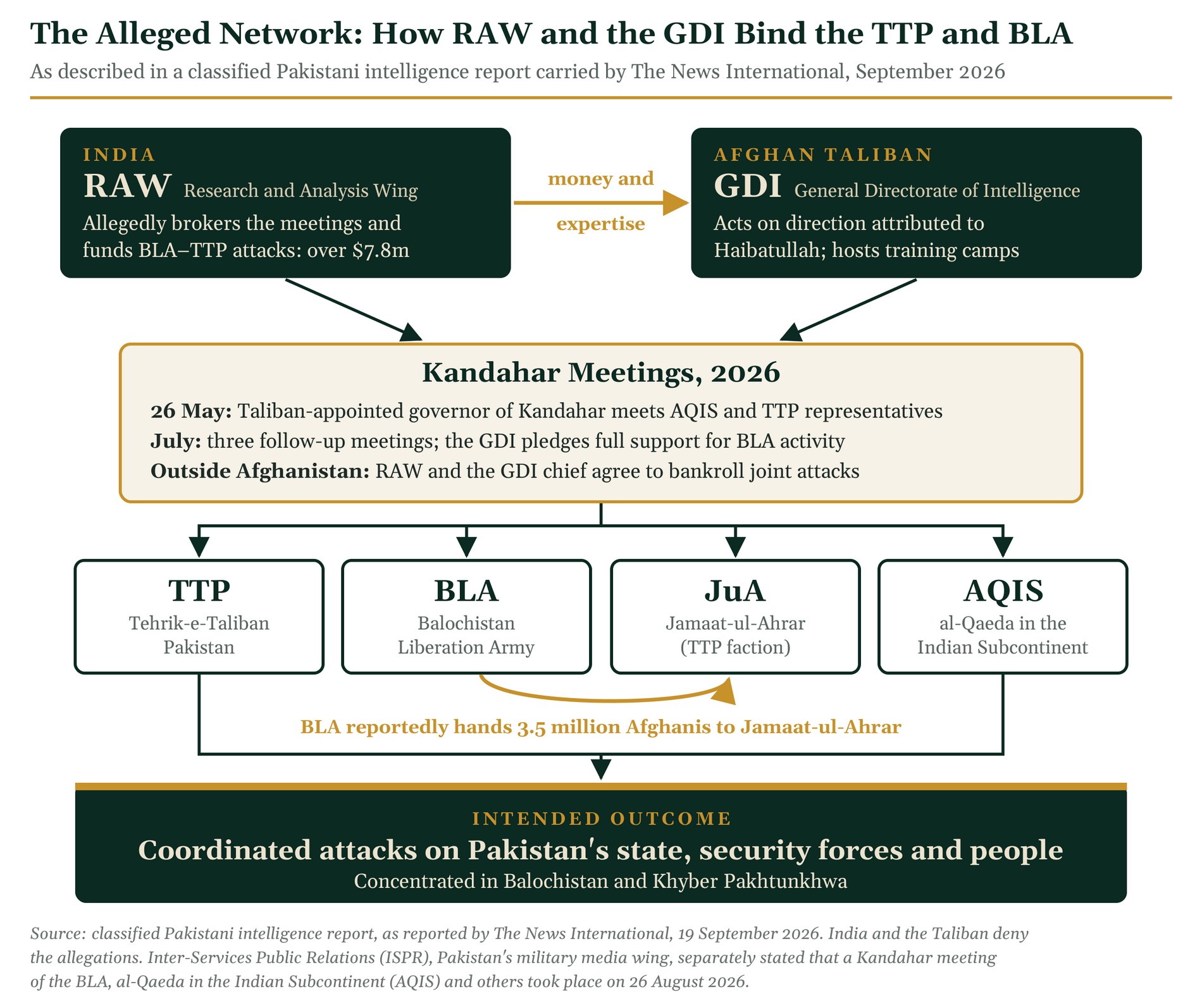
- Citing a classified Pakistani intelligence report, The News International reports that India’s Research and Analysis Wing (RAW) and the Afghan Taliban’s General Directorate of Intelligence (GDI) are facilitating a nexus between the Tehrik-e-Taliban Pakistan (TTP) and the Balochistan Liberation Army (BLA), with RAW allegedly contributing more than $7.8 million.
- The brief argues that India’s methods have changed, but its objective has not, that is, to destabilize Pakistan. It sets out how Pakistan should respond, at home and in regional forums.
Introduction
Within two days of the Taliban takeover of Kabul in August 2021, India closed its embassy. Four years later, it is back with a full diplomatic mission, engaging the same Taliban it once vowed to keep out of power. In this brief, Umer Farooq, an Islamabad-based Afghanistan expert, argues that New Delhi’s change of partners in Kabul is a change of method, not of purpose.
What did India build in Afghanistan before the Taliban?
During the American-backed governments of Hamid Karzai and Ashraf Ghani, India invested some $3 billion in Afghanistan. It trained and equipped the Afghan National Army (ANA) and worked closely with the Afghan intelligence agency, the National Directorate of Security (NDS). When Kabul fell in 2021, that investment seemed lost.
Why is India now engaging the Taliban it once opposed?
In 2008, India blamed the Taliban for the bombing of its embassy in Kabul. Since 2021, it has pragmatically re-engaged them, seeking to exploit the widening wedge between Kabul and Islamabad over the TTP. The brief holds the Taliban leadership responsible for that rift, and shows how New Delhi has moved quickly to fill the space it created.
What is the RAW–GDI alliance?
According to a classified Pakistani intelligence report carried by The News International in September 2026, meetings in Kandahar brought Taliban officials together with representatives of the TTP and Al-Qaeda in the Indian Subcontinent (AQIS). Outside Afghanistan, RAW and the GDI chief allegedly agreed to bankroll coordinated BLA–TTP attacks across Balochistan. Pakistan’s military separately stated that a Taliban governor hosted militant leaders in Kandahar in August 2026. India and the Taliban deny the allegations.
What does India want in Afghanistan?
India’s strategic community sees Afghanistan as geographic access around Pakistan, reached through Iran’s Chabahar port, and as a way to stop Pakistan becoming the region’s connectivity hub.
New Delhi justifies its presence by citing the need to monitor Jaish-e-Mohammed (JeM) and Lashkar-e-Taiba (LeT). The justification does not withstand scrutiny. Pakistan proscribed both organizations in 2002 and has since acted against their networks under the National Action Plan. In addition, Pakistan’s removal from the Financial Action Task Force (FATF) grey list in October 2022 followed international verification of these measures. Invoking proscribed and inactive organizations to warrant an intelligence presence in Afghanistan is therefore less a security necessity than a pretext. The brief reads that justification as an implicit admission of a sizeable intelligence footprint. With more than 20 terror groups based in Afghanistan, according to United Nations monitors, that footprint could be turned against Pakistan.
How should Pakistan respond?
The brief recommends that Pakistan:
- Build a coherent strategy for monitoring the Afghanistan-based terror groups with which RAW comes into contact.
- Launch a sustained international campaign to expose the role Indian intelligence is playing in Afghanistan.
- Place intelligence sharing with regional states on a sound footing.
- Press in multilateral forums: In the Shanghai Cooperation Organization (SCO) and the Moscow Format, press for the TTP to be treated as a regional threat in the same way as ISIS-K. If ISIS-K threatens Central Asia, the TTP threatens Pakistan and should be eliminated.
- Propose a TTP-specific mechanism within the SCO’s Regional Anti-Terrorist Structure (RATS).
Read the Full SAT Brief
Policy Research · 21 Pages · PDF Format
Full 21-page policy brief including network analysis, timeline diagrams, and policy options.
↗ Open PDF in FullscreenWrite for SAT Briefs
South Asia Times invites researchers, scholars and practitioners to author forthcoming SAT Briefs: rigorous, well-sourced policy research on consequential questions in regional and international affairs. Contributors are paid. Send a working title, a 300-word outline, and a note on your expertise to [email protected]. Terms are discussed after review.
Umer Farooq
Umer Farooq is an Islamabad-based Afghanistan specialist and senior journalist. A journalist since 1995, he has worked with Dawn and The Herald and covered Afghanistan and conflicts for Pakistani and international outlets. His analysis focuses on Pakistan–Afghanistan relations, the Taliban and the TTP, and regional security after the United States’ withdrawal.