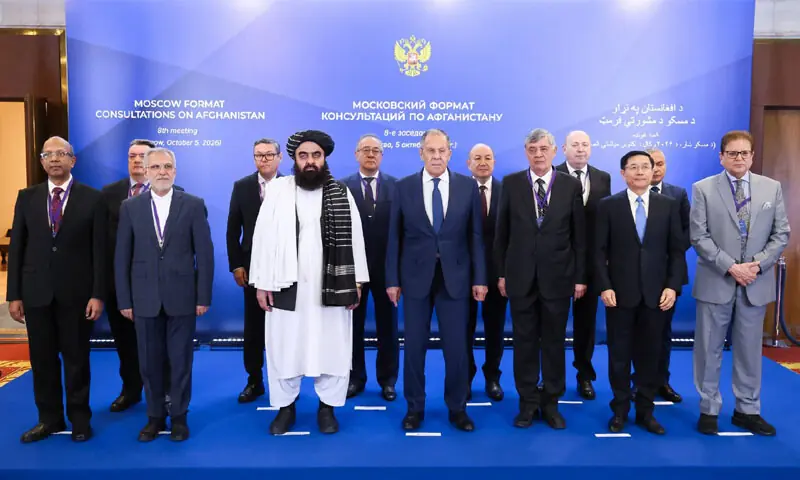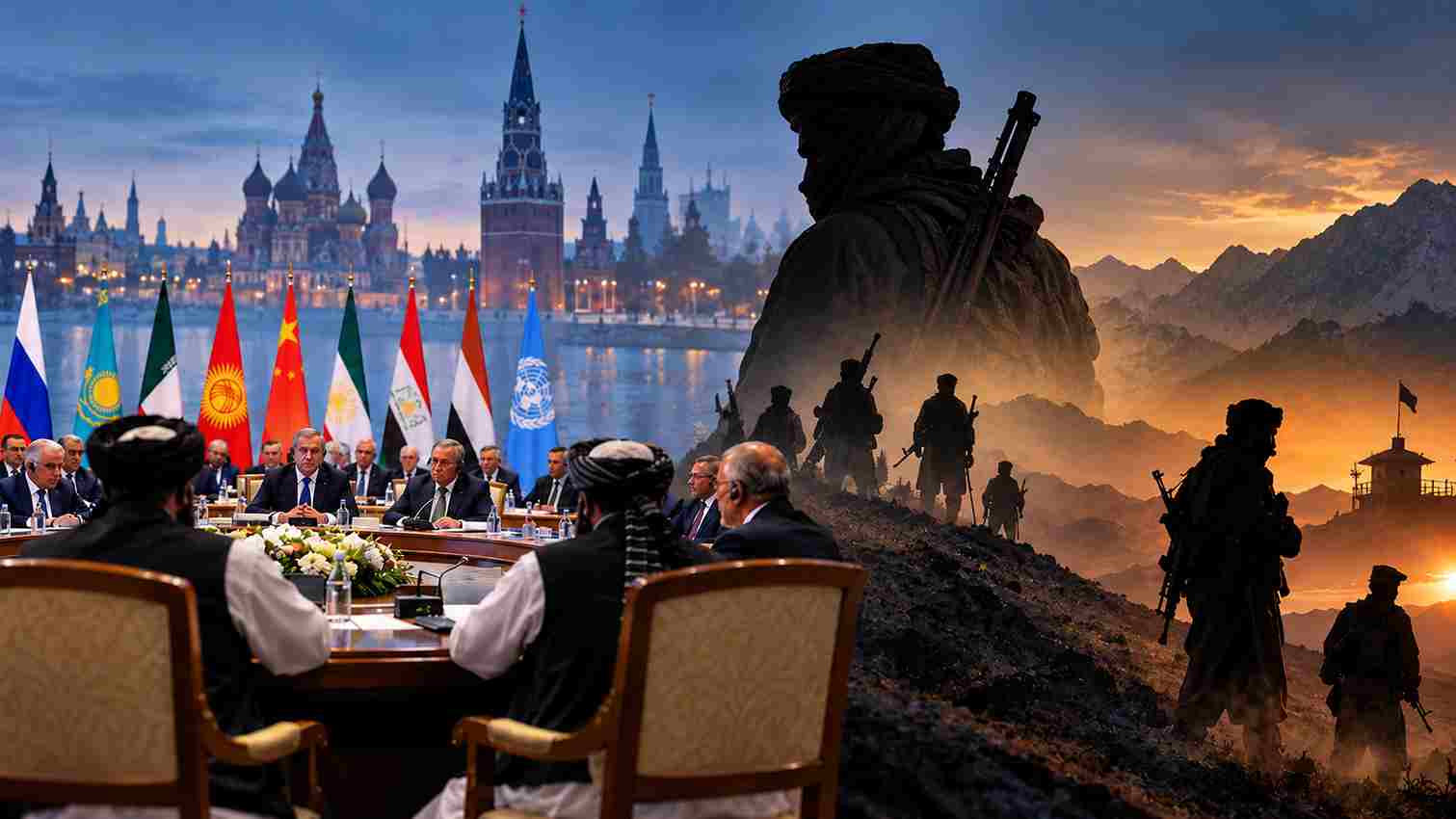
On 5 October, at the latest round of regional consultations on Afghanistan, the Taliban authorities in Kabul heard what they have long wanted to hear that they have brought their territory under control and are governing it with real success, terrorism included.
For a government most of the world still declines to recognize, such praise is valuable currency. For Pakistan, it should be a cause for concern, less because of who offered it than because of the logic behind it.
One detail from the same meeting says a great deal. It ended without a joint statement, because the Afghan delegation objected to a draft that, in its view, linked Afghanistan to terrorism too often. Similar wording had been accepted a year earlier. The applause, in other words, arrived just as Kabul was trying to edit terrorism out of the record.
The logic behind that applause is selectivity. It holds that militancy emerging from Afghanistan can be sorted into two bins. Groups that threaten one’s own borders must be confronted. Groups that threaten someone else’s can be overlooked.
On this reading, Islamic State Khorasan Province (ISKP) in northern Afghanistan is worth worrying about, because it eyes Central Asia. The Tehreek-e-Taliban Pakistan (TTP), operating from eastern and southern Afghanistan and attacking Pakistani soldiers, police and state installations across the border, is someone else’s problem.
It is a comfortable distinction. It is also a false one.
Start with where these fighters come from. ISKP and the TTP draw their cadres from the same pool of third- and fourth-generation militants produced by Afghanistan’s long wars. United Nations monitors report that the TTP even recruits from Afghan Taliban ranks. At the grassroots, it is not possible to draw a clean line between the two.
The groups have also cooperated. The UN Security Council’s sanctions monitoring team, in its 38th report released in August, describes facilitation networks that overlap across the TTP, ISKP, al-Qaeda and the Baloch Liberation Army (BLA). It cites a member state reporting al-Qaeda trainers working with both TTP and BLA elements. And it records something every advocate of selective pressure should read twice that ISKP attacks fell inside Afghanistan but rose inside Pakistan. Squeeze the network in one place and the violence moves.
These fighters are shaped by the same camps, smuggling routes and war economy. At ground level, the banner a fighter carries often depends on who pays, which commander is rising, and which group offers protection. A policy that targets one label while tolerating another does not shrink the pool. It simply moves fighters under the tolerated flag.
Then look at the Taliban’s own conduct. Media reports suggest Kabul has used high-handed tactics against Salafi groups in Afghanistan, which it sees as rivals and as ISKP’s recruiting ground, while building residential colonies for TTP cadres and their families.
The UN credits Kabul with operations against ISKP. On the TTP, its verdict is blunt that the Taliban continued their support. The monitors estimate some 6,000 TTP fighters in Afghanistan, concentrated in Khost, Kunar, Nangarhar, Paktika and Paktia, with the group’s chief reportedly living in Kabul.
Kabul’s main step was to relocate about 2,000 TTP fighters and their families away from the border, deeper into Afghanistan. They were moved, not disarmed. That is not counterterrorism. It is managing militants according to their political usefulness.
Pakistan is paying for that distinction.
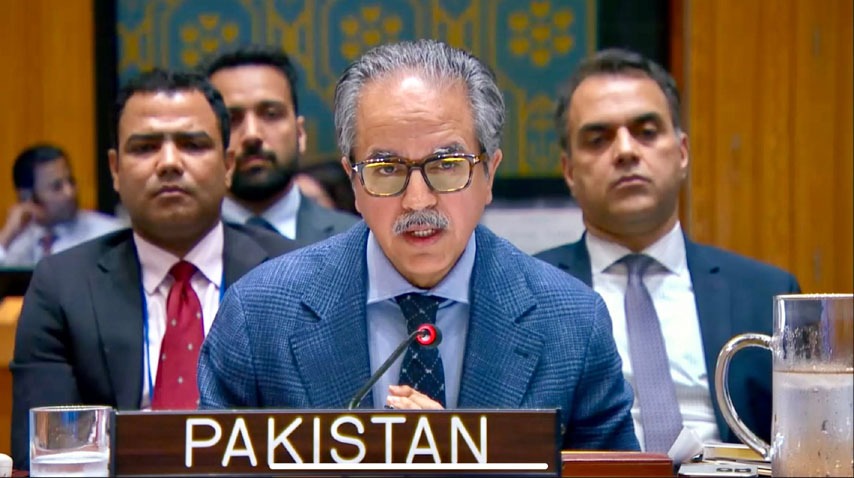
According to the Pakistan Institute for Conflict and Security Studies (PICSS), the country suffered 1,066 militant attacks in 2025, the most since 2014. Some 667 security personnel were killed, the highest toll since 2011, along with 580 civilians, the worst since 2015. This year is worse still. PICSS counted 1,232 attacks in the first nine months of 2026, a 52 percent rise on the same period last year. At the meeting, Pakistan’s envoy put the human cost of terrorism from Afghanistan at more than 4,700 Pakistani lives in three years.
The diplomatic cost is real too.
Afghanistan’s neighbors have long been concerned about the presence of some 20 regional terrorist groups on Afghan soil. Each Central Asian state has worried about its own fugitive group sheltering there, and Central Asian capitals have watched the growing presence and activity of ISKP in northern Afghanistan with alarm.
The UN lists ISKP, the TTP, al-Qaeda, the Turkistan Islamic Party (TIP), Jamaat Ansarullah, Ittihadul Mujahideen Pakistan and others as present in Afghanistan. Several of these are the fugitive outfits of Afghanistan’s Central Asian and Chinese neighbors. If that shared concern fractures, Pakistan risks being the only neighbor still raising it. Iran shares many of the same worries, but the war consumes its attention. Kabul will draw a simple lesson that selective action can be traded for legitimacy.
A parallel media narrative will likely follow, casting the Taliban in a positive light as a responsible security partner. Pakistan should answer it with evidence rather than grievance. Its argument should not be that ISKP is unimportant. It should be that no one can defeat half of a shared ecosystem.
In practice, Islamabad should document the overlap between these groups, including defections, shared facilitators and joint activity, and keep placing it before regional forums and the UN monitors, whose own findings already support the case. It should frame the TTP as a regional problem, not a bilateral quarrel, because a sanctuary that hosts one group will host others. It should keep talking to Central Asian capitals, whose own fugitive groups depend on the same permissive environment. And it should put the human cost on record, through the people of Khyber Pakhtunkhwa and Balochistan who live with the consequences every day.
Terrorism does not respect the categories diplomats find convenient. A sanctuary is a sanctuary. This region learned that lesson at great cost once before. It should not have to learn it twice.
Related Policy Research
Read SAT Brief 02: India’s Afghanistan Gambit — The RAW–GDI Alliance and the TTP–BLA Nexus by Umer Farooq.
Haleema Khalid is a research and strategic communications professional specializing in policy research, knowledge management, and analytical writing. With an interdisciplinary background spanning linguistics, security studies, and regional affairs, her work focuses on translating complex research into accessible outputs for policy and stakeholder audiences. She is a published researcher in corpus linguistics and political communication and is currently pursuing an MPhil in Intelligence & Security Studies, with a growing focus on Pak-Afghan affairs, regional security, and South Asian dynamics.