Some Background
True to our character, the ashhrafiyya-driven political system cannot go easy without churning out regular if frivolous storms in the nation’s teacup. Army bashing has now become a favourite theme for all and sundry. The 1947 Constituent Assembly framed the interim constitution under the 1935 Government of India Act, replaced by the first constitution in 1956. Gen Ayub “abrogated” this Constitution in 1958, imposing martial law. He promulgated the second constitution in 1962, containing provisions for “basic democracies” and a federal form of govt.
In 1969, Ayub Khan relinquished power to Gen Yahya who imposed the second martial law, “abrogating” the 1962 Constitution besides abolishing “basic democracies” and “One Unit” through a Legal Framework Order (LFO). In 1973, Pakistan’s third and current constitution was adopted; later “suspended” by Gen Zia through third martial law in 1977. He issued the 1981 PCO -Provisional Constitutional Order – providing a framework for government under martial law. Efforts to reinstate the 1973 Constitution resulted in ending the military rule in 1988 and conduct of elections thereafter.
In 1997, parliamentary system was adopted with revocation of the president’s power to remove a sitting government. In 1999, Gen Pervez Musharraf seized power “suspending” the 1973 Constitution. He ruled by decree as “chief executive” initially, and as president since 2001. In 2002, the 1973 Constitution was reinstated after a referendum, incorporating a new LFO that restored the presidential powers, removed in 1997.
Why Military Takes Over?
This brief constitutional history reveals our political anguish to decide on a form of Govt – presidential or parliamentary and the martial laws, where generals are both usurpers and lawgivers. Without condoning takeovers, military in each instance has acted in supreme national interest, in accordance with the prevalent public sentiment; and at times at the urging of the political opposition. One is reminded of Gen Zia speaking to the joint session of parliament in 1987, lamenting “Ham martial law bhi aap he key kehne per lagate hain (we impose martial law at your [politicians’] urging).”
The path to military take-overs is lined with systemic fragility; manipulation and corruption by the ashhrafiyya-dominated political class; inexperience and incompetence of squabbling politicians when in power; the ensuing lack of deliverance and pettiness morphing into public discontent, and the ultimate systemic break down. Judiciary, remaining cognizant of this situation, has provided all military takeovers with full, legal and constitutional cover. Its “doctrine of necessity” is a useful reference point.
When not in power, the military has been exercising self-restraint – truth be told. For military to stay out of power and for civilian leaders to command respect of the uniform, political class must match the military with an equally nationalistic outlook, above narrow partisan, ethnic, provincial, sectarian and numerous other faultlines. And it does not happen quite often. The top politicians conspiring to grab power instead of respecting the majority vote, losing half of the country in the process; and political leaders handing over intelligence dossiers to the nemesis; and political appointees asking foreign powers for interference in domestic politics; and politicians pursuing narrow monetary interests over national interests; and politicians resorting to unrestrained criticism of their own military, whenever, politically expedient. Dual nationalities of most politicians are not to be mentioned.
Civilian Control of the Military
There are no two opinions about the core issue of “civilian control of the military”. Enshrined in the Constitution and the bedrock of democracy, armed forces are and should remain subservient to civilian control. However, there are reasons for deviation from this desired norm. First, Armed Forces alongside other organs of the state constitute the “deep state” or – more fashionably – the ‘Establishment’ or the ‘Miltablishment’. Savvy politicians all over the World complement their deep state, not confront it. Even the US is no exception. Second, the nature, mandate and organization of the Establishment make it very nationalistic in outlook; keeping a vigilant watch to protect national interests, as institutionally perceived. Political leadership may perceive this jealous ownership as curtailing their liberty of action. Third – in Pakistan’s case – our existential security challenges would always catapult military to outsize prominence. Fourth, civilian capability and ability sadly leave yawning gaps. Military would never take over in a politically stable environment with economy doing good and governance at ‘minimum’ optimal levels.
The Gen Kayani-engendered “Self-Restraint” continues to this day as evident from the military’s “relatively” muted response to unwarranted criticisms lately. However, Armed Forces are not a monolith. Troops, junior officers and senior leadership all need to feel respected. Derogatory, insulting and less than graceful opinions against past and present military high command are never helpful.
Drawing on some four decades of professional experience, one can safely conclude that military is always willing to carefully cede authority provided the political counterparts are able to deserve and assume it. Ironically, it is the military-run National Defence University (NDU), Islamabad that conducts the much sought after, normally over-subscribed national security, leadership and media seminars. Participants comprise politicians – elected and non-elected, from councilors to MPAs, MNAs and senators, businessmen, media leaders, civil and military officials and other notable citizens from all walks of life. Focus remains on disseminating the ‘to do lists’ particularly to the newly elected politicians, who generally win elections making fiery and bombastic speeches, but find deliverance hard and their own inexperience telling.
Military and Other State Organs
The interplay among various organs of the state is another important facet of the wider debate. Executive, at times, do not know their powers and obligations referring politically risky decisions to the Judiciary. Judiciary has been exercising enthusiastic over-reach and, in the process, creating a parallel executive. Legislature remains a venue for political filibuster and non-serious point-scoring, instead of making laws and overseeing their implementation. Media – free and unrestrained – is manipulated, manipulative and beholden to ratings’ war, or money to be more precise.
Every now and then, media brews a storm in Pakistan’s teacup from seemingly frivolous issues. Government and opposition are perpetually locked in verbal duels, instead of governance and constructive criticism respectively. Hence, not surprisingly traders take their grievances to the Army Chief. And Establishment – Foreign Office included – rather than legislative committees and Government conduct and impact important policies like national security, defence and important foreign relations. Ignoring the Establishment results in ignominies like the 2019 embarrassing debacle, when Pakistan had to withdraw from the Malaysian-sponsored alternative OIC meeting in Kuala Lumpur at last minute, ostensibly under Saudi pressure.
Even at present, every important foreign dignitary after his calls in Islamabad, makes it a point to visit the General Headquarters. Under Kayani engendered ‘Self-Restraint’, this ‘hybrid’ formulation will continue, in near to mid-term, unless our politicians are schooled rigorously, are politically savvy, become situationally aware, and able to play at the broader canvas of governance with assistance and not dictation from the Miltablishment. With the prevalent state of affairs, civilian supremacy of the military would only remain a pipedream, and dreams are believed to be true, if watched closer to the wake-up time.
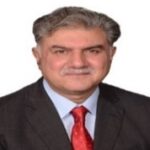
Maj Gen Inam Ul Haque
Maj Gen Inam Ul Haque (Retd) writes on Global Affairs and Political Sociology. He can be reached at [email protected] and his twitter handle @20_Inam.