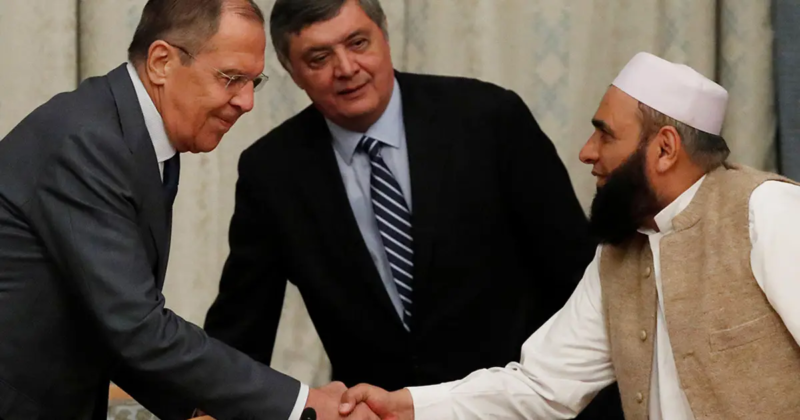
The Russian government has been gradually cozying up to the Taliban regime in Kabul. In April 2025, it removed the Taliban from the list of banned organizations. In July, the same year it extended official recognition to the regime. In the latest move, Moscow has acknowledged Taliban counter terrorism efforts during the meeting of Moscow Format, a forum of Afghanistan’s neighboring countries. All this has happened while the UN monitoring team has been reporting that more than 20 terrorist organizations operate from Afghanistan. The Pakistani government has been accusing the Taliban regime of playing host to Tehrik-e-Taliban Pakistan (TTP).
Russia and Central Asian states perceive threat from the rise of ISIS-K (Daesh) in Northern Afghanistan, an Afghan region which borders Central Asia. In the latest UN monitoring report, it has been stated that ISIS-K still poses the most powerful threat to peace in the broader sense. Why, then, has the Russian government given clean chit to the Afghan Taliban? Is there any evidence available which indicates the Russian government carried out any objective and positive assessment of the Taliban regime’s counter terrorism efforts? All that is publicly available are the tall claims of Taliban leaders that they have broken the back of Daesh in Afghanistan.
The Russian government’s desire to maintain geopolitical influence in Afghanistan seems to have played a major role in its move to give a clean chit to the Taliban government. There has been no reported exercise by the Russian government to undertake an objective assessment of the terror situation in Afghanistan.
Taliban claim major operational successes against ISIS-K inside Afghan territory including killing of Daesh’s central leaders and commanders. On the other hand, a UN monitoring report issued in August 2026 states that ISIS-K still poses a major security threat to the states and societies of the region. Does this mean that the Russian move to give clean chit to the Taliban is part of the Russian government’s foreign policy and strategic requirements and is not based on the Russian government’s objective assessment? What are the details of Taliban’s operations against ISIS-K since the movement took control of Kabul in August 2021? Whether the Taliban have broken the back of ISIS-K in Afghanistan?
Read More: Moscow’s Selective Clean Chit to Kabul Endangers Regional Peace
Taliban Operations Against ISIS-K and Salafi Groups, From Counterterrorism to Repression
Daesh as an organization originated in Arab lands and its fighters and leaders migrated to Afghanistan between 2014-2016 after their apparent defeat in Syria and Iraq. Most ISIS-K fighters belong to the Salafi sect, which differ from other Sunni groups by their tendency to reject all the four Sunni schools of law. Taliban on the other hand follow Hanafi school of law. After their arrival in Afghanistan local Salafi groups in Eastern Afghanistan joined ISIS-K in droves.
Afghan Taliban were engaged in Anti-ISIS operations even before coming to power in Kabul. However, Taliban intelligence moved to suppress Salafi groups in a big way after taking control of Kabul.
In September 2021 Afghanistan’s most prominent Salafist cleric, Abu Obaidullah Mutawakil, was kidnapped in Kabul by unknown assailants. Few days later his mutilated and burned dead body was found lying on the outskirts of the city.
His followers accused the Taliban of carrying out the kidnapping and killing, an allegation which the Taliban government in Kabul denied. In the year the Taliban came to power they jailed the slain cleric for alleged links to ISIS-K.
This is not an isolated incident of killing of a Salafist cleric in Taliban’s Afghanistan—there have been hundreds of killings of Salafists in Afghanistan since Taliban took over Kabul in August 2021.
In its counter terrorism campaign against ISIS-K in Afghan society, Taliban feel no qualms against targeting every civilian with religious inclinations towards Salafists school of thought.
Human Rights groups have said that civilians with Salafists with no links to IS-K have been allegedly arrested, tortured, or killed by the Taliban.
In a July 2022 report by Human Rights Watch it has been documented that the residents of Kunar and Nangarhar had discovered some 100 dead bodies in rivers and canals. Many of them were Salafists and alleged IS-K members who had been arrested by the Taliban.
Taliban intelligence has been actively pursuing ISIS-K sleeper cells on Afghan universities campuses where they don’t hesitate to arrest hundreds of ordinary students with Salafists inclinations.
In the last days of former President Ashraf Ghani’s rule, the ISIS-K recruitment drive in Afghanistan’s university campuses proved to be highly successful. Taliban, immediately after coming to power, started to perceive ISIS-K as a direct threat to its rule and legitimacy, leading it to deal ruthlessly with ISIS-K and Salafists more generally.
This was an unexpected turn in the thinking of Taliban leadership as Afghan Taliban had allied itself with Al-Qaeda and other Salafists groups in Pak-Afghan border areas, in the past. The Taliban has also absorbed smaller Salafist groups in the past.
But the Taliban, however, has opposed ISIS-K since its emergence in 2015, and an intense turf war erupted between the two groups since ISIS-K started its operations in Afghanistan. Since the Taliban takeover of Kabul there has been a surge in IS-K attacks against the Taliban.
Following the Taliban takeover of Afghanistan, the environment in Afghan universities and educational institutions has become particularly toxic for Salafist students and ordinary people, as reports about Taliban intelligence chasing, kidnapping, and torturing ordinary people with Salafist inclination have become very common.
In other words, the Taliban counter terrorism campaign against ISIS-K has become a witch hunt against the Salafist community of Afghanistan.
Taliban themselves are an offshoot of the religious reformist movement that started in 18th-century British Northern India. It was a reformist movement in the sense that it encouraged Muslim of India to move away from saint and shrine worship, which had been very common among Northern Indian Muslims and is still very common in the present times.
ISIS has emerged as a serious threat to the Taliban government’s survival in Kabul with successive suicide attacks against Shia mosques; the Taliban government has identified ISIS as the most potent threat to the stability of Afghan society. The discoveries of dead bodies of ISIS fighters in Jalalabad were happening separately from the officially designated military operations against ISIS in Kabul and eastern Afghanistan.
Read More Taliban’s Shifting Storylines: Is ISIS-K Really a ‘Foreign’ Problem
What the UN Monitoring Team Says About Taliban Counterterrorism
“The greatest threat to the de facto authorities and the broader region remained ISIL-K” reads the latest report of the UN monitoring team. The UN team has in fact noted that ISIS-K terror attacks have been reduced, “As a result of counter-terrorism operations by Pakistan and the de facto authorities”.
“ISIS-K suffered serious setbacks, notwithstanding its continuing intent to conduct external operations. Counter-terrorism operations by the Taliban, primarily in the north and major cities, including Kabul, diminished ISIL-K capabilities. Attacks declined in Afghanistan but increased in Pakistan. ISIL-K was in a rebuilding phase, with renewed capability for infrequent but high-profile mass casualty attacks, reflecting its resilience and adaptability”.
“Regional Member States reported that ISIL-K had modern tactical equipment, including drones, night vision devices and thermal imagers, and received training in urban combat and the use of drones. One Member State reported that ISIL-K and the Baloch Liberation Army (BLA, not listed) shared facilitation networks for the provision of logistics,” reads the latest UN report.
Several experts reported a reduction in the ISIS-K terror campaign in Pakistan and Afghanistan in the year 2023. But these experts pointed out that the organization of ISIS-K had been facing a financial crunch, and the decrease in its activities could be attributed to the financial problems the organization was facing.
The Taliban campaign against ISIS-K looks more like a witch hunt against religious opponents than an effective counter terrorism campaign. Tactically, the Taliban has succeeded in eliminating ISIS-K leaders and commanders, kidnapping or torturing them at the local level. But this looks more like tackling political opposition in a democratic setup. Defeating or eliminating hardcore terror organizations is a bit more difficult. Taliban might have killed ISIS-K commanders in large numbers. But a workable counterterrorism strategy should distinguish combatants from civilians, investigate individual responsibility, dismantle recruitment and stop Afghanistan from serving as a base for violence beyond its borders.
Read More Ignoring the TTP Leaves the Moscow Format’s Counterterrorism Hollow
Why Russia Has Given the Afghan Taliban a Clean Chit
There is no publicly available record, policy statements, media commentary in Russian media, or any analysis from Russian society that establishes that the Russian government’s decision is based on an independent and detailed verification of the Taliban’s counterterrorism performance. The Russian government has not announced any policy review or a detailed examination of the Taliban’s counter terrorism performance before it decided to give a clean chit to the regime for its counter terrorism efforts.
The Taliban regime has been cooperating with the Russian government cooperation against ISIS-K after the March 2024 Crocus City Hall attack in Moscow. Russian diplomacy shows a deep-seated desire to maintain influence in Central Asia as well as in Afghanistan. The diplomacy also shows Russia’s strategic elites’ wish to defeat Western powers in geopolitical games in South and Southwest Asia. But as far as an objective analysis of the situation in Afghanistan is concerned, the Russian government doesn’t seem to have conducted any such analysis.

Umer Farooq
Umer Farooq is an Islamabad-based Afghanistan specialist and senior journalist. A journalist since 1995, he has worked with Dawn and The Herald and covered Afghanistan and conflicts for Pakistani and international outlets. His analysis focuses on Pakistan–Afghanistan relations, the Taliban and the TTP, and regional security after the United States’ withdrawal.