“Terrorism does not need the truth. It needs a story convincing enough that no one thinks to check the truth at all.”
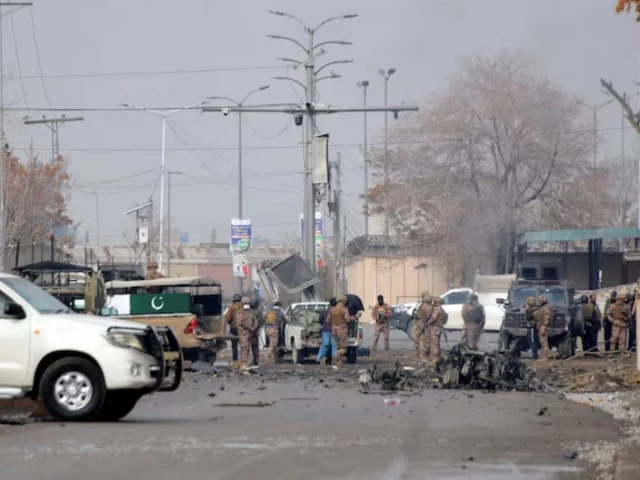
The Baloch Liberation Army does not just claim an attack. It fabricates one twice over, once on the ground, and once online, where the casualty count is inflated, the footage is cut for maximum shock, and the caption never changes: an occupying army has struck innocent civilians. This is not chaos. It is deliberate deception, manufactured for an audience thousands of miles away that will hit share long before anyone checks a fact.
That is the part of Balochistan’s terrorism problem that goes missing when the conversation defaults to grievance. Some of that anger is real. Most of the story built around it is not. A small, organised set of terrorist actors has built a calculated propaganda operation mixing real frustration with invented detail, deliberately and with malicious intent, to delegitimise the state, recruit fighters, and raise money from a diaspora primed to believe the worst.
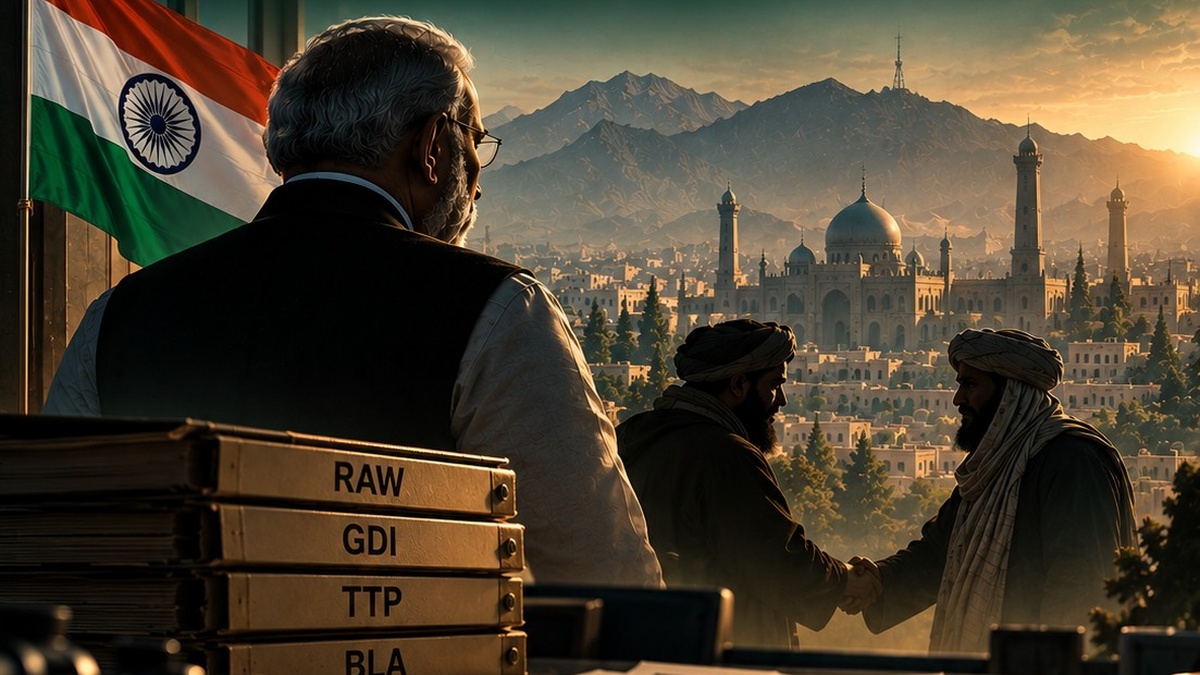
The BLA, the Baloch Liberation Front, and the umbrella group Baloch Raaji Aajoi Sangar run propaganda cells and diaspora pages built to publish one version of events before any other can circulate.
The clearest evidence that this is constructed, not spontaneous, is where it recruits its loudest voices. The most consistently cited incubators of Baloch nationalist radicalism are not the cut-off tehsils of Awaran or Kharan but Quaid-e-Azam University, the International Islamic University, and Punjab University in Lahore, elite, state-funded campuses where Baloch students hold scholarships and reserved seats built to include them.
Terrorist propagandists target these students: connected, online, positioned to carry a curated story of victimhood to audiences a villager in Kharan never could reach.
Interior Sindh and the Saraiki belt of southern Punjab report development indicators no better than Balochistan’s, in places worse, and neither has produced comparable terrorism. Sindh’s separatist current, built around GM Syed’s Jeay Sindh Mahaz, stayed small and ageing; southern Punjab has sectarian violence but no nationalist terrorist campaign. The difference is not hardship. It is that Balochistan has an organised propaganda apparatus manufacturing one, and Sindh and southern Punjab do not.
This is not new. The Marri sardars who fought the state in the 1960s were not defending village welfare, Sher Mohammad Marri’s fighters wanted a cut of Sui gas revenue, and Nawab Khair Bakhsh Marri denounced state development because it would have ended his monopoly on how his people understood the state. Terrorism in Balochistan has always run on controlled information; what has changed is who controls it and how far it travels.
After Nawab Akbar Bugti’s death in 2006, the tribal chieftaincy that once monopolised the Baloch cause was sidelined, not strengthened. In its place rose a generation of terrorist commanders with no tribal claim to authority, Bashir Zeb and Allah Nazar of the Baloch Liberation Army, educated and social-media literate, with no tribal elder to answer to.
They had grown up absorbing the same deprivation narrative sardars had spun for generations to extract concessions from the state, and many were admitted to elite universities under scholarships and quotas with academic records no stronger than their peers’, yet it was inside those institutions, not despite them, that the narrative hardened into conviction.
Pakistan’s political class has made the terrorists’ task easier by refusing to contest their narrative directly. In Sindh, the Pakistan Peoples Party built its dominance without ever confronting GM Syed’s separatism, leaving that fight to the state’s coercive apparatus. In Khyber-Pakhtunkhwa, the ruling party has favoured jirgas and accommodation with the Tehreek-e-Taliban Pakistan over establishing the state’s writ and protecting the public, and then blames the army whenever an operation proceeds. Civilian leaders who will not contest a hostile narrative leave it uncontested by default.
None of this would travel as far as it does without social media, which has ended the state’s old monopoly on information, as it has elsewhere. Platforms reward emotionally resonant claims over accurate ones, and a fabricated photograph spreads faster than a press release citing an audited budget line. Pakistan keeps issuing statistics into an environment that runs on story, leaving the vacuum to people with no obligation to accuracy.
The clearest evidence of malinformation is the gap between the militants’ narrative of a neglected, resource-starved province and what has actually been transferred to it. The 7th National Finance Commission Award of 2010 raised the provinces’ combined share of the federal divisible pool from 47.5 to 57.5 per cent, weighting the formula toward poverty and backwardness rather than population alone, specifically to favour Balochistan.
The results were not incremental: Balochistan’s annual NFC transfer rose from roughly Rs40 billion in 2010 to Rs291 billion by 2020, more than 600 per cent, while its provincial budget grew from Rs152 billion in 2010–11 to Rs465.5 billion a decade later and beyond Rs1 trillion by 2025–26. Khyber-Pakhtunkhwa alone received a cumulative Rs8.4 trillion in federal transfers over the following fifteen years.
None of this fits a narrative built on the claim that the state has starved these provinces of resources. Separatist violence in Balochistan did not decline as the money arrived; it restructured and, by most security assessments, grew more sophisticated after 2018. If neglect were driving it, the trend lines would move together. They do not, and the separatist narrative apparatus has every incentive never to mention the transfers at all.
None of this means every complaint from Balochistan is invented. Ghost schools and ghost roads exist, and scholarship seats go to the well-connected instead of the deserving. The blame sits with Pakistan’s own political and civil leadership, not any external hand. The same politicians, bureaucrats, and officials who announce scholarships, quotas, and development funds divert them, then blame Islamabad, the military, or unnamed “anti-state elements” instead of their own ministries.
A minister who signs off on a road that exists only on paper is not a victim of an information war; he is one of its suppliers, handing terrorists a failure every time he chooses graft over delivery.
That corruption did not create a terrorist movement. A continuous propaganda narrative of grievance, spun for decades by sardars and vested interests and never seriously contested, did, and a small number of armed groups, drawn from the generation that took it over, built it into a calculated propaganda campaign, not a peasant revolt.
The state cannot out-argue a campaign of lies with a press release, or out-govern it with a bigger cheque handed to the officials who pocketed the last one. What it can do is contest the terrain terrorists have claimed: name every fabrication, publish the transfer figures on the same platforms, prosecute officials who profit from non-delivery, and give Baloch citizens a state they can see without a broker in the way. Pakistan does not have a resource problem in Balochistan. It has a story sitting unclaimed, and every day it goes unclaimed, the terrorists tell it instead.
That contest cannot be outsourced to spokesmen and press officers. People follow political leaders, not officials, however senior or respected those officials become, which means the narrative war is a political leadership’s burden, not its bureaucracy’s. Elected leaders, not press releases, have to stand up and tell citizens the state’s story directly. Leaving that domain uncontested, as they have for years, is its own form of surrender.

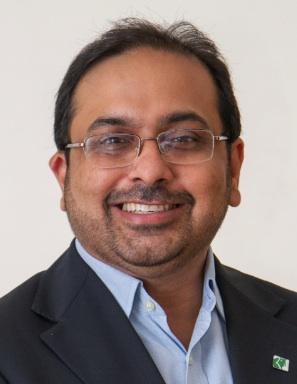
Amir Jahangir
The writer is a strategic communications expert, media executive, and policy adviser