Bangladesh’s foreign policy machinery has been realigning its strategy on multiple fronts since Prime Minister Tarique Rahman came to power in February 2026. However, one position has remained unchanged: the chairmanship of BIMSTEC (the Bay of Bengal Initiative for Multi-Sectoral Technical and Economic Cooperation), which Bangladesh assumed in April 2025 and will hold until 2027. Now the challenge for the new government is whether it regards this as a formality or a true opportunity to develop the regional economic and strategic capability.
Geography isn’t a Strategy
The internal political transition of a state tends to reshape foreign policy discourse. Bangladesh’s new government is already re-evaluating relations with several partners. However, some pledges outlast the politicians that made them because they’re determined by the institutional calendar rather than the political platform. One such commitment is the rotating chairmanship of BIMSTEC, which will not change with the next reshuffle.
In spite of shifting political scenarios, the chairmanship of BIMSTEC still remains in the hands of Bangladesh. Bangladesh’s regional significance does not depend on any specific government; it rests on geography and the country’s strategic capacities. Bangladesh sits at the crossroads of South Asia and Southeast Asia, bordered by India to the west, Myanmar to the east, and the Bay of Bengal to the south. That position has given Bangladesh a natural gateway for regional trade and connectivity, which predates BIMSTEC.
BIMSTEC is a bid to give that geography-based potential institutional form. Geography generates opportunity, but turning that opportunity into an actual accomplishment requires specific policy, institutional development and political commitment from the state.
The Promise Nobody has Delivered on
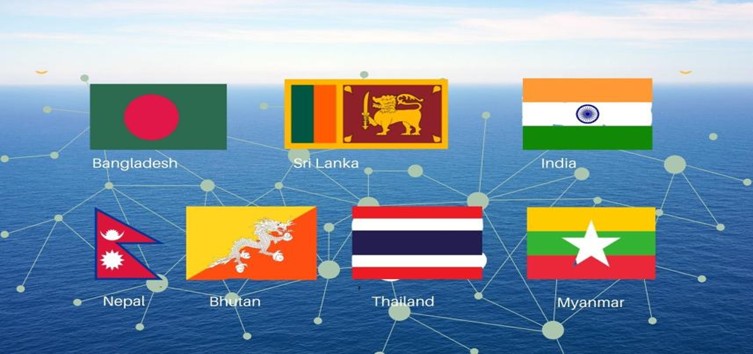
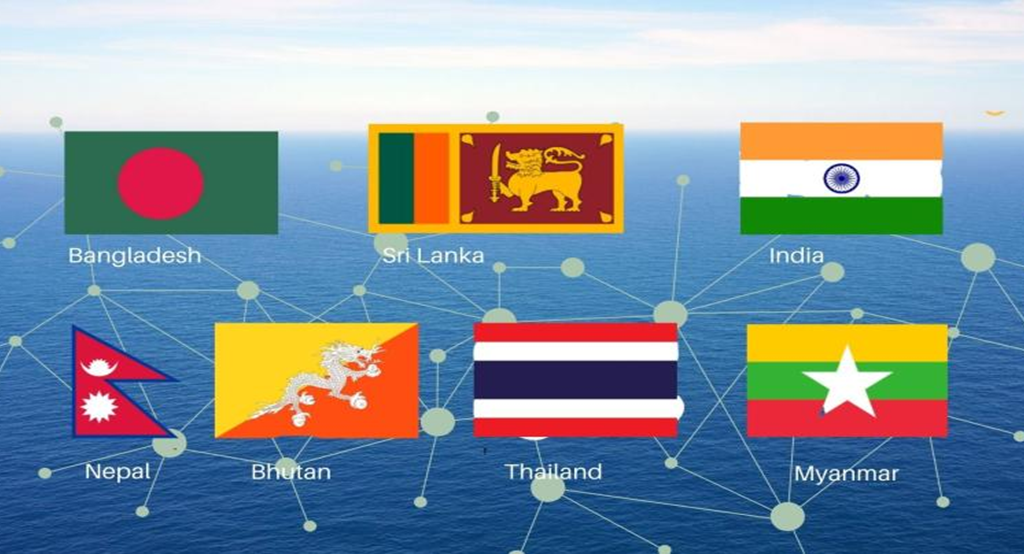
BIMSTEC is a regional body of seven South Asian and Southeast Asian countries that include 1.8 billion people and a combined GDP of USD 4.5 trillion. The bloc ought to be one of the most promising regional economic platforms in the world.
According to industry estimates, the potential of I,ntra-BIMSTEC trade is projected to be more than $250 billion, but Intra-BIMSTEC trade is limited to only seven percent of the bloc’s total trade. Although there have been a number of policy statements and institutional pledges, implementation has been relatively slow. The difference between these two numbers answers the question on its own: BIMSTEC is not yet economically integrated. It remains a diplomatic hope that is waiting to be realized.
The Reality Facing Bangladesh
Bangladesh is strategically located between South and Southeast Asian countries and regional connectivity is a natural policy priority of the country. In 1976, an agreement was made with Nepal to give landlocked states official access to Mongla port, followed by an agreement with Bhutan in 1980, but neither has been implemented. In March 2023, Bhutan signed a transit protocol, which includes multimodal connection with Mongla, Payra and Chattogram ports. Nearly five decades of difference between agreement and implementation is the biggest challenge for the BIMSTEC chairmanship of Bangladesh.
This geographical advantage cannot be converted into economic potential without greater port capacity, modernization of customs and regulatory systems. Bangladesh’s ongoing chairmanship of BIMSTEC is a policy opportunity to strengthen the nation’s long-term strategic presence in the field of connectivity and economic cooperation.
A Diplomatic Challenge for the New Government
After the change in political power, an important policy question is being put before the new government: what direction will Bangladesh take in its regional policy and how will it define its own role in multilateral forums?
Bangladesh’s foreign policy has always been about balancing relations with multiple regional and global powers instead of choosing one bloc. However, in the current context, BIMSTEC has a different meaning. As chair, Bangladesh has a direct influence over the policy development and regional cooperation directives.
Therefore, if this chairmanship is regarded as a formal or rotational role, its effectiveness would be limited. However, if it is being picked up as a tool to enhance economic cooperation and trade partnership in the region, a new dimension would be created in the regional role of Bangladesh.
Leadership Will Be Judged by Outcomes
The Bangladesh economy remains largely dependent on a limited number of sectors and markets. As a result, market penetration, enhanced supply chain and economic relationship diversification is becoming a key driver for sustainable long term growth.
BIMSTEC should not be perceived as a regional diplomatic forum, but as a space that could also serve as a vehicle for economic connectivity and trade opportunity. The two areas where Bangladesh can progress quickly are the energy grid and digital connectivity, both of which require bilateral coordination rather than multilateral consensus. The agriculture and maritime trade facilitation will take longer since it involves regulatory harmonization of seven different national systems. However, the possibilities would not be achieved through promises or conference diplomacy alone, it is necessary to have policy continuity, institutional capacity, and initiative for implementation.
In international relations, effectiveness of leadership is measured by results, not by position. Bangladesh now has the opportunity to shape the BIMSTEC Secretariat and regional strategic discussion. The crucial point is whether Bangladesh will carry this responsibility simply as a continuity of institutions or transform it into a real opportunity to build regional influence and economic connectivity.
The views and opinions expressed in this article are solely those of the author and do not necessarily reflect the editorial position of South Asia Times.

MD Sabbir Ahamed
MD Sabbir Ahamed, An Undergraduate student at Department of International Relations at Jahangirnagar University, Bangladesh