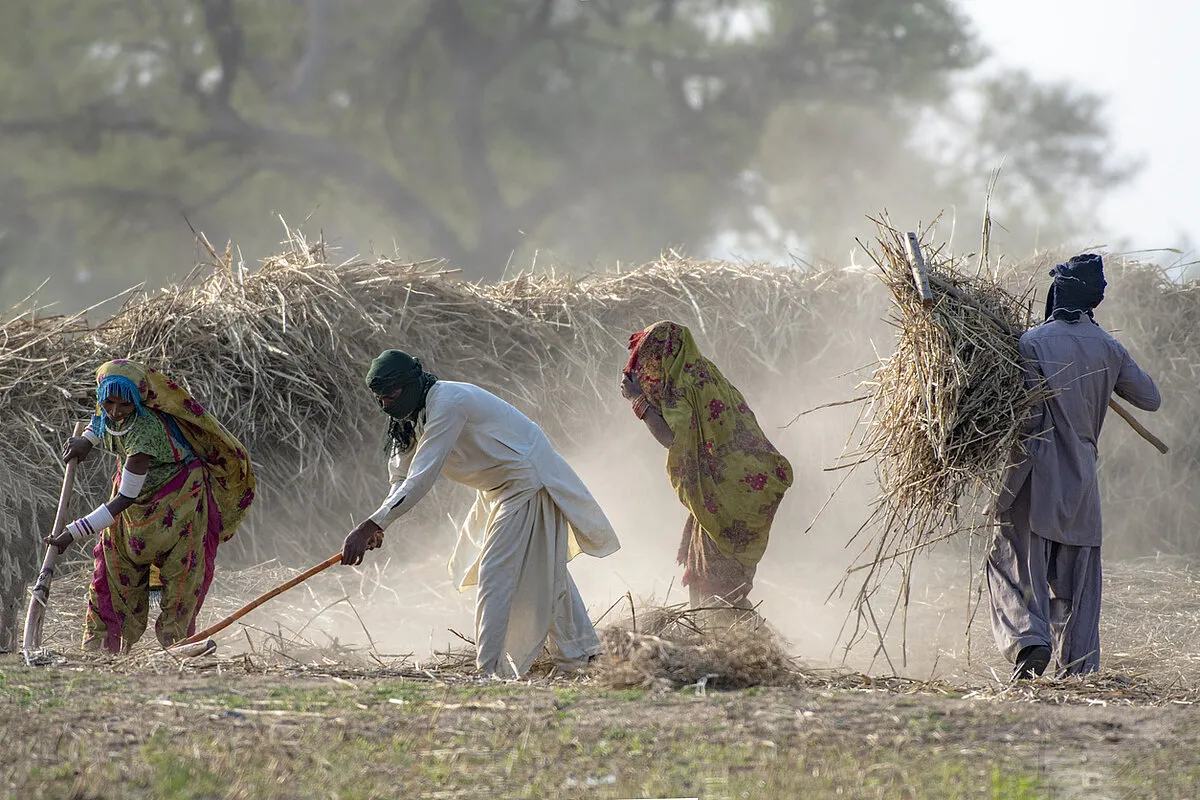
A recent social media post by Visegrad24 amplified a narrative of a U.S.-based activist, Aaron Hutchings, “freeing” a family from supposed 140-year bonded labour in Pakistan’s brick kiln sector. The post presents a highly selective, sensationalized picture that ignores Pakistan’s decades-long legal, institutional and enforcement efforts, pushing a Western saviour trope while overlooking ground realities.
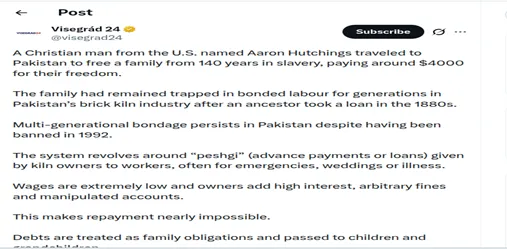
Such claims become laughable when examined against Pakistan’s robust framework. The idea of a family trapped since 1880 decades before Pakistan’s creation misrepresents generational occupations common in rural economies, similar to masonry or carpentry. The ‘peshgi’ (advance payment) system, while needing regulation, functions as a traditional rural credit mechanism for guaranteed work not perpetual slavery. In a nation where even low-income households have smartphones, cheap internet and access to over 120 private TV channels, portraying widespread undetected slavery defies common sense.
Pakistan has taken concrete legislative action. The Bonded Labour System Abolition Act, 1992 explicitly abolished bonded labour. Article 11 of the Constitution prohibits all forms of slavery, forced labour and child exploitation. Building on this, Punjab home to a large brick kiln workforce passed the Punjab Labour Code 2026 on February 4, 2026, enacted on February 10, 2026. This landmark legislation consolidates over two dozen fragmented laws into a unified framework covering nearly 48 million workers, including informal and brick kiln labourers.
Key reforms include a new Minimum Wage Bill raising wages to PKR 40,000 per month, a toll-free helpline (0800-88889) processing 345 wage complaints, 127 District Vigilance Committee meetings in major kiln districts, Government supported field projects processed 53,724 CNICs for vulnerable communities including 12,202 identity cards specifically issued to brick kiln workers, enabling access to courts, banking and welfare services. and veterinary support for 2,280 livestock animals owned by workers. Organizations like SPARC, Bhatta Mazdoor Union, PILER, and HRCP actively collaborate with the government on child labour prevention, education and rehabilitation.
International voices, including Mike Brickley, Grant Webster (Christian Economic Forum), and the U.S. Congressional Pakistan Caucus, have acknowledged Punjab’s “clear political resolve” and transparent engagement. Sensational narratives often serve donation driven agendas by combining humanitarianism with selective framing. Pakistan continues advancing through enforcement, modernization and inclusive development a path of self-reform rather than external rescue.