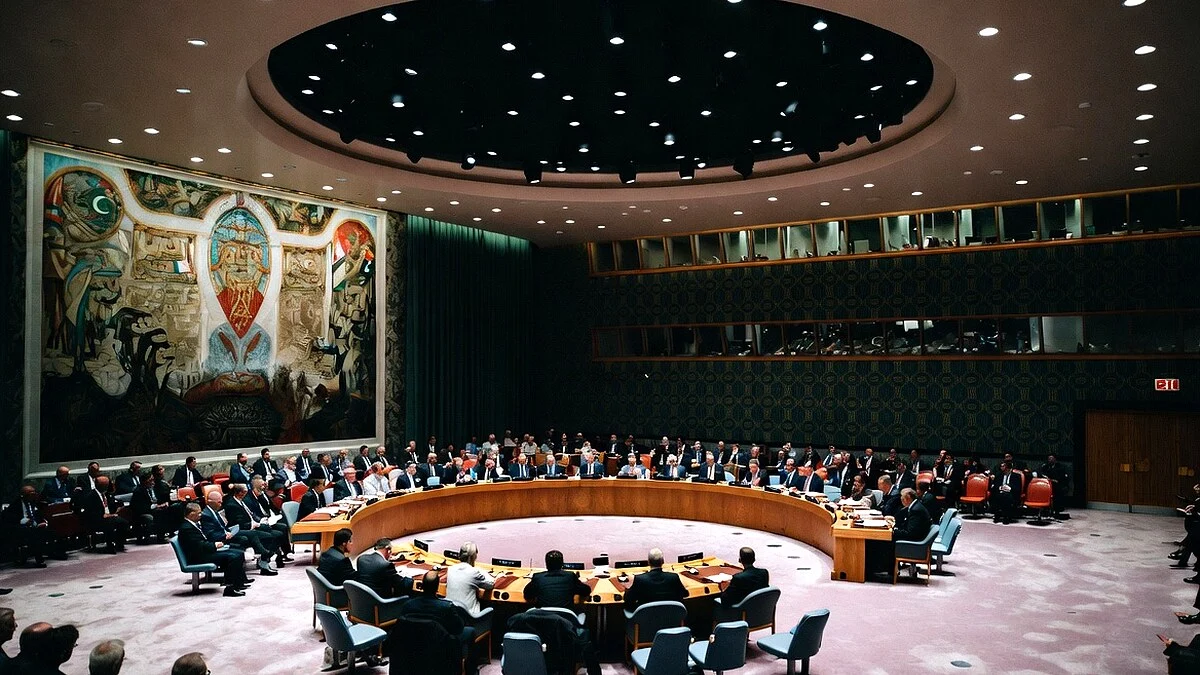
The United Nations Security Council was conceived, in the words of its founding charter, as the primary organ bearing “the maintenance of international peace and security.” Yet a recent episode at Turtle Bay lays bare a more uncomfortable reality, that the Council’s counterterrorism machinery is increasingly calibrated not by universal security imperatives, but by the cartography of great-power interest. The blocking by the United States, the United Kingdom, and France of a joint Pakistan-China proposal to list the Balochistan Liberation Army (BLA) and its suicide-bombing unit, the Majeed Brigade, under the UN 1267 sanctions regime is more than a diplomatic setback for Islamabad. It is a diagnostic moment for the credibility of international counterterrorism architecture itself.
The Case Pakistan Made
Pakistan’s rationale for seeking the designation was neither arbitrary nor manufactured for diplomatic optics. The BLA has, over the past decade, evolved from an ethno-nationalist insurgency into a sophisticated terrorist organisation with a demonstrable track record of mass-casualty attacks against civilians, security forces, and foreign nationals. The Majeed Brigade, the BLA’s dedicated suicide-bombing cell, has claimed responsibility for attacks that, by any objective application of the UN’s own definitional criteria, constitute acts of terrorism.
The August 2023 attack in Mastung, which killed over ninety people gathered at a political rally, and the sustained campaign against Chinese engineers and workers employed along the China-Pakistan Economic Corridor (CPEC) represent the most lethal face of this violence. In April 2022, a suicide bomber struck the Confucius Institute at Karachi University, killing three Chinese nationals and a Pakistani driver. In March 2024, a complex assault on a convoy near Bisham in Khyber Pakhtunkhwa claimed the lives of five Chinese engineers. These are not incidents of contested political violence; they are targeted killings of civilian workers building economic infrastructure.
For Pakistan, the listing request was also a matter of internal legal and intelligence coherence. Islamabad has long sought multilateral validation of its counterterrorism operations in Balochistan, not merely for reputational purposes, but to facilitate international financial intelligence cooperation, cross-border information-sharing, and the legal curtailment of BLA fundraising networks reportedly operating through diaspora communities in Western Europe. The 1267 regime, administered by the UN’s Sanctions Committee, would have imposed asset freezes, travel bans, and arms embargoes on designated individuals and entities, providing Islamabad with meaningful enforcement instruments beyond its own borders.
The Calculus Behind the Veto
The Western veto exercised without a formal vote through the procedural blocking mechanism available to the P5 was not accompanied by any substantive public explanation. This silence is itself instructive. It suggests that the objection was not grounded in evidentiary disagreement about the BLA’s conduct, but in a strategic assessment that designating the group would be politically inconvenient.
The inconvenience is legible in several registers. First, in influential think-tank and media ecosystems across Washington and London, the BLA has benefited from a sympathetic framing that portrays it primarily as a response to Pakistani state repression and enforced disappearances in Balochistan, a narrative that, whatever its partial validity, does not extinguish the legal and moral significance of mass-casualty attacks on civilians. The boundary between legitimate political grievance and terrorist methodology is not a matter of geopolitical interpretation; it is a matter of international humanitarian law. The West’s reluctance to apply that law consistently suggests that other considerations are prevailing.
Second, and more structurally, the proposal was co-sponsored by China. Beijing’s deep investment in CPEC and its broader strategic partnership with Islamabad have made Pakistani security matters inseparable from Chinese strategic interests in the eyes of Western capitals. Designating the BLA under a China-backed initiative would have amounted to a multilateral security concession to Beijing at a moment when Washington and its allies are engaged in a systematic effort to limit Chinese influence in multilateral institutions, from the UN Human Rights Council to the International Telecommunication Union.
This dynamic, where the merits of a security proposal are evaluated less on their own terms than on who benefits from their adoption, represents a dangerous corrosion of institutional integrity. It is not unique to this episode.
A Pattern, Not an Aberration
History offers instructive parallels. During the Cold War, the UN Security Council was effectively paralysed on questions of terrorism and political violence whenever a superpower’s client was involved. The United States vetoed resolutions condemning Israeli military actions in Lebanon; the Soviet Union protected its allies from accountability in Afghanistan. What has changed in the post-Cold War, post-9/11 era is that the UNSC developed, briefly and imperfectly, a more technocratic, criteria-based approach to counterterrorism designations under the 1267 regime. The al-Qaeda and ISIS sanctions lists, for all their procedural imperfections, represented an attempt to insulate counterterrorism from pure power politics.
That insulation is eroding. The blocking of the BLA designation follows a pattern in which the 1267 mechanism has been weaponised or withheld along geopolitical lines. China and Pakistan have repeatedly sought the designation of Jaish-e-Mohammed’s Masood Azhar, a request blocked for years by China before it eventually relented in 2019 under intense pressure. The West has on multiple occasions sought designations that China and Russia have resisted. What is emerging is not a counterterrorism architecture but a counterterrorism bazaar, where listings are traded, blocked, and conditionally granted in accordance with the interests of those holding permanent seats.
For smaller states, including Pakistan, this reality demands a fundamental recalibration of expectations. The UNSC is not a court of international justice. It is a political body where legality is always mediated by power.
Implications for Pakistan’s Diplomacy
The immediate cost for Islamabad is real but manageable. Pakistan retains its own domestic legal designation of the BLA as a terrorist organisation, and its bilateral security cooperation with China, including intelligence-sharing and joint security protocols for CPEC personnel, does not depend on UN validation. The deeper cost is reputational and strategic: a signal to Pakistan’s security establishment that its framing of the Balochistan insurgency as a counterterrorism challenge will not receive automatic endorsement in the West’s preferred multilateral forums.
This should prompt Islamabad to draw several sober conclusions. The first is that Pakistan’s diplomatic strategy on counterterrorism cannot be outsourced to the United Nations. Multilateral designation is a useful instrument but not a substitute for the harder work of building bilateral consensus around Pakistan’s security narrative — and that work requires sustained diplomatic investment in relationships that Pakistan has too often allowed to atrophy. Pakistan must make its counterterrorism case to European capitals, Washington, and London not through formal resolutions alone, but through persistent, evidence-based engagement with think tanks, legislative committees, academic institutions, and media organisations that shape the epistemic environment within which policy decisions are made.
The second conclusion is that Pakistan must take its own narrative management far more seriously. The BLA has been remarkably effective at projecting a sympathetic image in Western media, one that emphasises Baloch grievances while systematically obscuring its terrorism record. Pakistan’s response to this information campaign has been consistently reactive and inadequate. Islamabad needs a professionalised public diplomacy infrastructure capable of presenting documented evidence of BLA atrocities, the civilian deaths, the Chinese fatalities, the attacks on infrastructure, in formats and forums that reach Western policymakers and publics. This is not propaganda; it is the basic work of diplomatic communication that most effective states undertake as a matter of course.
Third, Pakistan should pursue the designation through alternative mechanisms. The Financial Action Task Force (FATF) process, bilateral mutual legal assistance treaties, and regional counterterrorism frameworks offer pathways to practical cooperation that do not require UNSC unanimity. The Shanghai Cooperation Organisation, in particular, provides a forum in which Pakistan and China can advance joint counterterrorism initiatives outside the constraints of P5 dynamics. None of these alternatives carries the prestige of a Chapter VII designation, but they are more reliably attainable.
The Wider Diagnosis
The episode also demands that Pakistan resist a tempting but counterproductive response: retreating into a purely China-centric diplomatic posture as a reaction to Western obstruction. Such a response would accelerate precisely the dynamic that makes Pakistan vulnerable, namely, the perception in Washington and European capitals that Pakistan is, on security matters, simply an extension of Chinese strategic interests rather than an independent state with sovereign security concerns. Pakistan’s long-term diplomatic influence depends on its ability to engage credibly across the great-power divide, not on its willingness to be absorbed into one bloc.
More fundamentally, the failure of the BLA designation exposes a structural weakness in the global counterterrorism regime that goes beyond Pakistan’s immediate interests. If the UNSC sanctions mechanism is to retain any legitimacy as a universal instrument rather than a tool of selective application, states must be willing to accept inconvenient designations, cases where the group in question poses no direct threat to Western interests but where the evidentiary record plainly warrants listing. The precedent set by blocking the BLA proposal strengthens the hand of every government that has faced analogous resistance from China or Russia, and weakens the moral authority with which Western capitals can demand multilateral counterterrorism cooperation from Pakistan, the Gulf states, or indeed any partner in the Global South.
Beyond the Resolution
Pakistan’s response to this setback must ultimately be constructive rather than merely reactive. A single UN designation, however warranted, would not have resolved the underlying security challenges in Balochistan, eliminated BLA funding networks, or transformed Pakistan’s international image on human rights and governance. The work required for those outcomes is domestic, diplomatic, and long-term: meaningful political engagement with Balochistan’s legitimate grievances, institutional reforms that reduce the space for militancy to recruit, and a foreign policy infrastructure capable of sustaining sophisticated, evidence-based advocacy in the world’s major capitals.
Pakistan is not without leverage. It sits astride the primary land corridors connecting Central Asia to the Indian Ocean. It hosts the second-largest Muslim population on earth. It is a nuclear state with a sophisticated military and intelligence apparatus. It is a founding member of the SCO and an important interlocutor in any serious negotiation about the future of Afghanistan. These are not trivial assets. But they are assets that diplomatic complacency, domestic instability, and economic fragility systematically undermine.
The UNSC vote was a reminder that the international order, for all its invocations of universal principles, remains a competitive arena in which legitimacy must be earned, not simply claimed. Pakistan’s challenge is to earn it, not through a single resolution, but through the patient, rigorous, and strategically coherent work of building a foreign policy that commands respect rather than simply demanding it.
The BLA will continue to pose a threat regardless of what happens in New York. The real work of defeating it, and of securing Pakistan’s place in an increasingly contested international order, begins at home and extends outward through every relationship, institution, and argument that Islamabad chooses to invest in. That investment, more than any Security Council vote, will determine Pakistan’s strategic future.