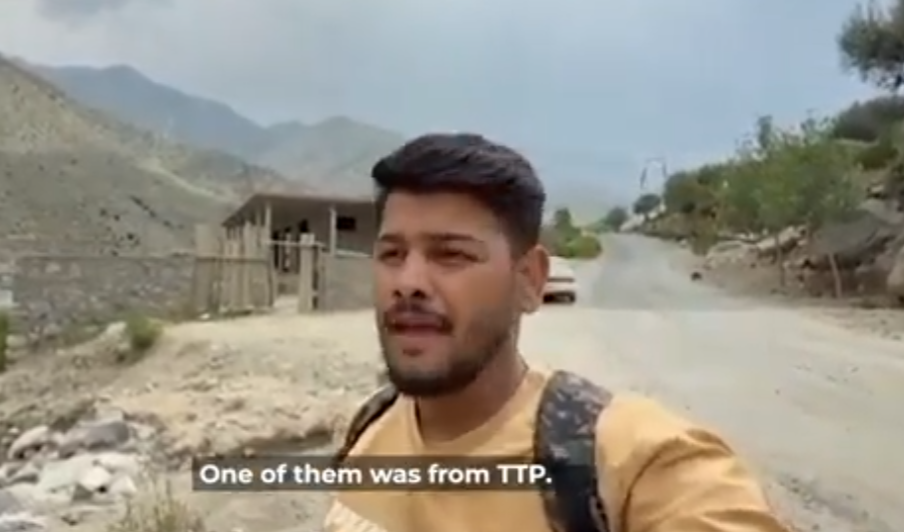
An account attributed to an Indian YouTuber’s visit to Kunar has added a fresh, granular data point to a case Islamabad has been building for years: that Tehrik-i-Taliban Pakistan operates inside Afghan territory with a degree of freedom that is difficult to reconcile with the Taliban’s claims of sovereign control.
The vlogger reported encountering individuals identifying as TTP members during his time near the border, including a person describing himself as part of the group’s intelligence wing, who took his contact number and called him later that night.
He further reported that Afghan Taliban authorities restricted his movement in the area shortly afterward. The sequence, TTP contact first, Taliban containment second, is consistent with the pattern Pakistani officials have described for years. A de facto authority that moves quickly to manage the optics of TTP’s presence once it becomes visible to outsiders, rather than to dismantle the presence itself.
This account aligns closely with material Islamabad has placed on the record through more formal channels. UN Security Council monitoring reports, statements from Pakistan’s military and foreign office, and the operational record of Operation Ghazab lil-Haq have all converged on the same geography, that is, Kunar, Nangarhar, Khost, as the belt where TTP retains command-and-control infrastructure under the Taliban’s nose. Pakistan’s shift toward unilateral cross-border strikes through 2025, and the collapse of the broader Pakistan-Taliban relationship into open confrontation by October of that year, followed directly from Islamabad’s assessment that repeated appeals to Kabul to act against these sanctuaries had gone nowhere.
Seen in that light, the Kunar episode functions as corroboration rather than coincidence. A foreign visitor with no stake in the Pakistan-Afghanistan dispute stumbling into direct contact with TTP’s intelligence apparatus, followed by a swift Taliban response aimed at controlling his access rather than the militants’ presence, mirrors precisely the dynamic Pakistan has spent the better part of five years describing to international audiences: a Taliban government that tolerates, and at times facilitates, the very network responsible for a sustained terrorism campaign against Pakistani forces and civilians.
For Islamabad, the value of episodes like this lies less in their evidentiary weight, Pakistan’s case does not depend on any single vlogger’s account, than in how consistently independent, incidental testimony continues to reproduce the same picture the state has already drawn. Five years into Taliban rule, the burden of explanation continues to sit with Kabul.

SAT Commentaries, a collection of insightful social media threads on current events and social issues, featuring diverse perspectives from various authors.