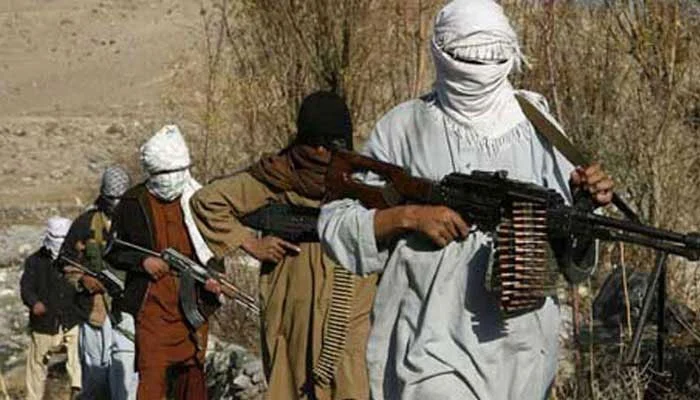
The US State Department declared the Majeed Brigade a Foreign Terrorist Organization, with the BLA as its armed wing, in 2025.
The BLA was originally designated as a Specially Designated Terrorist group by the US in 2019, after a grisly sequence of terrorist attacks against Karachi Airport and the Gwadar Port Authority Complex.
In 2025, the BLA hijacked the Jaffar Express train travelling from Quetta to Peshawar, killing 31 civilians and security personnel and holding over 300 train passengers hostage. China, the EU, Russia, the US, the UK and Pakistan have individually declared the BLA a terrorist entity, which places an obligation upon these countries to take action against the BLA under their relevant domestic laws.
According to the doyen of counter-insurgency studies, David Galula, counter-insurgency is 80 per cent politics and 20 per cent kinetics.
He recommends that an ‘active minority’ play an important role as the people-centred vanguard of the counter-insurgency, whereby people sympathetic to the state take on the insurgents alongside the state. The state has to protect that pro-state minority through financial, legal and administrative measures.
Domestically, Pakistan has begun to strengthen its anti-terrorism and witness protection laws to indict BLA terrorists and their active collaborators masquerading as political activists. The conviction of terrorists is adversely impacted in the absence of special prosecution and witness protection measures.
Examples of successful anti-terrorism prosecutions include the Diplock courts in the UK, where judges were allowed to preside over non-jury proceedings and confessions by terrorists were deemed admissible as evidence. These courts were presided over by judges whose identities were kept confidential to eliminate the possibility of intimidation by terrorists.
Some similar special legal arrangements include Italy’s witness protection mechanisms for pentiti, the erstwhile mafia members; the US Marshals Service Witness Security Program of the 1970s; French specialised terrorism courts; Germany’s high-security and extremism prosecutions; Australian secret trials; and Canadian national security courts that permit secret evidence.
Internationally, there is a corpus of terrorism-related laws comprising UN Security Council Resolutions 1267 (1999), 1333 (2000), 1373 (2001), 1390 (2002), 1988 (2011), 1989 (2011), and 2253 (2015). UNSCR 1267 adopted a framework for targeted sanctions against entities affiliated with Al Qaeda in the wake of the 9/11 attacks. The scope and range of the sanctions under UNSCR 1267, however, are restricted by definitional constraints that limit terrorist entities to Al Qaeda.
There is a need to expand the reach of the UNSCR 1267-mandated central list of targeted sanctions to include terrorist entities such as the BLA, which have already been individually designated by several important members of the UNSC.
The inclusion of terrorist organisations like the BLA in the UNSCR 1267-mandated proscribed list also requires a consensus vote, which further complicates a procedure that needs to be simplified. The specific definition limiting terrorist entities to Al Qaeda, ISIS and their affiliated organisations narrows the scope for listing terrorist organisations like the BLA that may have operational links with Al Qaeda affiliates such as the TTP and ISKP in Afghanistan.
While the BLA has been proscribed domestically in several countries, the evidentiary requirements for linking it with Al Qaeda and ISIS act as procedural bottlenecks to its listing among UN-mandated terrorist entities.
Pakistan and China submitted a joint bid to designate the BLA as a terrorist entity under UNSCR 1267 in September 2025, which was put on technical hold by the UK, France, and the US due to insufficient evidence linking it with Al Qaeda and its affiliates.
In view of the above limitations of UNSCR 1267, another pathway to frame and prosecute the BLA may be pursued under UNSCR 1373, which is broader in scope and more collaborative. Instead of relying on a central list of targeted sanctions, UNSCR 1373 mandates that all states take domestic counterterrorism measures to criminalise the support and financing of terrorism.
Unlike the central list under UNSCR 1267, no consensus constraints are imposed on countries. Individual countries can therefore operationalise their obligations under UNSCR 1373, untrammelled by consensus-building requirements, by taking action individually against entities such as the BLA.
Pakistan can effectively utilise its obligations under UNSCR 1373 through the Ministry of Interior’s existing terrorist-outfit monitoring mechanism to prepare interstate requests to allied countries for the designation of the BLA as a terrorist entity. To achieve that end, Pakistan needs to prepare strong evidentiary dossiers to support its case.
Another legal option is the Private Military Organizations (Abolition and Prohibition) Act, 1974, which clearly prohibits association with private armies or militias. This law provides an additional domestic legal pathway to criminalise entities such as the BLA and similar groups that operate as armed organisations outside state authority.
The state should aim to achieve an ideal symbiosis between its domestic and international legal obligations by strengthening domestic anti-terrorism laws and furnishing evidence before international fora to facilitate the counterterrorism obligations of international organisations.
The most puissant legal censure against the BLA lies in securing swift convictions through special courts, alongside choking off its financial streams through domestic laws implemented in accordance with international covenants and UN resolutions.
There is a need to continue pushing for the BLA’s listing under UNSCR 1267 by overcoming procedural inertia while optimally exploiting instruments such as UNSCR 1373.
Originally published in The News, this article by Dr Rashid Wali Janjua is featured in South Asia Times as an Editor’s Pick.
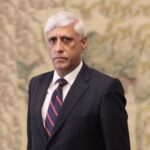
Dr Raashid Wali Janjua
The writer is a defence and security expert with a PhD from NUST. He may be reached at [email protected]