Pakistan’s Anti-Smuggling Victory Echoes in Warsaw
Pakistan cuts illegal migration to EU by 47% via 1,700+ arrests. Europe hails it as frontline partner, eyes legal labor paths amid crime-terror links.

Pakistan cuts illegal migration to EU by 47% via 1,700+ arrests. Europe hails it as frontline partner, eyes legal labor paths amid crime-terror links.
![2022-02-09T000000Z_1319661209_MT1NURPHO000HXCNME_RTRMADP_3_UKRAINE-CONFLICT-STOCK-PICTURES-scaled-e1661353077377 Ukrainian and Russian flags with soldier silhouettes representing ongoing conflict. [Image via Atlantic Council].](https://southasiatimes.org/wp-content/uploads/2026/02/2022-02-09T000000Z_1319661209_MT1NURPHO000HXCNME_RTRMADP_3_UKRAINE-CONFLICT-STOCK-PICTURES-scaled-e1661353077377.jpg)
Four years after Russia’s invasion of Ukraine, the war has evolved into a costly stalemate with far-reaching geopolitical and economic consequences.

PM Shehbaz meets Qatar’s Emir in Doha, reaffirming strong ties and advancing strategic economic cooperation.
![The Facade of Indian Strategic Autonomy Prime Minister Narendra Modi with External Affairs Minister S. Jaishankar at an official event. [Photo Courtesy: Praveen Jain via The Print].](https://southasiatimes.org/wp-content/uploads/2026/02/20-scaled-e1755601883425-1024x576-1.webp)
India’s strategic autonomy faces pressure as US trade leverage, energy dependence, and defence ties test New Delhi’s balancing doctrine.

Washington’s new security lens is transactional. Partnerships must pay. For India, sentiment won’t suffice, deliverables will.

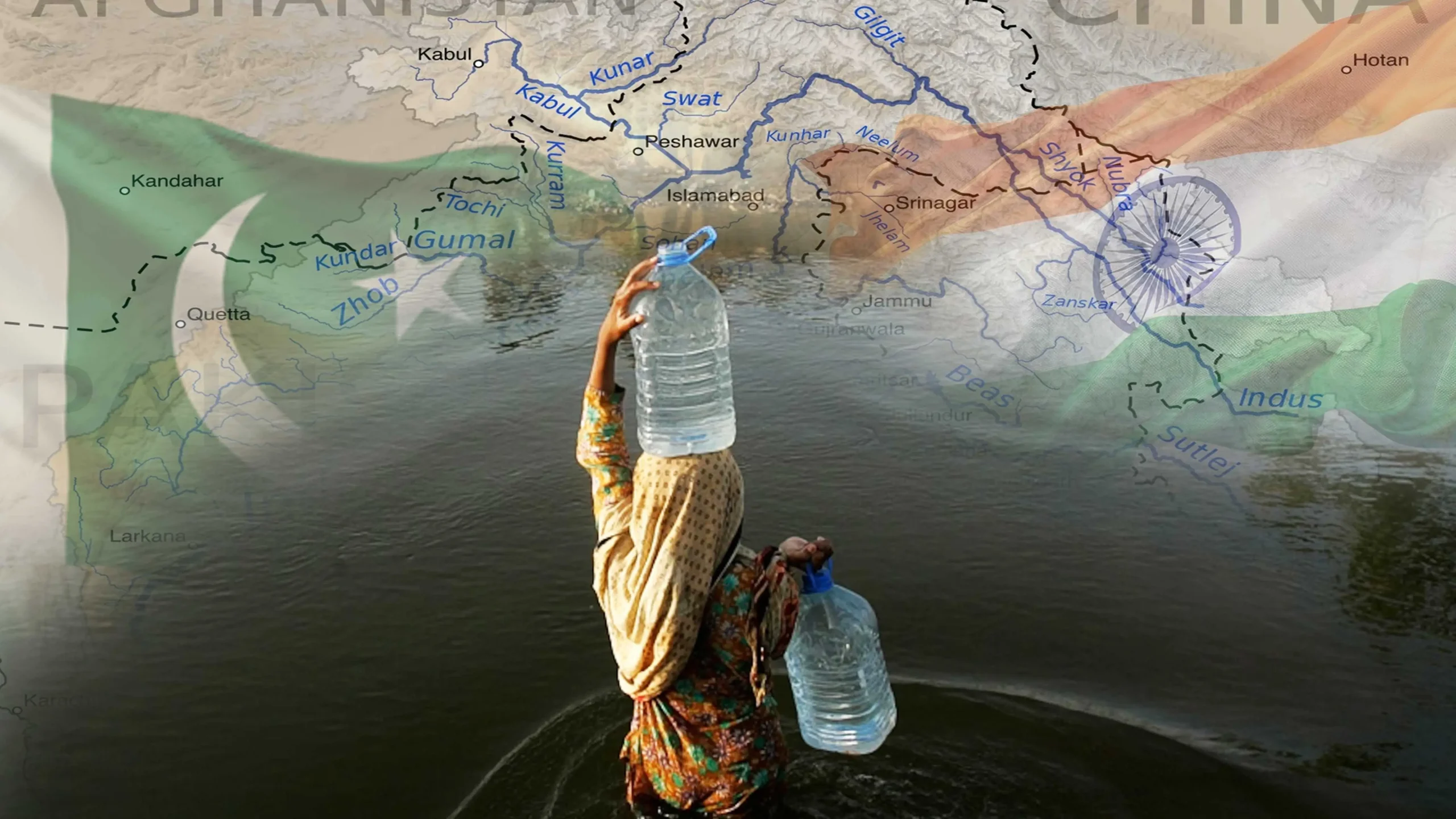
Pakistan convened an Arria-formula UN Security Council meeting, emphasizing that the Indus Waters Treaty remains fully binding. International law and treaty sanctity were upheld against India’s unilateral

As Gaza endures a prolonged humanitarian catastrophe, Pakistan’s decision to engage with the Board of Peace reflects a calculated shift from symbolic diplomacy to realist-humanitarianism. Rather than retreating into moral posturing, Islamabad has chosen presence as leverage, seeking to shape aid delivery, protect Palestinian priorities, and influence outcomes from within imperfect multilateral structures.

Pakistan’s entry into Gaza’s Board of Peace marks a historic departure from its traditional Palestinian policy. As Islamabad navigates an extra-legal, US-led governance framework that excludes Hamas and sidelines sovereignty, the question looms large: is participation a tool of influence, or an act of moral complicity?

Andy Halus’s interview signals a strategic shift in US–Pakistan relations from security-centric ties to a multidimensional partnership centered on minerals, education, and soft power. Projects like Reko Diq now stand as the key test of this new architecture.

Natalie Baker signals a historic shift in the US-Pakistan ties, focusing on Reko Diq, agriculture, Fulbright programs, and a Green Alliance to strengthen trade, technology, and climate resilience.