For the students of strategic affairs especially those who started believing in the diminishing role of geography in military strategy due to rapid technological advancement, Strait of Hormuz episode has offered some rethinking. The Strait has been effectively controlled by Iran ever since the war was started by the US and Israel and despite all measures that the US could take, it has not been able to wrest its control.
The war which was started with stipulated aims and objectives, none of which included anything about Strait of Hormuz, has now been narrowed down to opening of Strait of Hormuz which seems to be the US’ biggest worry in international affairs at the moment. How Iran has been able to bring US to this point merits some study and understanding.
There are at least three strategic lessons that can be discerned from this whole saga. The Strait of Hormuz, world’s one of the busiest and important trade routes is subjected to positive control by Iran for the last five and a half months. Iran has endured harsh punishment for this yet it has also inflicted heavy damage to the world on this account.
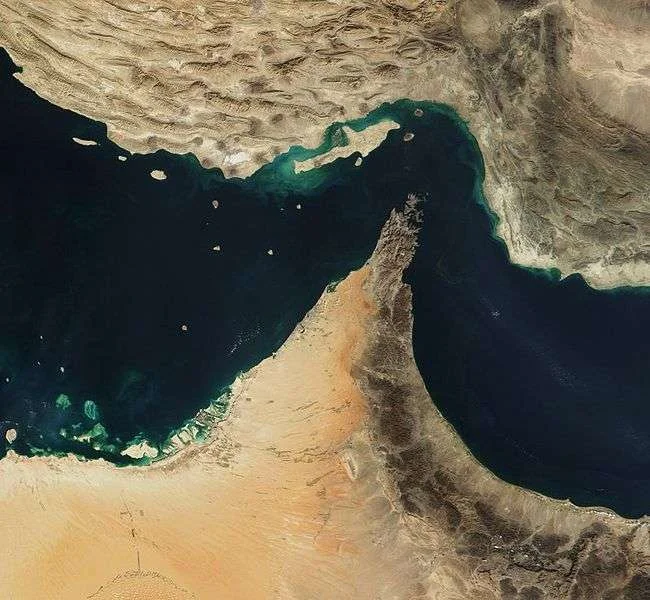
At Strait of Hormuz, an interplay between geography and military strategy was vivid and geography pinned down military strategy in an obvious manner. Despite harshest aerial campaigns that the US could carry out, Iran still retains the control of Strait, making effective use of geography, revealing a lesson that if geographical advantage is capitalized in right context, it will deliver. Iran forms complete northern part of Gulf of Oman, Strait of Hormuz and Persian Gulf.
It has established several military installations all along especially on islands which act as eyes and ears and afford considerable reaction time to Iranian forces. The geographical proximity in fact gives Iran leverage to use even unconventional means such as fishing boats, commercial passenger boats etc for the purpose of surveillance and attacks on unwanted ships.
The deterrence that Iran exhibits in these areas is to an extent that even if any other force announces that the Strait is open, the ships may not like to ply through it for the sake of ensuring safety. It can be therefore considered safe only with Iran’s consent.
Strait of Hormuz, merely a geographical area, has also frustrated a Super Power in fulfilling its ambitions of overwhelming a regional power under sanctions for the last 47 years. Despite all claims, the US has not been able to decimate Iran’s capacity to retaliate and keep standing against its wrath. More importantly, it also has not been able to change regime.
On the contrary the US through its acts has unified the nation and the gulf between the leadership and the public seems eroded at least for the time being. It has solidified control of regime giving space to the new generation seemingly with more hardline approach.
Interestingly, the US, knowingly or unknowingly has resorted to endorsement of the ideology as it is right now in conversation with the same regime’s representatives. The US came here with the pride of a Super Power yet it has not been treated as such. Opening of Strait of Hormuz has therefore become its ultimate objective to somehow secure face saving.
The third lesson that Strait of Hormuz offers is the new precedent it has set for the chokepoints in the world. Before 28 February, 2026 it was seldom realized that a country could control, impede or block a chokepoint. There have been measures against non-state actors but a state was not expected to undertake such an adventure. Iran has awakened world and now new security measures to keep chokepoints open will be undertaken with focused attention to limit the capability of neighboring countries to block them on their will.
For Iran, it has become mandatory to control Strait of Hormuz since if it doesn’t, the world would like to take certain measures which may not go in favour of Iran. The first sign of security measures that will be coming up for the other chokepoints is in the form of Saudi led Multinational Maritime Defence Alliance for Bab al Mandab, Red Sea and Gulf of Aden.
As per information, fourteen nations have formally announced to be part of this alliance and those also include the states which lie far away from this geographical area but their economies depend on it. The alliance is evolving but it has sent a strong message to Houthis and Iran that if Bab al Mandab is affected these countries will not approve any such contingency and will react.
Out of the navies that have so far formed part of it, Royal Saudi Naval Forces, Egyptian Naval Forces, Turkish Naval Forces and Pakistan Navy are the ones which can play a formidable part in this alliance. Of these four, Pakistan Navy is the one which has requisite expertise and experience for operating in this area and is expected to take lead role in planning and execution of operations.
Is this an interim measure or will it be a permanent feature with some broader scope, only time will tell. But such measures are also expected in other parts of the globe.
Strait of Hormuz has cast political, economic and military imprints all around the globe. It has brought changes not only to the theory of warfare but is also changing ground reality.
If geography is correctly studied and utilized, it serves dividends that military might alone cannot achieve. It is surprisingly naïve on part of Americas to have undermined possibility of Iran’s effective control over Strait of Hormuz. Geography therefore despite any measure of technological advancement remains as an inseparable part of military strategy.

Rear Admiral (redt) Faisal Shah
Rear Admiral Syed Faisal Ali Shah, Hilal-e-Imtiaz (Military), is a retired Pakistan Navy officer with more than 35 years of distinguished service in command, staff, instructional, and operational appointments. The first Marine officer to attain the rank of two-star admiral, he has held key leadership positions, including Director General Joint Cantonment Gwadar at JSHQ, Director General C4I at Naval Headquarters, Commander Creeks, Commander West, and Naval and Air Attaché to Iran. An expert in maritime security, strategic affairs, the Middle East, blue economy, and coastal development, he serves as an Honorary Research Fellow at the National Institute of Maritime Affairs and teaches as visiting faculty at Quaid-i-Azam University and Air University. He regularly writes and speaks on maritime and regional security issues.