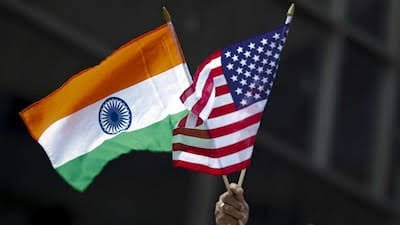
The Maldives’ foreign policy is no longer simply about choosing between India and China. Its national security is increasingly tied to how effectively it manages competition among major powers in the Indian Ocean. As strategic rivalry intensifies across the region, Malé is seeking to preserve its independence by maintaining relationships with competing powers rather than relying excessively on any single partner. This balancing approach can provide economic assistance, maritime cooperation, and diplomatic support while protecting the country’s strategic autonomy. Its implications, however, extend beyond the Maldives itself. Located along important Indian Ocean sea lanes, the country holds strategic significance for India, China, and other regional actors.
Geography gives the Maldives an importance that far exceeds its size. The country occupies a strategic position in the Indian Ocean between the Middle East, Africa, and Asia, while its economy and security are closely tied to the sea. Maritime stability is therefore inseparable from national security. Any intensification of competition among major powers in the surrounding waters can affect Maldivian trade, tourism, energy supplies, and strategic autonomy. For a country in such a position, aligning too closely with a single external power carries significant risks.
India remains a security partner that the Maldives cannot ignore. As its closest major neighbour, India has supported Malé through maritime security cooperation, disaster relief, humanitarian assistance, and capacity building for years. The two countries have continued to engage on defence cooperation and Indian Ocean security. Stable relations with New Delhi therefore remain important to Maldivian security.
At the same time, excessive dependence on India can create domestic political concerns over sovereignty and external influence. These tensions became particularly visible during debates over the “India First” policy and after President Mohamed Muizzu sought to alter the country’s foreign-policy direction. Foreign policy and domestic politics have consequently become closely intertwined.
China offers a different strategic and economic avenue. Beijing has expanded its engagement with the Maldives through development projects, trade, and diplomatic ties. In May 2026, the Maldivian government reaffirmed the One China principle and expressed an interest in deepening its partnership with Beijing. Closer relations with China allow Malé to diversify its external partnerships and reduce excessive dependence on any single regional power. For a small state, such diversification can provide greater room for manoeuvre.
However, deeper Chinese involvement also generates concerns in New Delhi. India views developments in the Indian Ocean through the lens of its own maritime security, while China’s expanding presence has increased strategic competition in the region. The Maldives therefore finds itself at the intersection of competing interests, making careful management of these relationships essential.
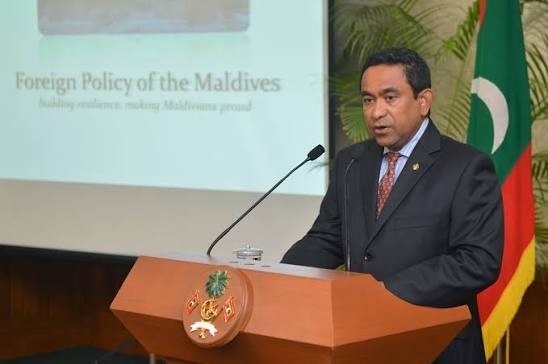
The Maldives’ balancing strategy should therefore be understood as a national security calculation rather than a simple diplomatic choice between India and China. The objective is not to choose permanent friendship with one power over competition with another, but to ensure that neither relationship becomes so dominant that Malé loses the ability to make independent decisions. The principles of an “independent” and “Maldives First” foreign policy, as described by Maldivian officials, are centred on national interests, sovereignty, constructive engagement, maritime security, and regional stability.
The Maldives’ strategic choices also matter to its external partners. India has a direct interest in maintaining security in its maritime neighbourhood, while China benefits from stronger diplomatic and economic relations across the Indian Ocean. Other external partners likewise have an interest in secure sea routes, resilient maritime systems, and an Indian Ocean that is not dominated by a single strategic actor. Consequently, Malé’s foreign-policy choices can influence calculations well beyond its own territory.
The challenge is that balancing can become over-balancing. If Malé turns strategic autonomy into excessive dependence on competing external powers, it may gain short-term economic or political benefits while creating long-term vulnerabilities. The Maldives therefore needs a foreign policy based not on choosing sides, but on choosing interests. Its most sustainable strategy is to diversify partnerships while maintaining transparency, protecting sovereignty, and ensuring that economic and security cooperation strengthens rather than compromises national resilience.
Ultimately, the Maldives’ balancing act reflects a broader reality of contemporary international politics: small states can possess significant strategic value. For Malé, balancing relations with India, China, and other partners is an attempt to transform geographical vulnerability into diplomatic leverage. Its success will depend on whether the Maldives can remain sufficiently connected to major powers without becoming strategically dependent on any one of them. In an increasingly contested Indian Ocean, that distinction may determine not only the Maldives’ foreign-policy autonomy but also the wider security calculations of its partners.

Umama Saifeen
Umama is undergraduate scholar of Strategic Studies at National Defense University