For much of the modern era, international politics was understood through alliances: enduring security commitments, identifiable blocs and relatively clear lines of division. That picture was never complete. Even during the Cold War, states sought room for maneuver. Yet it remains less adequate to a world in which the same country can cooperate with one power on security, another on trade and several others on technology or regional diplomacy.
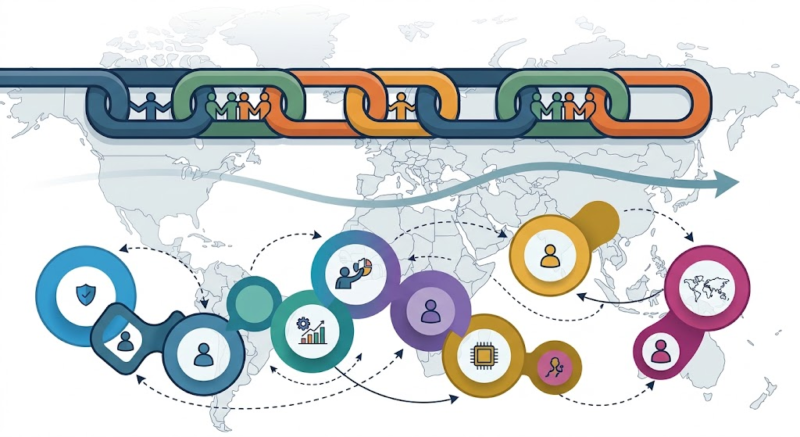
The age of alignment is taking shape within this more complicated order. Alliances remain essential, particularly when states fear military attack. But alliance membership no longer provides a complete guide to a country’s partnerships or choices. The central change is the widening space for selective cooperation across different domains.
An alliance typically involves an enduring security commitment, often formalized by treaty. Alignment is a convergence of interests on particular questions, with or without a mutual-defence obligation. It may be temporary, but it can also become durable and institutionalized. Flexibility does not necessarily mean unreliability, but neither does a signed agreement ensure the capabilities needed to honor it.
Developments through October 2026 make that distinction more important. At The Hague in June 2025, NATO allies reaffirmed collective defence and pledged to reach annual defence- and security-related investment of 5 per cent of GDP by 2035, including at least 3.5 per cent for core defence requirements. At Ankara in July 2026, they again reaffirmed Article 5 and emphasized greater European and Canadian responsibility within the alliance, but these are commitments and policy directions, not proof that every spending or capability target has been achieved.
The changes are in the relationship between security commitments and the rest of foreign policy. Power is distributed unevenly across military capability, industrial production, finance and technology, and a state that depends on one partner in a particular domain may find its opportunities elsewhere to be in another. This creates incentives to diversify, but the constraints of geography, economic dependence and threats of coercion limit how much.
Geo-economics reinforces this logic while also complicating it. Trade and investment can sustain cooperation across political differences, but supply chains, energy routes and the availability of critical technologies can become sources of vulnerability. Governments therefore have reasons both to preserve valuable connections and to reduce dependence on one supplier or market. Economic interdependence does not ensure political moderation.
The Indo-Pacific offers a clear example of cooperation arranged around particular tasks. At the Quad foreign ministers’ meeting in New Delhi on 26 May 2026, India highlighted expanding work with Australia, Japan and the United States on maritime awareness, logistics, undersea cables and disaster response. The discussions also covered energy, fertilizers, critical minerals and supply-chain resilience, but the Quad’s agenda extends beyond military deterrence; it does not make the four countries a mutual-defence alliance.
India’s diplomacy also illustrates why one forum cannot define a country’s entire strategic position. Earlier that month, New Delhi was hosting BRICS foreign ministers under its chairship, and its stated priorities included development, diversified markets, reliable supply chains and reform of international cooperation. Its participation in both BRICS and the Quad does not establish that their members share the same interests or that India can avoid the tensions between them.
The Gulf is a related pattern, but its security pressures are different. The March 2023 Beijing agreement between Saudi Arabia and Iran showed how China could facilitate a specific diplomatic accommodation. The parties agreed to restore diplomatic relations and reopen their missions, but that does not mean a Chinese security guarantee, nor does it mean that regional rivalry has been resolved. Diplomatic engagement and defence commitments serve different purposes.
More recent developments make it unmistakable. Pakistan’s Foreign Ministry announced that Saudi Arabia, Pakistan and Türkiye had signed the Makkah Joint Defence Agreement on 7 August 2026, providing that an armed attack on any one would be regarded as an attack on all three. Their joint statement of 5 October said the partners had decided to implement collective-defence commitments through agreed forces and capabilities, subject to approved arrangements and national legislation. The announcement signals movement towards operational cooperation; it does not verify completed deployments or effectiveness in a crisis.
This example qualifies the idea of an age of alignment. States seeking greater freedom of action may also accept new binding security commitments if they judge the threat to be serious enough. A flexible diplomatic outlook can coexist with obligations that narrow future choices. Alignment offers agency, but it cannot remove the consequences of an alliance.
Europe needs precision as well. Greater European responsibility for defence need not imply a turn away from the transatlantic framework. In its conclusions of 18 June 2026, the European Council called for faster capability development and defence-industrial reinforcement, explicitly in coherence with NATO. Strategic autonomy, in this context, concerns the capacity to act and sustain commitments, and should not be mistaken for evidence that Europe has become a single strategic actor or stopped needing its allies.
For middle powers, the opportunity is real. Different partnerships can widen access to investment, knowledge and diplomatic channels, and cooperation on a practical problem need not wait for agreement on every political question, but the benefits depend on bargaining power and domestic capacity. A country with weak institutions or an externally dependent economy may accumulate commitments and gain no meaningful freedom of action.
For Pakistan, the lesson is particularly important. New defence obligations require a clear understanding of their scope, legal procedures and demands on national resources. Wider diplomacy should be supported by credible economic policy and the capacity to deliver what Pakistan undertakes. Strategic flexibility becomes useful when partners understand the country’s commitments, and when those commitments remain consistent with its resources and long-term interests.
Major powers also have to adapt. Partners will often seek relationships outside their camp, and attempts to demand exclusivity can make things difficult. But smaller states cannot assume that every choice will remain negotiable. The costs of maintaining incompatible relationships may rise sharply in the face of a military crisis or sensitive technology. Effective diplomacy requires clarity about these limits before a crisis exposes them.
The global system is reconfiguring unevenly. Formal alliances can strengthen in response to danger, and selective alignments can expand around them. The ability to work across several relationships will be increasingly important, but so will the credibility of commitments. The decisive skill will be to align selectively and strategically, with a clear understanding of what each partnership offers.

Qazi Zaheer Ahmed
The author is a retired BS-21 civil servant of the Government of Pakistan with over three decades of public service. He writes on geopolitics, economic strategy, and regional security, and is engaged in international trade and advisory work.