Originally published by The News. Featured by South Asia Times (SAT) for informational purposes, with attribution to the original author and publisher.
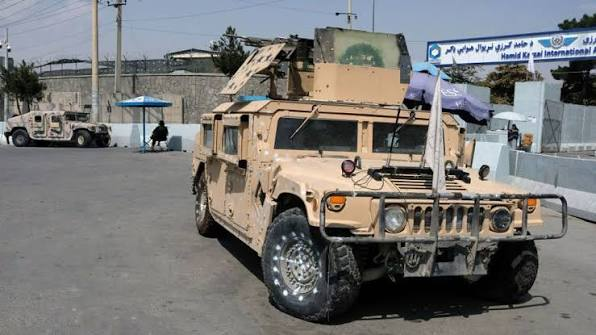
A policeman guarding a remote checkpoint in Pakistan should not have to pay for the collapse of an army in Afghanistan. Yet rifles and night vision equipment supplied to defend the former Afghan republic have become part of the threat he faces. Foreign soldiers went home. Weapons supplied during their mission continue to circulate, making an already dangerous duty more perilous.
The United States and its allies should help Pakistan trace these weapons, disrupt their supply and protect exposed personnel. Afghanistan’s Taliban authorities must secure inherited stockpiles and stop transfers to terrorist groups. Identifying a recovered rifle means little unless that discovery produces action against those who supplied it. Condemnations after another funeral cannot substitute for preventing the next attack.
The scale is substantial. America’s Special Inspector General for Afghanistan Reconstruction, or SIGAR, reported that approximately $7.1 billion in American funded military equipment remained in Afghanistan when the Taliban took control in August 2021. These assets had previously been transferred to Afghan forces. Their collapse left an enormous arsenal beyond the oversight intended to govern its use.
Evidence of diversion goes beyond photographs. United Nations monitors reported in January 2024 that Taliban commanders had supplied Tehreek-e-Taliban Pakistan, or TTP, with weapons including M24 sniper rifles, M4 carbines with advanced sights and M16A4 rifles with thermal scopes. They also recorded that night vision capability was increasing the lethality of attacks on Pakistani security forces. These reported findings demand investigation and consequences.
For a policeman defending an isolated post, the difference is practical. An attacker with night vision can observe movement the defender cannot see. Thermal equipment helps locate targets in darkness. Better sights improve accuracy. Equipment intended to strengthen government forces can therefore help terrorists choose their moment, engage from a distance and withdraw before reinforcements arrive.
Pakistan’s losses explain the urgency. The Global Terrorism Index 2026 ranked Pakistan as the country most affected by terrorism, recording 1,139 deaths, 1,595 injuries and 1,045 incidents during 2025. The TTP accounted for 595 attacks and 637 deaths. These figures do not identify how many victims were killed with diverted weapons. They reveal the violence within which those weapons circulate.
The Balochistan Liberation Army, or BLA, has inflicted another devastating share of that suffering. On March 11, 2025, its terrorists attacked the Jaffar Express and took passengers hostage. The UN Security Council’s condemnation recorded at least 25 Pakistani deaths and noted the BLA Majeed Brigade’s claim of responsibility. The Global Terrorism Index recorded 442 hostages in the incident.
Months earlier, a suicide bombing claimed by the BLA at Quetta railway station killed at least 26 people, including soldiers and railway employees, and injured around 62. Each attack requires its own forensic investigation. The wider imperative remains clear: terrorist organisations must be denied the equipment, financing and operational freedom that allow them to threaten passengers, communities and security personnel alike.
By September 2025, the recovery tally supplied for this article stood at 293 American made weapons and sights: 208 M16 rifles, 53 M4 carbines, seven machine guns, four sniper rifles and 21 sights. That is 272 firearms and 21 sights. Further recoveries have since been reported. In February 2026, Reuters described more than a dozen additional M16 and M4 rifles seized after fighting in Balochistan. A consolidated national total through October 2026 could not be independently verified.
Independent tracing has also established a connection to Afghan military inventories. The Washington Post reported in April 2025 that US authorities confirmed 63 recovered weapons had previously been supplied to Afghan forces. That finding provides a documented starting point for investigating diversion. The next questions concern who moved the weapons, who paid for them and who allowed the transactions to proceed.
What should happen when a weapon is traced? Supplier countries should share transfer records and help establish its journey from an Afghan inventory to a terrorist’s hands. Identifying the original supplier does not establish who diverted it. Investigators must connect weapons to brokers, commanders, transport routes and financial transactions. Evidence of deliberate supply should support prosecutions or targeted sanctions through appropriate mechanisms.
Supplier countries should also help Pakistan protect personnel confronting this equipment. Surveillance, protective gear, secure communications and training should reach exposed police and border units. Maintenance must accompany delivery. Sending devices that cannot be sustained would repeat an expensive mistake.
Kabul must account for stockpiles under its control, investigate identified transfers and act against implicated commanders. Claims that weapons were stolen or privately traded should prompt documented investigations. Authorities exercising control over depots cannot dismiss diversion without demonstrating what they have done to prevent its recurrence.
Pakistan and its partners should seek a time-bound process with confidential evidence sharing, specific investigative requests and regular progress reports. Credible verification should establish whether depots are secured and identified networks disrupted. Persistent obstruction should bring targeted diplomatic and financial consequences for responsible individuals. Humanitarian assistance to Afghan civilians must remain protected.
Pakistan has obligations too. Reliable forensic records, stronger investigations and credible prosecutions make its international demands harder to evade. Responsive government strengthens public confidence where terrorists seek to replace it with fear.
Nobody can recover every rifle scattered through Afghanistan’s wars. Governments can trace weapons, obstruct suppliers and protect vulnerable communities. The withdrawal ended a military campaign. It did not erase responsibility for its consequences. Pakistan’s families should not be left to carry them alone.

Amir Jahangir
The writer is a strategic communications expert, media executive, and policy adviser