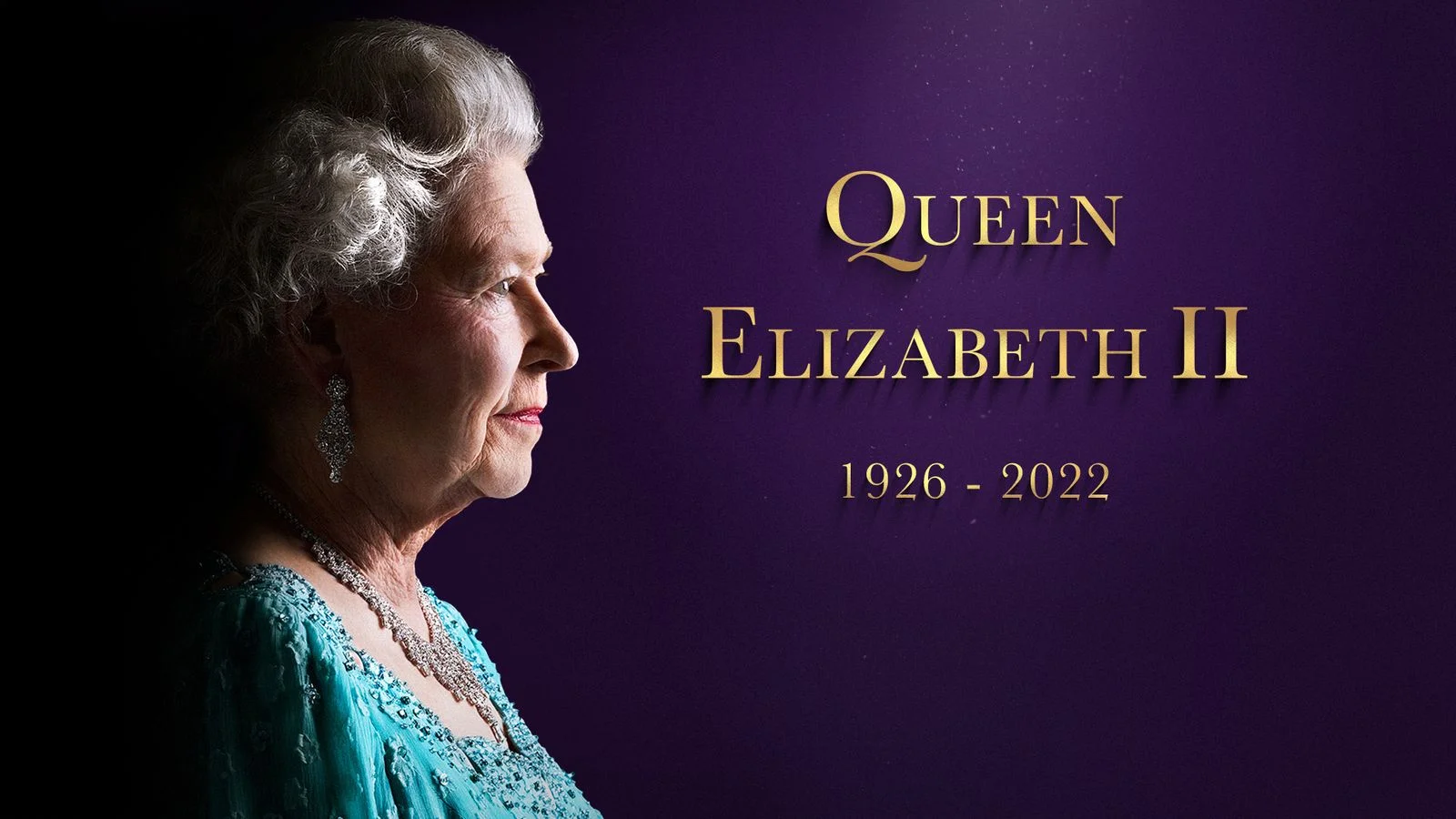
Queen Elizabeth II, Britain’s longest-reigning monarch was laid to rest on Monday amid conventional pomp and pageantry as thousands in the country lined the procession route and millions more across the globe tuned in to watch the funeral service. Even as the Archbishop of Canterbury in his sermon proclaimed that “few leaders receive the outpouring of love we have seen” for the late Queen, a more sweeping generalization could not have been made. The announcement of her death, instead, elicited varied reactions from nations formerly colonized by the British Empire.
From anguish and resentment on behalf of the colonial subjects and demands for formal reparations to a growing sense of republicanism in the Commonwealth realms, a pandora box of renewed debates has been set open. For South Asians, particularly inhabitants of the erstwhile Indian subcontinent, the ongoing debates mark the continuum of their reckoning.
British Imperialism in the Subcontinent
As early as the 1500s, the Europeans had begun trading for spices and textiles with the Indian subcontinent, an area that presently encompasses most of the modern nation-states of Afghanistan, Bangladesh, Bhutan, India, the Maldives, Nepal, Pakistan, and Sri Lanka. However, the story truly began on December 31, 1600, with the charter that was awarded to the East India Company, granting it a monopoly of trade from the Cape of Good Hope to Magellan. It was this boundless pursuit of wealth that created the foundations the British would utilize after they formally assumed control of the region in the mid-nineteenth century. While scholarly attempts have been made to vindicate the British of their responsibility in the economic exploitation of the region by propounding an alternate narrative of the costs of sustaining the Empire outweighing the benefits, the deindustrialization of and extinction of various craft industries in the region under British rule is well-documented.
Perhaps, the extent of misappropriation is adequately illustrated by taking into account the Indian subcontinent’s share of the world economy, which declined from 24.4% in 1700 to 4.2% in 1950. Not to mention its share of global industrial output which plunged from 25% in 1750 to 2% in 1900. With masses today in the same region on the brink of extreme poverty, and its legendary Koh-i-Noor diamond now adorning the British Queen Consort Crown, the grotesque symbolism of colonial legacy is complete.
Attempts at Historical Revisionism
Nonetheless, arguments have been made in favor of the ‘gifts’ of colonialism, of which democratic ideals, freedom of the press, the rule of law, and modern education top the list. However, the Censorship of the Press Act in 1799, the Vernacular Press Act of 1878, and the revised Press Act of 1910 corroborate the farce of press freedoms supposedly bestowed by colonial masters.
The subject of British justice is indeed more controversial, remarkably demonstrated by the verdict of a committee of enquiry having found Colonel Dyer, for his role in the Jallianwala Bagh Massacre, guilty of “grave error” and only relieved of his command to retire with a handsome pension. The travesty was more firmly set in stone by Rudyard Kipling hailing Dyer as ‘the man who saved India‘.
Arguably, the most enduring impact of British colonialism in South Asia has been its contribution to identity politics and nationalistic, often hostile, attitudes that persist to this day. Herein, history becomes more intriguing owing to the revisionism it is frequently subjected to by successor states, each vying for a more glorious recourse than the other. For one, there was at no point during this time a unified India to qualify as a contemporary nation-state, but rather a vast and divided landmass with diverse populations, ethnicities, and religions, which were either directly ruled by the British or through indigenous rulers in the case of the Princely States. It would be ludicrous, therefore, to proceed with a fictitious narrative of absolute harmony before the notorious ‘Divide and Rule’ policy seized solid ground. Instead, one has to examine the extent to which such divisions, religious or otherwise, were bolstered by discriminatory policies. Notably, episodes such as the Hindi-Urdu controversy in the nineteenth century, the Partition of Bengal and its subsequent annulment, the Two-Nation theory, and the rise of Hindutva merely uncovered pre-existing antagonisms later navigated by rigorous nationalism to resist the tyranny of the other to the point of perceived socio-political emancipation.
Ultimately, the rushed departure of the British spelling the dawn of independence for Hindu-majority India and Muslim-majority Pakistan was marred by unprecedented scales of communal violence, mass migration, and territorial disputes, the most prominent being the lingering question of the accession of the Princely State of Jammu and Kashmir.
A Time of Somber Reflections
In the seventy-five years that have elapsed since their deliverance from British rule, the region, and its dwellers have found the imprints of former colonizers in many of their existing grievances which have shaped the modern character and structural framework of their respective states. Consequently, it is unsurprising for the death of the ceremonial figurehead of the vestigial Empire to evoke strong emotions. While many will surely mourn the loss of their revered queen, others bearing proverbial scars conferred by personal experiences will find it difficult to dissociate the persona from the institution it embodied.

Your go-to editorial hub for policy perspectives and informed analysis on pressing regional and global issues.

![Indian Christian community faces rising violence while Modi congratulates new Jacobite Catholicos in Lebanon. Rights groups sound alarm. [Image via Reuters]](https://southasiatimes.org/wp-content/uploads/2025/03/deccanherald_2025-02-12_8gxoemcr_file7zbn3w0b8kj1egk2eks4.webp)