![Indian Christian community faces rising violence while Modi congratulates new Jacobite Catholicos in Lebanon. Rights groups sound alarm. [Image via Reuters]](https://southasiatimes.org/wp-content/uploads/2025/03/deccanherald_2025-02-12_8gxoemcr_file7zbn3w0b8kj1egk2eks4.webp)
India is actively engaging with the parties to the conflict in West Asia. Its leaders and diplomats have been talking to officials from the United States, Israel, and Iran regarding the ongoing military conflict in the region. India is regarded as a strategic ally of Washington and a military ally of Israel.
Prime Minister Narendra Modi’s high-profile meeting with Iranian President Masoud Pezeshkian in New Delhi on the sidelines of the BRICS summit is largely seen as an Indian attempt to show its relevance to the ongoing political and military situation in the Persian Gulf region. Many in New Delhi view Prime Minister Modi’s decision to openly side with Israel during the Gaza genocide as a diplomatic mistake.
Later, Modi opted to remain silent about Israeli aggression against Iran, even though India has very close relations with the latter. The Indian External Affairs Ministry did try to stage a comeback after these initial missteps.
It stepped up its diplomatic contacts with the governments of Gulf countries and Iran on the one hand and the US and Israel on the other. But much to the chagrin of the Indian government, New Delhi failed to secure a prominent role for itself in the ongoing diplomacy related to the US-Iran military conflict, which is keeping much of the world on its toes.
India has a large economy; it claims a higher international profile for itself. Its economic relations with the Gulf states are substantial, with the Indian economy consuming oil that is imported from the Persian Gulf Arab states. Israel’s military industrial complex is a major source of military modernization for India.
The Iranian coast, another belligerent in the conflict, hosts a major Indian project of making the Iranian port of Chabahar as its gateway to Afghanistan and Central Asia. Powerful lobbies in the United States want to project India as a major counterweight to China in the Indo-Pacific region.
Yet Indian diplomacy appears a complete failure in making India relevant in the ongoing flurry of diplomatic activity related to the US-Iran conflict. The frustration of the Indian foreign policy establishment is palpable. One clear reflection of this frustration was clearly visible when Indian Foreign Minister Jaishankar used obnoxious language against the Pakistani nation during a press conference in New Delhi after an Indian journalist asked him to comment on Pakistan’s successful mediation efforts in the US-Iran conflict.
Apparently, if we compare the access that Pakistani leadership enjoys in the regional capitals with the access enjoyed by the Indian government, we will not find much difference. India has one special relationship in the region; its military is overly dependent on the Israeli military industry for its modernization campaign. Similarly, Pakistan enjoys one special relation in the region, that is with Saudi Arabia.
Pakistan has geographical proximity to one belligerent, and its leaders enjoy access in power corridors of Tehran. India, on the other hand, is projected as a close ally of Washington by China-bashers in the capital city of the other belligerent United States. Gulf states are tied up with India in many major projects of trade, commerce and economy. Pakistan on the other hand is increasingly becoming a net security provider for these Gulf states.
In the realm of international politics, as far as mediation diplomacy related to the US-Iran conflict is concerned, Pakistan has one clear advantage on India. That is the backing it has received from China in its mediation efforts. China has a major stake in the Persian Gulf region insofar as it wants to see that the Strait of Hormuz remains open for shipping.
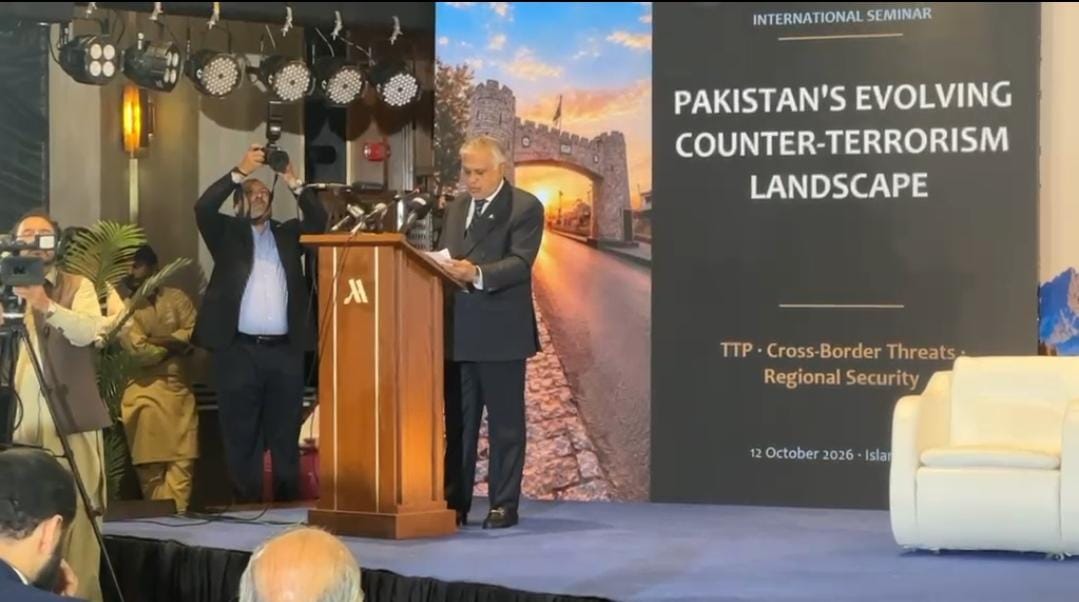
China is dependent on oil from Gulf States and discontinuity in the supply of oil from Persian Gulf will hurt its industrial production. So, when Foreign Minister Ishaq Dar went to Beijing to seek Chinese support for Pakistan’s mediation efforts, China wholeheartedly came out in support of Pakistani diplomacy.
The question that comes to mind is why Pakistani mediation diplomacy was so successful and attained such a prominent place on the world stage, while Indian diplomacy lingered behind? Why was India never able to show its relevance, on the world stage, in the ongoing diplomacy related to the conflict? What was the reason behind Indian frustration on this count?
Pakistan’s success was not simply the result of the influence its political and military leaders enjoy in regional capitals and the access its leaders have in the capitals of the United States and Iran. Other factors such as timing of its mediation efforts, credibility of its military and political leaders in the regional capitals and the ease with which Pakistan leadership has been able to communicate across an extremely difficult diplomatic divide.
The rise of Pakistan as a potent regional military power in the wake of the May 7, 2025, conflict with India played no small part in presenting the country as a net security provider to the Gulf rulers. It was immediately after this conflict that Pakistan signed defense protocols with Gulf States.
Within the first three to four weeks of the conflict, both strategic and military planners in Tehran and Washington had arrived at the conclusion that they had entered an unwinnable war. This was the time when Pakistan organized a meeting between US Vice President J.D. Vance and Iranian delegations led by the speaker of the parliament on April 10, 2026. Both sides wanted to open a channel of communication with the other side. Field Marshal Asim Munir strategically availed himself of this opportunity. In the later days, he repeatedly made himself available as a channel of communication between the two sides. This was diplomacy at its finest.
India, on the other hand, despite its economic and political influence in the region, was completely sidelined.
On October 7, 2023, Indian Prime Minister Modi expressed the solidarity of his government with Israel following the Hamas-led attacks. His response was unequivocal compared with India’s traditional policy of balancing its relations with Israel and the Palestinians. The traditional foreign policy practitioners in New Delhi have been severely criticizing Modi for his continued support for Israel while its military carried out a massacre of Palestinian people in Gaza. Modi did not step back from his support for Israel as it later attacked Iran.
As the war escalated, Modi’s continued support for Israel made New Delhi completely irrelevant to diplomacy that was initiated to mediate between Iran and the United States. Traditionalists in New Delhi kept pointing out that the Modi government underestimated the cost of its policy of continued support for Israel.
Meanwhile, Pakistani diplomacy attracted the backing of powerful regional players like Saudi Arabia, Turkey, and the Gulf States. Iran continued to welcome and appreciate Pakistani mediation efforts. In fact, Pakistani diplomacy completely sidelined the state of Israel, a close Indian ally, which was pushing for continued military strikes against Iran. The Pakistani mediation efforts continued with the involvement of powerful regional players.
India’s dependence on the Israeli defense industry for Indian military modernization compelled it to come all out in support of Israel on October 7, 2023. But the Modi government failed to evaluate the cost of its continued support for Israel while the latter attacked Iran and continued its genocidal war in Gaza. I am not saying this became the sole reason for Indian diplomacy becoming completely irrelevant in ongoing mediation efforts. In this regard, Pakistan’s timing and diplomatic initiative played a decisive role in determining the outcome. This, in turn, played a decisive part in pushing Indian diplomacy into oblivion.
Umer Farooq
Umer Farooq is an Islamabad-based Afghanistan specialist and senior journalist. A journalist since 1995, he has worked with Dawn and The Herald and covered Afghanistan and conflicts for Pakistani and international outlets. His analysis focuses on Pakistan–Afghanistan relations, the Taliban and the TTP, and regional security after the United States’ withdrawal.