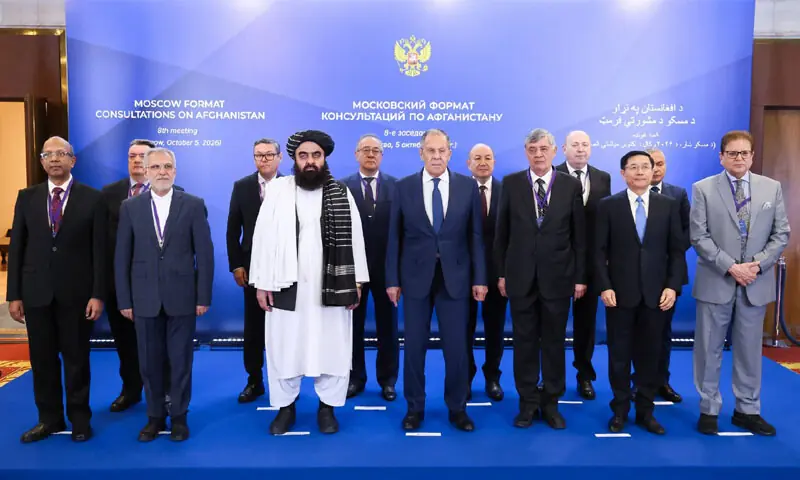
At the opening of the eighth Moscow Format consultations on Afghanistan on 5 October, Russian Foreign Minister Sergey Lavrov offered a positive assessment of the Taliban-led administration. He said it had brought the country’s territory under control and was governing it with considerable success, and he acknowledged its efforts against Daesh, other extremist groups and drug trafficking. Russia, which recognized the Taliban government in July 2025, has its own well-founded reasons for this emphasis.
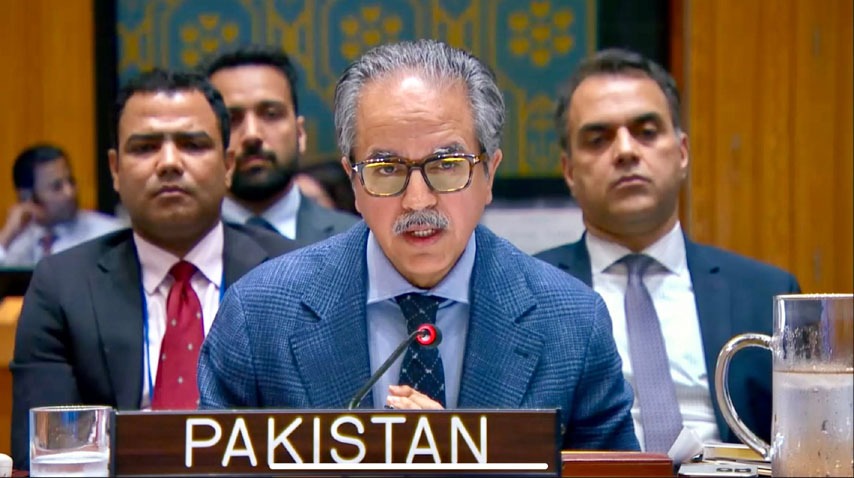
Pakistan’s assessment, presented at the same meeting by Special Representative Ambassador Mohammad Sadiq, was markedly different. He argued that terrorism remains central to Afghanistan’s problems, pointed to Tehreek-e-Taliban Pakistan (TTP) and other groups operating from Afghan soil, and cited more than 4,700 Pakistani deaths from terrorism linked to Afghanistan over the last three years.
The Afghan delegation objected to draft language that referred to Afghanistan too often in the context of terrorism, and for the first time since 2017 the meeting closed without a joint statement.
The episode reflects less a dispute between Islamabad and Moscow than a divergence in how regional states define and prioritize the terrorist threat from Afghanistan. That divergence deserves careful examination, because a shared threat assessment has underpinned regional diplomacy on Afghanistan since 2021.
Implications for Pakistan
Russia’s priorities are understandable. The March 2024 attack on Crocus City Hall near Moscow was attributed to Islamic State Khorasan Province (ISKP), and Central Asian states have long worried about their own militant groups regrouping in northern Afghanistan. Seen from Moscow and Central Asian capitals, Taliban operations against ISKP address the most immediate danger. The risk for Pakistan is that this narrower focus gradually displaces the broader regional concern about some 20 militant groups present on Afghan territory.
If that shift takes hold, Pakistan may become the principal neighbor still raising sustained concern about militant sanctuaries in Afghanistan. Iran shares several of these anxieties but is preoccupied with the war, while China expresses its concern over the East Turkestan Islamic Movement (ETIM) largely through quiet diplomacy.
A further implication concerns perception.
A positive international assessment of Taliban counter-terrorism performance can shape media and policy narratives, and Pakistan’s concerns about the TTP risk being read as a bilateral dispute rather than a regional security question. For Islamabad, the task is to restore that wider framing through evidence and argument.
The case for a comprehensive approach
Pakistan’s central argument is that terrorist threats emanating from Afghanistan cannot be addressed in isolation from one another. An approach that concentrates on ISKP in the north while giving less weight to the TTP in the east and south may reduce one set of risks while leaving another unresolved.
Analytical support for this view exists. The TTP and ISKP recruit from overlapping pools of third- and fourth-generation militants, shaped by similar networks, conflict zones and informal economies, and there have been documented cases of fighters moving between groups and of tactical cooperation. Successive reports of the United Nations (UN) sanctions Monitoring Team have also noted the TTP’s sustained presence in Afghanistan.
Media reports also point to an uneven pattern in the Taliban’s own security policy. Firm action against Salafi networks associated with ISKP, alongside the reported resettlement of TTP members and their families, can be considered an instance. If accurate, this suggests that groups are being treated according to the threat they pose to Kabul rather than to the region as a whole.
Experience from earlier conflicts shows that militants displaced from one organization often reappear in another. A durable regional framework would therefore address all groups using Afghan territory, an outcome that serves Central Asian and Russian security as much as Pakistan’s.
The way forward
Pakistan’s response should be scholarly and constructive, aiming to broaden the regional definition of the terrorist threat. The core message is that counter-terrorism in Afghanistan works best when it is comprehensive.
That case is most persuasive when grounded in lived experience. Communities in the border districts of Khyber Pakhtunkhwa and Balochistan have borne the cost of TTP violence for two decades. Their doctors, teachers, retired officers, tribal elders, artists and athletes can speak to that experience with an authority that official statements lack. Supporting independent reporting from these areas, and access for foreign journalists and researchers, would let those accounts reach regional and international audiences in their own words.
Testimony should be matched by evidence. Pakistan can share documented, verifiable data with regional capitals and the UN Monitoring Team on cross-border attacks, recruitment links between the TTP and ISKP, and the location of militant sanctuaries. Engaging independent researchers and think tanks, in Pakistan and abroad, would expose these findings to scrutiny and strengthen their credibility.
Diplomatically, the Moscow Format remains a valuable platform, and Pakistan’s interest lies in strengthening it. Islamabad can work with Russia, China, Iran and each Central Asian state toward a common language on all terrorist groups present in Afghanistan, building on the wording participants accepted in earlier joint statements.
It must be noted that every regional state has legitimate security concerns in Afghanistan, and Russia’s focus on ISKP reflects real threats. Pakistan’s experience adds a necessary dimension to that picture. Bringing it into the regional conversation through evidence, community testimony, and patient diplomacy offers the best chance of a consensus that leaves no militant group a safe haven on Afghan soil.
Related Policy Research
Read SAT Brief 02: India’s Afghanistan Gambit — The RAW–GDI Alliance and the TTP–BLA Nexus by Umer Farooq.

Your go-to editorial hub for policy perspectives and informed analysis on pressing regional and global issues.