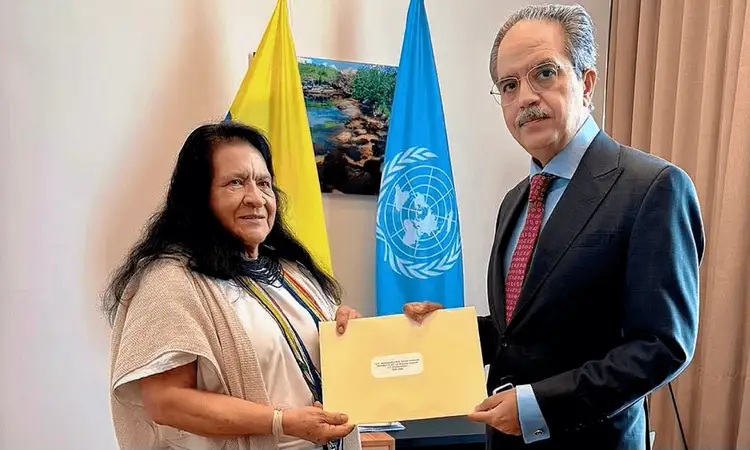
On 18 June 2026, Pakistan’s Ambassador to the United Nations, Asim Iftikhar Ahmad, walked into the Security Council and handed a letter to Ambassador Leonor Zalabata Torres of Colombia, the Council’s president for the month. The letter, signed by the Deputy Prime Minister and Foreign Minister Senator Mohammad Ishaq Dar, did not use the language of diplomatic suggestion. It used the language of warning. Two illegal Indian infrastructure projects on the Chenab River system, it said, were aimed at water diversion and weaponizing a river that, under a sixty-six-year-old treaty, belongs to Pakistan.
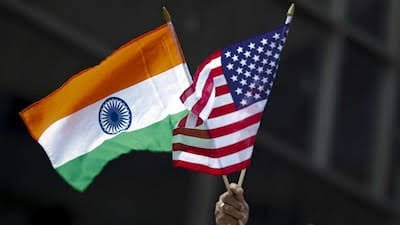
The Indus Waters Treaty of 1960, brokered by the World Bank after nearly a decade of negotiations, did not divide water on a per-capita basis. It divided river systems entirely. The three eastern rivers, the Ravi, Beas, and Sutlej, went to India. The three western rivers, the Indus, Jhelum, and Chenab, went to Pakistan. It was, for decades, one of the most durable frameworks of bilateral cooperation in the world. It survived wars. It survived crises. What may not survive is the systematic infrastructure campaign India has been prosecuting on the western rivers since 2025.
The sequence of events that brought this dispute to the Security Council began in April 2025, when India placed the Treaty “in abeyance” following the Pahalgam terrorist attack. The legal basis for this move was, and remains, nonexistent. The Permanent Court of Arbitration ruled in June 2025 that India cannot unilaterally suspend the Treaty, that its declaration of abeyance has no legal effect, and that the Treaty remains fully intact and binding. India’s response to that ruling was to skip subsequent proceedings at The Hague and accelerate its infrastructure activity on the rivers it no longer considered itself bound by.
What has followed is not ambiguous. India approved the Dulhasti Stage-II Hydropower Project on the Chenab, a project that violates the Treaty’s provisions governing western river use. It greenlit the Sawalkote project. It expanded the Baglihar and Salal hydroelectric structures, both on the Chenab in Indian Illegally Occupied Jammu and Kashmir. Reports emerged in June 2026 that India had invited bids for the Chenab-Beas Link Tunnel, a proposed 113-kilometre canal that would permanently transfer 1.9 million acre-feet of water annually from the Chenab basin into the Beas system. The Beas is an eastern river. This is not a technical detail. Under the Treaty, the Chenab’s drainage basin and the Beas basin are legally distinct. Moving water from one into the other is not a matter of operational interpretation. It is a category the Treaty does not contain and explicitly prohibits.
Foreign Minister Dar, addressing a seminar in Brussels on the same day as the UNSC letter, called it what it is: “hydro-hegemony.” In total, he identified at least 17 Indian projects that would, in aggregate, give India the infrastructure to control what flows into Pakistan. “River systems are not merely waterways,” he said. “They are lifelines.” An Indian official had already stated, publicly, that India intended to ensure “not a single drop” would flow to Pakistan. These statements and these projects belong in the same sentence.
Pakistan has framed any attempt to alter the flow of cross-border waterways as an act of war. This is not rhetorical excess. It is a proportionate description of consequences. Pakistan is an agricultural economy. The Indus system feeds over 200 million people. When Dar told the Brussels seminar that India’s actions represent a “catastrophe in the making of unparalleled magnitude,” he was describing hydrology, not hyperbole. A Pakistan deprived of its treaty-guaranteed water allocation faces food insecurity, economic collapse, and social destabilization on a scale that no military operation would need to produce by force.
This is the logic of water as a weapon, and it is not a new logic. Scholars of hydraulic power have documented, across conflict contexts from the Middle East to Central Asia, how control over upstream water infrastructure translates into coercive leverage over downstream populations. What makes the Indus case distinctive is the existence of a binding legal framework that India is choosing, in full view of international arbitral rulings, to ignore. The weaponization is not occurring in a legal vacuum. It is occurring in deliberate defiance of international law, and that defiance has, until now, attracted insufficient international consequences.
Pakistan’s decision to escalate to the Security Council is therefore both a legal move and a political signal. The Security Council has limited jurisdiction over treaty disputes between states, and the Council’s composition, with its permanent members’ complex relationships with both India and Pakistan, means binding action is unlikely in the near term. But the escalation places the dispute on a different register. It names India’s conduct as a matter of international peace and security, not a bilateral technical disagreement to be resolved in the corridors of the World Bank or at The Hague. It indeed demands that the international community engage with what is happening in the Chenab basin as a geopolitical crisis in progress.
The question that now hangs over the Council, and over the international community more broadly, is whether the frameworks that exist will be applied with consistency. The Permanent Court of Arbitration has already spoken. International arbitrators endorsed Pakistan’s position. The Treaty cannot be suspended. India’s obligations are binding. What remains is the gap between legal conclusion and political will, the familiar space in which powerful states operate when they calculate that the cost of noncompliance is lower than the cost of compliance.
India’s bet, in other words, is that the international community will look away. Pakistan’s letter to the Security Council is a refusal to make that bet easy to win.

Your go-to editorial hub for policy perspectives and informed analysis on pressing regional and global issues.