There is a tendency in the commentary on diplomatic breakthroughs to conflate the moment of announcement with the substance of achievement, to measure success by the grandeur of the signing ceremony, the television imagery of handshakes, and the choreography of state visits. The Islamabad Memorandum of Understanding resists this tendency, and in doing so, reveals something important about the quality of the diplomacy that produced it. The MoU has been electronically signed. It has entered into force. Implementation has commenced. The Strait of Hormuz is open. The naval blockade is lifted. The guns are silent. These are not the preconditions for success; they are its evidence. The political breakthrough is complete. What has begun is the harder, less visible, but ultimately more consequential work of translating that breakthrough into durable peace.
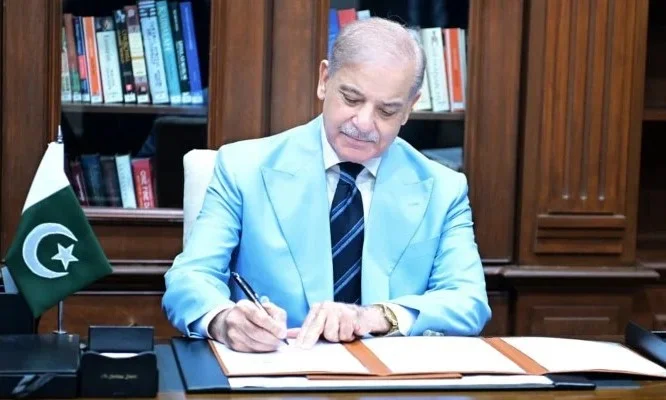
The postponement of Prime Minister Shehbaz Sharif’s visit, which some observers have sought to characterize as a setback or a diminishment of Pakistan’s role, is in reality a precise reflection of where the process now stands. Ceremonial visits belong to the phase of political diplomacy, the phase of building trust, demonstrating commitment, and creating the conditions under which both parties can move from confrontation to negotiation. That phase is complete. What the current moment requires is not ceremony but discipline, the quiet, technically demanding work of implementing the commitments made in Islamabad through dedicated tracks covering sanctions relief, maritime security, nuclear-related measures, verification mechanisms, sequencing, and regional assurances. In this context, the postponement of a visit is not a signal of reduced engagement. It is a signal of maturity: the recognition that substance must now take precedence over symbolism, and that Pakistan’s continued centrality to the process is demonstrated not through optics but through outcomes.
This distinction matters because it goes to the heart of what Pakistan actually achieved in the Islamabad talks. Pakistan did not simply provide a venue. It did not merely facilitate introductions between parties who were already inclined toward agreement. What Pakistan did through the sustained engagement of Prime Minister Shehbaz Sharif, Field Marshal Syed Asim Munir, and the diplomatic apparatus they deployed was to design and deliver a comprehensive diplomatic framework. The Islamabad talks produced more than a ceasefire. They established a structured roadmap for implementation: a sequenced, institutionalized process that transforms the initial political de-escalation into an organized diplomatic architecture with the durability to survive the inevitable friction of implementation. That architecture is now operational. Its existence is Pakistan’s most significant contribution, more significant, in the long run, than any single ceremony could communicate.
The technical tracks now underway reflect the complexity of what the MoU must deliver. Sanctions relief for Iran requires coordinated action across multiple Western jurisdictions and involves careful sequencing to ensure that economic normalization does not outpace nuclear-related verification. Maritime security arrangements for the Strait of Hormuz, through which a substantial portion of the global oil supply flows, require multilateral coordination that extends beyond the two primary parties. Nuclear-related measures demand the involvement of the International Atomic Energy Agency and the broader architecture of non-proliferation diplomacy. Regional assurances must address the concerns of parties, including Israel, who are not signatories to the MoU but whose cooperation or obstruction will materially affect its implementation. Each of these tracks is demanding. Each carries within it the potential for friction that could slow or complicate the process. None of them are resolved by the political breakthrough alone; they require exactly the kind of sustained, disciplined, technically sophisticated diplomatic engagement that the Islamabad process has demonstrated Pakistan is capable of providing.
The broader significance of this phase extends beyond the immediate US-Iran context. The international community is watching not only whether the Islamabad MoU holds but whether the diplomatic model it represents, patient, multilateral, outcome-focused mediation by a coalition of credible regional actors, can be reproduced in other contexts of comparable complexity. The precedent being established in real time is one that will shape expectations about where effective conflict resolution capacity resides in an increasingly multipolar world. If the implementation phase succeeds, if sanctions are relieved, if maritime security is institutionalized, if nuclear measures are verified, if the peace holds, the credit will accrue not only to the parties who signed but to the mediators who designed the framework within which signing became possible. Pakistan’s name is on that framework. Its reputation is invested in its success. And that investment is itself a guarantee of continued engagement.
For Pakistan domestically, the transition to implementation carries its own significance. The country’s mediation of the US-Iran agreement has already produced a transformation in how Pakistan is perceived internationally, from a country defined in much Western commentary by its challenges to a country defined by its capabilities. That transformation must now be consolidated through the patient work of implementation support, through maintaining the trust of both Washington and Tehran simultaneously, and through demonstrating that the diplomatic credibility Pakistan has earned in the political phase of this process is equally present in its technical phase.
Successful diplomacy is not measured by the applause that greets its announcements. It is measured by the agreements that endure, the institutions that function, and the commitments that are implemented when the cameras have moved elsewhere, and the hard work of turning political intentions into operational reality has begun. The Islamabad MoU has now entered that phase. Pakistan helped bring the United States and Iran from war to agreement. It must now help bring them to a peace agreement.
That is the harder task. It is also the most important one. And by every indication of the framework Pakistan has built, it is a task for which Islamabad is prepared.

Your go-to editorial hub for policy perspectives and informed analysis on pressing regional and global issues.