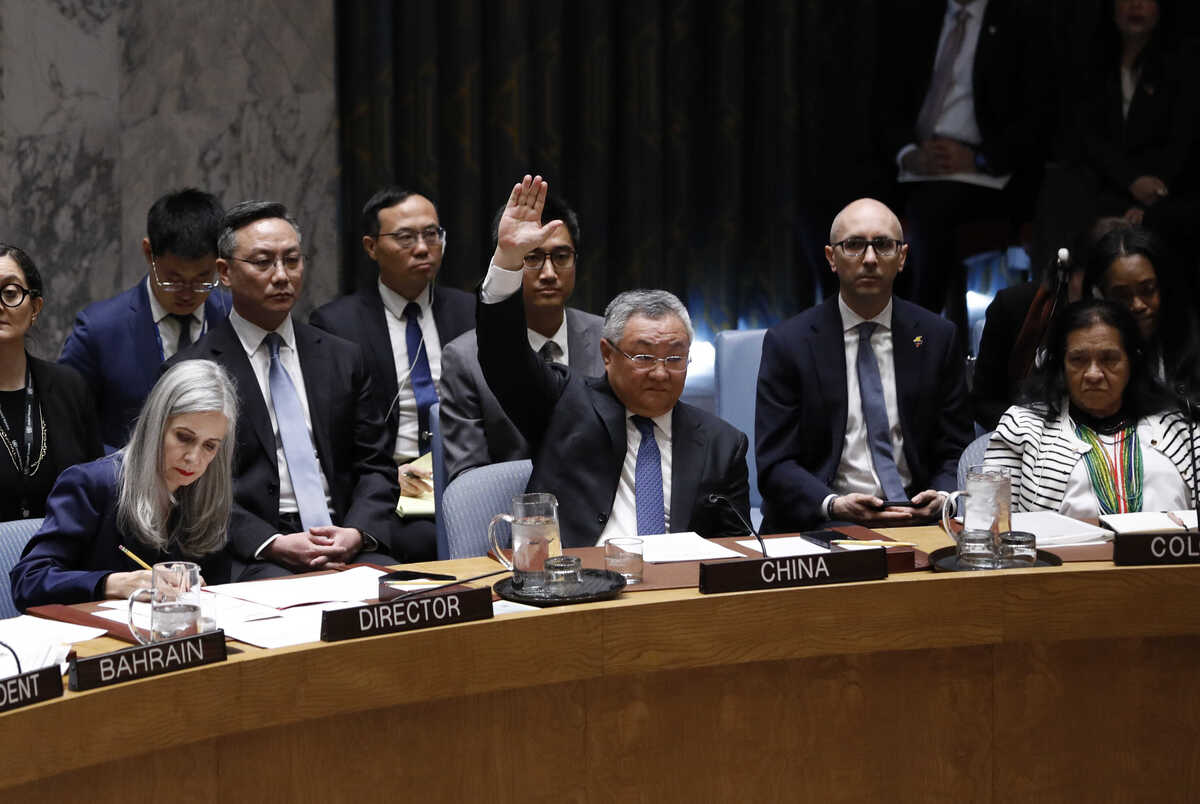
In a quiet but significant shift at the United Nations Security Council, China has taken over as the sole penholder on Afghanistan in 2025. This role, previously held by Japan in 2024, places Beijing at the center of drafting resolutions and steering international discussions on one of the world’s most complex crises. The transition of the Afghanistan penholder role from Japan to China marks more than a routine diplomatic handover.
In past years, especially since the late 2000s, most country-specific files in the Security Council were managed by France, the United Kingdom and the United States. In that arrangement, drafts were first coordinated among these three countries, then with China and Russia, before being presented to the elected members of the Council.
As penholder, China now leads consultations, drafts key documents and coordinates among the 15 Security Council members on Afghanistan-related matters. This includes managing the mandate of the UN Assistance Mission in Afghanistan (UNAMA). In March 2026, China successfully guided a resolution extending UNAMA’s mandate for three months, describing it as a bridge for further responsible discussions. China’s ambassador to the UN, Fu Cong, stated during the vote: “As the penholder of the Resolution, China thanks Council members for their support and cooperatio. Although the Security Council this time did not, as is customary, extend UNAMA’s mandate by one year, this by no means implies any wavering in its support for UNAMA and the Afghan people.”
Since the Taliban’s return in 2021, China has maintained working relations without full formal recognition. It prioritizes security against terrorism especially groups threatening its own borders while pushing for economic integration through projects like mining and infrastructure. China stresses that Afghan territory must not become a haven for militants and calls for the international community to engage constructively rather than isolate Kabul.
After months of negotiations involving China, Japan, Pakistan, South Korea and objections from the US, Beijing emerged as sole penholder. Practical reasons explain this choice. Sharing a direct border via the Wakhan Corridor, China has major stakes in Afghanistan’s stability for its Belt and Road Initiative and domestic security.
Unlike Japan’s more neutral facilitation in 2024, China brings direct regional leverage and a preference for non-interference. Kabul has warmly welcomed the appointment, seeing it as a step toward greater international legitimacy and support aligned with Afghan realities.
Japan had served diligently as penholder in 2024, drawing on its experience to facilitate multiple resolutions and press statements focused on peace, humanitarian needs, and women’s rights.
Why the shift to China? Several practical reasons stand out.
Beijing shares a direct border with Afghanistan and has deep economic stakes through Belt and Road-related projects. It views stability in Kabul as essential for its own security, particularly against groups like the East Turkistan Islamic Movement. Unlike Western approaches that often tie aid to governance reforms and human rights benchmarks, China emphasizes “non-interference,” respect for sovereignty and development-first engagement.
In February 2025, China and Pakistan circulated drafts for mandate extension amid competing proposals from the US and South Korea. The final outcome reflected China’s leadership in merging texts into a unified resolution. Beijing has used its position to advocate balancing humanitarian needs with counterterrorism, while cautioning against excessive focus on internal governance issues that could alienate the Taliban.
This development carries strong implications across South and Central Asia. In their May 26, 2026 Joint Statement, China and Pakistan declared: “Both sides stressed on the need of not allowing any individual, group or party, including the Tehreek-e-Taliban Pakistan (TTP), the Eastern Turkistan Islamic Movement (ETIM) etc to use the territories to harm and threaten regional security and interests, or conduct terrorist actions and activities.”
Russia finds common ground with China in publicly pushing for realistic engagement, asset unfreezing and counterterrorism cooperation. However, Moscow’s approach reveals a troubling contradiction. While Russian officials, including Security Council Secretary Sergei Shoigu, have warned that Afghanistan hosts 18,000–23,000 terrorists from over 20 groups, including ISIS-K, the country signed a military-technical cooperation agreement with the Taliban just days later in late May 2026.
This deal, finalized during a meeting between Shoigu and Taliban Defence Minister Mohammad Yaqoob in Moscow, deepens defence ties and risks legitimizing a regime that shelters groups threatening Russian interests and regional stability. Such moves appear driven by short-term geopolitical gains against Western influence rather than consistent counterterrorism principles.
India maintains a cautious pragmatism on the surface but has deepened its Indo-Afghan nexus in ways that raise serious concerns for regional stability. It has explored limited re-engagement, upgrading its technical mission in Kabul to a full embassy in October 2025, and fostering an emerging Indo-Afghan nexus through enhanced trade reaching USD 1 billion in 2025, pharmaceutical investments, and people-centric projects.
However, Pakistan has repeatedly highlighted that this nexus enables proxy activities, India uses Afghan soil to wage a proxy war against Pakistan through funding and supporting anti-Pakistan terrorist elements. Afghanistan, under the Taliban stands accused of providing safe haven to groups like TTP that launch attacks into Pakistan, further complicating the security landscape.
China’s penholding offers opportunities for more regionally attuned diplomacy. Yet hurdles remain from Taliban restrictions on women and girls to persistent humanitarian crises and terrorism threats. Success will depend on Beijing’s ability to bridge its development-first vision with the Council’s expectations for broader inclusivity.

Your go-to editorial hub for policy perspectives and informed analysis on pressing regional and global issues.