Originally published by The News. Featured by South Asia Times (SAT) for informational purposes, with attribution to the original author and publisher.
Afghanistan has become a complex challenge for Pakistan as well as the region. The defiant and uncooperative nature of the Afghan Taliban regime has become increasingly evident in policies that are both politically expedient and driven by a desire to reverse past losses.
The present Kandahar-based regime combines spiritual and political authority and claims complete control over Afghanistan. After the chaos of warlord rule and the bloodshed of resistance to foreign forces, the Taliban regime promised the dawn of a new era of stability. Those expectations, however, have been undermined by the Taliban’s refusal to change course.
The regime’s inability to deliver basic public services at home stems directly from its failure to share power inclusively and engage with the world to break free from international isolation and economic sanctions. Its inability to rein in the diverse mix of militant non-state actors operating from Afghan soil reflects a lack of both capacity and political will. The present ruling junta is unwilling to address international concerns about human rights and terrorism.
This is why the Kandahar group, led by Mullah Hibatullah Akhundzada, willingly gives like-minded groups ideological space and operational freedom. Despite differences with ISKP, the Tehreek-e-Taliban Afghanistan (TTA) does little to eliminate the group from Afghan soil, despite knowing full well the costs of sheltering this transnational terrorist outfit. A similar attitude prevails toward the Tehreek-e-Taliban Pakistan (TTP), which operates under the TTA’s patronage and shares funding, recruitment, and training networks. ETIM, IMU and a host of smaller non-state terrorist groups enjoy the same protection from the Taliban regime in Afghanistan.
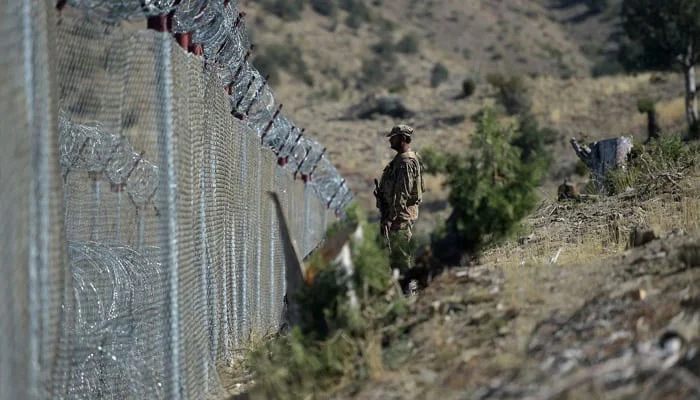
For countries like Pakistan, which share 17 divided tribes with Afghanistan and have a British-era border-crossing policy based on easement rights, the dilemma is even harder. Pakistan’s law enforcement agencies (LEAs) continue to thwart TTP infiltration attempts, but despite heavy casualties, the flow of terrorists continues. In the absence of any serious effort by the Afghan Taliban regime to counter the TTP, Pakistan’s counterterrorism operations are akin to cutting grass that keeps growing back. Unless the source of terrorist support is eliminated, the steady flow of TTP militants will continue.
External powers supporting TTP terrorism add another layer of complexity. The flow of arms and money to the TTP in Afghanistan is no secret, but geopolitical rivalries continue to override international counterterrorism commitments. As non-state terrorist groups exploit Afghanistan’s permissive environment for crime and terrorism, the world risks witnessing a resurgence of the threats that led to 9/11. For Russia, the March 22, 2024, attack on Crocus City Hall in Krasnogorsk, a suburb of Moscow, in which 140 people died, was a shocking reminder of the threat posed by terrorism linked to Afghanistan.
ISKP and the Taliban leadership both harbour hostility towards Russia because of the Soviet invasion of Afghanistan, Russia’s role in Syria and other historical factors. Despite their differences, the Afghan Taliban and ISKP share several commonalities, including ideological affinities and financial motives linked to a conflict economy sustained by organised crime.
Pakistan has made extensive efforts to engage the Afghan Taliban diplomatically and economically, highlighting opportunities for infrastructure development and energy corridors that could link Pakistan to Central Asia through Afghanistan. Unfortunately, the Taliban leadership’s rigid outlook and internal divisions have undermined these efforts.
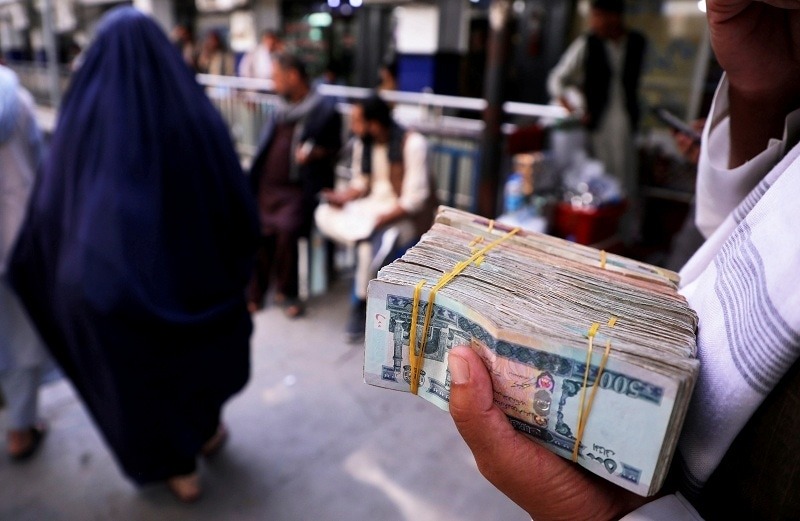
As a result, Afghanistan’s international isolation has continued, while the country has descended into internal conflict and its population into poverty. Afghanistan today resembles a war economy sustained by the illegal profits of drug trafficking, smuggling and organised crime.
Pakistan has made serious efforts to address this complex problem through bilateral and multilateral regional initiatives. These include the trilateral Pakistan-Afghanistan-China forum, the quadrilateral Pakistan-Iran-Afghanistan-China forum and the Moscow Format, which brings together Pakistan, Afghanistan, Iran, the Central Asian states, Russia, India and China.
During the recently concluded Moscow Format meeting, Pakistan highlighted the Afghan regime’s double-dealing and tolerance of terrorist groups such as the TTP, while the Taliban delegation resorted to its usual tactics of denial and evasion. Despite Russia’s best efforts as host, the Taliban delegation refused to acknowledge its shortcomings and, as a result, no joint statement could be issued by the forum. Russia’s desire to build a cooperative relationship with the Taliban to counter ISKP is understandable, but Moscow may not fully appreciate the nature of the relationship between the Taliban and ISKP.
Appeasing the Taliban in the hope of securing a positive response is futile, as the regime appears intent on expanding its influence through coercion. The best course for regional and international stakeholders is to exert all possible diplomatic and economic pressure on the Taliban regime to bring about a meaningful change in its policies towards violent non-state actors.
Resistance to the Taliban is already gaining ground in the northern, eastern and even western provinces, where the Afghan Freedom Front (Yasin Zai), the National Resistance Front (Ahmed Massoud) and the Afghan United Front (General Sami Sadat) are challenging the regime’s oppressive policies.
Resolving Afghanistan’s complex security crisis requires regional and international consensus, given the threat posed to the entire world by the network of terrorist groups operating from Afghan soil.
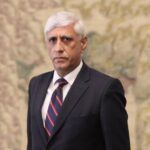
Dr Raashid Wali Janjua
The writer is a defence and security expert with a PhD from NUST. He may be reached at rwjanj@hotmail.com