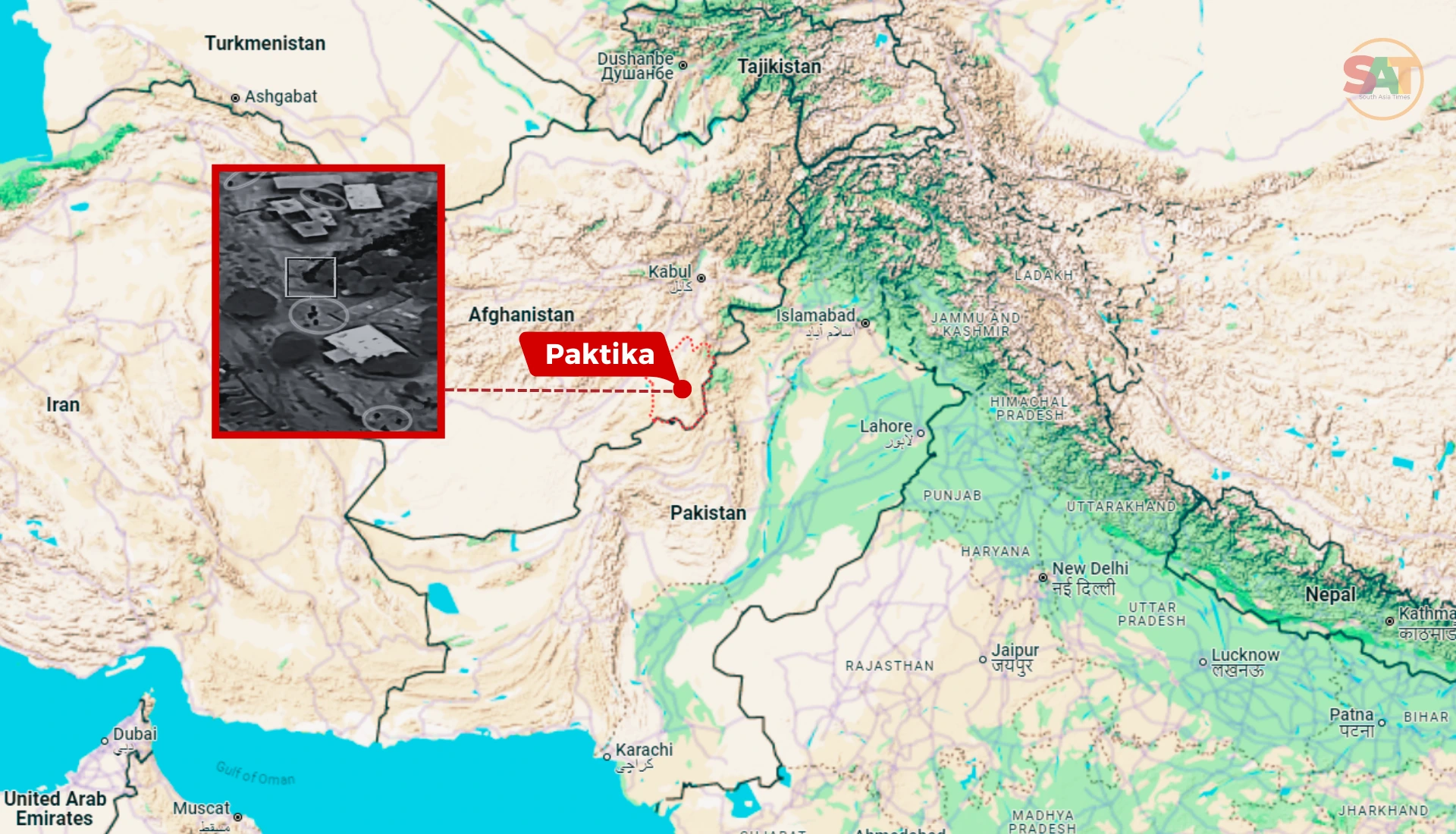
Reports from Afghanistan’s Paktika province indicate that suspected Pakistani airstrikes targeted key hideouts of the Tehreek-e-Taliban Pakistan (TTP) in the Barmal district. Afghan government spokesperson Zabihullah Mujahid, speaking to journalist Tahir Khan, confirmed that “two or three places” were bombed but withheld details on the identities of those targeted.
Strategic Targets in Paktika
Speaking with Tahir Khan, local sources reported hearing at least four explosions in the Barmal area. These are believed to have been caused by Pakistani jets striking TTP-linked locations. Open-Source Intelligence (OSINT) claims suggest the strikes targeted the Hafiz Gul Bahadur group, the Al-Farooq training camp known for training suicide bombers, and the Umar Media Center, a vital propaganda arm of the TTP. Reports confirm that the Umar Media Center was completely destroyed, potentially disrupting the group’s media operations.
High-Profile TTP Leaders Allegedly Killed
Unverified sources suggest that the airstrikes aimed at and possibly killed prominent TTP figures, including:
- Mukhlis Yar (alias Sher Zaman): Trainer of suicide bombers.
- Abu Hamza (alias Izhar): Senior commander.
- Akhtar Muhammad (alias Khalil): Second-in-command of the Hafiz Gul Bahadur group.
- Shoaib Iqbal (alias Muneeb Jatt): Umar Media Cell Incharge.
Initial reports estimate over 20 militants were killed in the strikes, though the final toll remains uncertain as rescue operations continue.
Conflicting Narratives Coming from Paktika, Afghanistan
A TTP commander, speaking to Tahir Khan, alleged that the strikes hit a camp housing displaced Pakistani nationals. Such camps are often labeled as TTP-associated by Pakistani authorities due to suspected militant presence among their residents. The commander reported seven bodies were recovered, with more potentially buried under the debris.
Afghan Government’s Response
In response to the recent Pakistani airstrikes in Paktika province, the Afghan Ministry of National Defense has condemned the attack as a “Brutal Bombing.” The statement, issued by Ministry spokesperson Inayatullah Khawarizmi on social media platform X (formerly Twitter), confirmed that the Pakistani military targeted the Barmal district on Tuesday evening, hitting civilian areas, particularly camps housing Waziristan refugees. According to the Afghan government, the bombing resulted in civilian casualties, including women and children.
“The bombing targeted civilians, mostly Waziristan refugees. And a number of children and other civilians were martyred and injured,” the statement read. The Ministry described the airstrike as “barbaric” and a violation of international principles, calling it “clear aggression.”
“The Islamic Emirate of Afghanistan considers this barbaric act to be against all international principles and a clear aggression and strongly condemns it,” the statement continued. It further emphasized that such actions would not go unanswered, asserting, “The Islamic Emirate will not leave this cowardly act unanswered, but rather considers the defense of its territory and territory to be its inalienable right.”
The Afghan government also pointed out that “such arbitrary measures are not a solution to any problem” and reiterated their stance on defending their sovereignty.
Also See: Legacy, Trade, and Turmoil: The Pak-Afghan Reset
Implications and Future Developments
If verified, these airstrikes mark a significant development in Pakistan’s operations against TTP sanctuaries in Afghanistan. The destruction of critical facilities, including the Umar Media Center, could deal a blow to TTP’s propaganda and operational capabilities. The situation remains tense as investigations unfold, with both nations trading claims over the incident’s details and implications.
Disclaimer: This is a developing story, and the details provided are based on initial reports. Further information will be updated as more facts emerge.

Your trusted source for insightful journalism. Stay informed with our compelling coverage of global affairs, business, technology, and more.