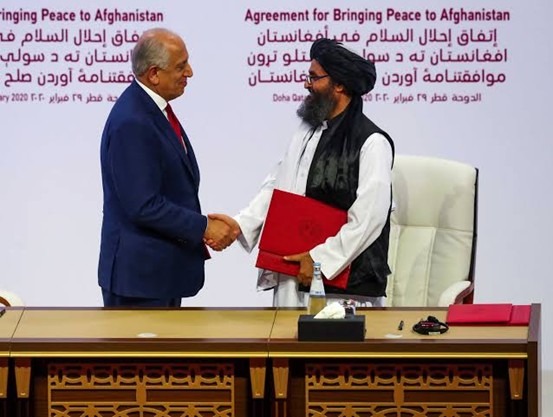
The promises and expectations attached to the Taliban since February 29, 2020, when Zalmay Khalilzad and Taliban political chief Mullah Abdul Ghani Baradar signed the Doha Agreement, largely disappeared after the group took control of Kabul on 15 August 2021.
The international community, especially neighbouring countries, expected a similar code of conduct to that followed by Mullah Muhammad Omar, the Taliban’s supreme leader, before the US invasion. The engagements and actions of the current government, however, have been contrary to what was agreed upon and what many expected of the group.
The Taliban entered Kabul, and the government of President Ashraf Ghani collapsed. The movement re-established the Islamic Emirate of Afghanistan, placing its supreme leader, Hibatullah Akhundzada, at the apex of power and appointing Mohammad Hassan Akhund as acting prime minister. The transition was not merely a change of government. It began a new chapter for the people of Afghanistan after two decades of conflict and continued struggles for freedom.
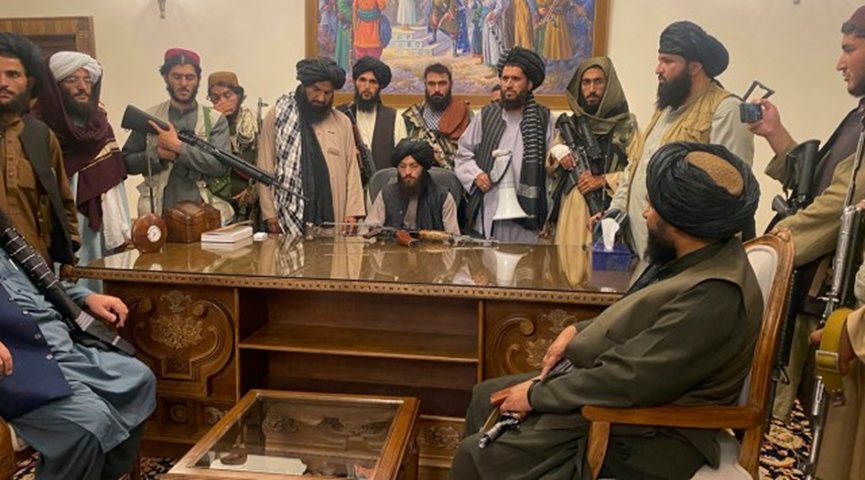
But the transition turned out to be a nightmare for South and Central Asia and, most importantly, for the people of Afghanistan. Across national sectors, civil institutions, civic engagement, and diplomatic relations with other countries, the Afghan government has raised serious questions about its governance and conduct.
The Taliban has improved the security situation in one sense, as there is no longer a nationwide war between the Taliban and the former Afghan government, nor a US-NATO military presence fighting the Taliban. However, the end of the previous conflict has not made Afghanistan entirely secure.
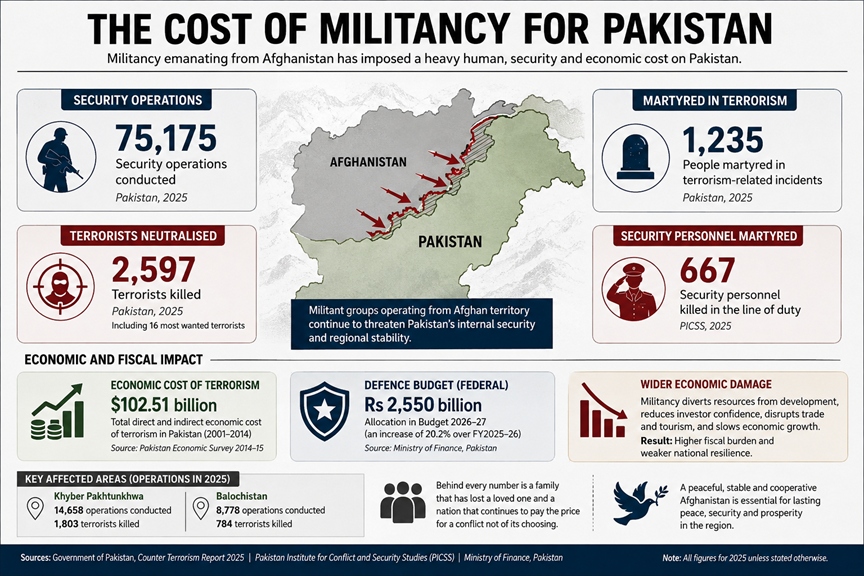
With the withdrawal of foreign forces, Afghanistan continues to provide an operating environment for terrorist organisations and non-state armed groups such as Al-Qaeda, TTP, IS-KP, ETIM and TIP.
The UN Security Council’s sanctions-monitoring team has assessed that Al-Qaeda remains present in Afghanistan and provides ideological guidance, training, advice and logistical support to other groups. The report also states that the Taliban continues to host and support Al-Qaeda, although the Taliban rejects the claim that Al-Qaeda maintains a presence in the country.
Regionally, Pakistan has repeatedly accused the Taliban government of allowing TTP and BLA militants to operate from Afghan territory, making the group a major security concern for Pakistan. The continued presence and activities of these groups also raise questions about the Taliban’s ability or willingness to fulfil its counter terrorism commitments under the Doha Agreement.
The economic sector of Afghanistan has shown noticeable improvement. According to the World Bank, Afghanistan’s economy grew by an estimated 4.8% in 2025. The real question, however, is whether this economic growth is improving national institutions and the lives of ordinary Afghans.
Economic growth on paper does not necessarily translate into prosperity on the ground, as Afghanistan’s GDP per capita fell by 5.6 percent in 2025. Despite some economic recovery, poverty and unemployment remain widespread, with nearly one in four young Afghans unemployed. Humanitarian assistance has also remained a major lifeline for the population, while reports have raised concerns over the Taliban’s interference in and diversion of international aid.
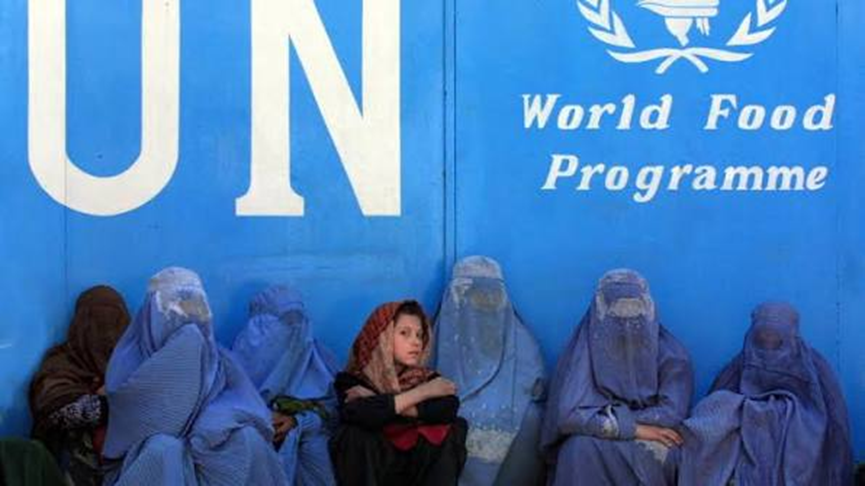
A 2025 US government watchdog report alleged that the Taliban used coercion to divert humanitarian assistance and manipulated aid distribution, further raising questions about how external assistance is being used. Meanwhile, Afghanistan continues to face a widening trade deficit, with strong import demand and weak export performance, reflecting the fragility of its economy.
Although the Taliban has improved domestic revenue collection, weak private investment, limited access to finance, and restrictions on women’s economic participation continue to constrain long-term growth. Thus, while Afghanistan has achieved some degree of economic stabilisation under Taliban rule, this has not yet translated into broad-based prosperity, employment, or sustainable development.
The health system remains fragile and heavily dependent on foreign aid provided through organisations such as UNICEF and the World Bank. Healthcare access is also restricted for women and girls under Taliban policies. Reports of aid being diverted to terrorist organisations rather than being used for its intended purpose further raise concerns about the effectiveness and transparency of humanitarian assistance.
The situation regarding minorities is also deeply concerning. Non-Muslim minorities have effectively ceased to exist as significant communities in many parts of the country; the large Sikh population that once resided in Kabul is largely gone.
Among Muslim minorities, the Hazaras, who are Shia, continue to face attacks. Data from August 2021 to December 2022 alone records 700 killings. While subsequent data is unavailable, it is estimated that the total death toll ranges between 5,000 and 6,000.
In provinces such as Bamiyan, Herat, Kandahar, and Ghazni, properties are reportedly being seized from minorities and handed over to Pashtun Taliban members.
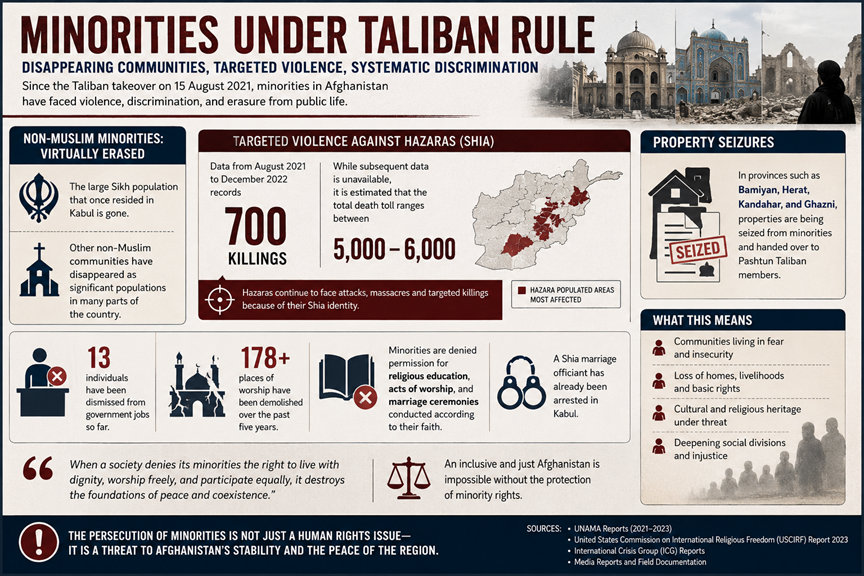
Approximately 13 individuals have been dismissed from government jobs so far, while at least 178 places of worship have reportedly been demolished over the past five years.
Minorities are also denied permission for religious education, acts of worship, and even marriage ceremonies conducted according to their faith. A Shia marriage officiant has already been arrested in Kabul.
The Taliban’s return to power has brought sweeping restrictions on the rights and public participation of Afghan women and girls. Girls have been barred from secondary education beyond Grade 6 and women from universities, while restrictions have also extended to medical education, limiting the future pipeline of female health professionals.
Women have been pushed out of large parts of the workforce, including employment with NGOs and the United Nations, and face restrictions on movement, including requirements related to travelling with a male relative (mahram).
The authorities have also restricted women’s access to parks, gyms, sports facilities, and beauty salons, while imposing strict dress requirements and narrowing their participation in public and political life. Women who do not wear the type of burqa prescribed by the authorities have also reportedly been arrested.
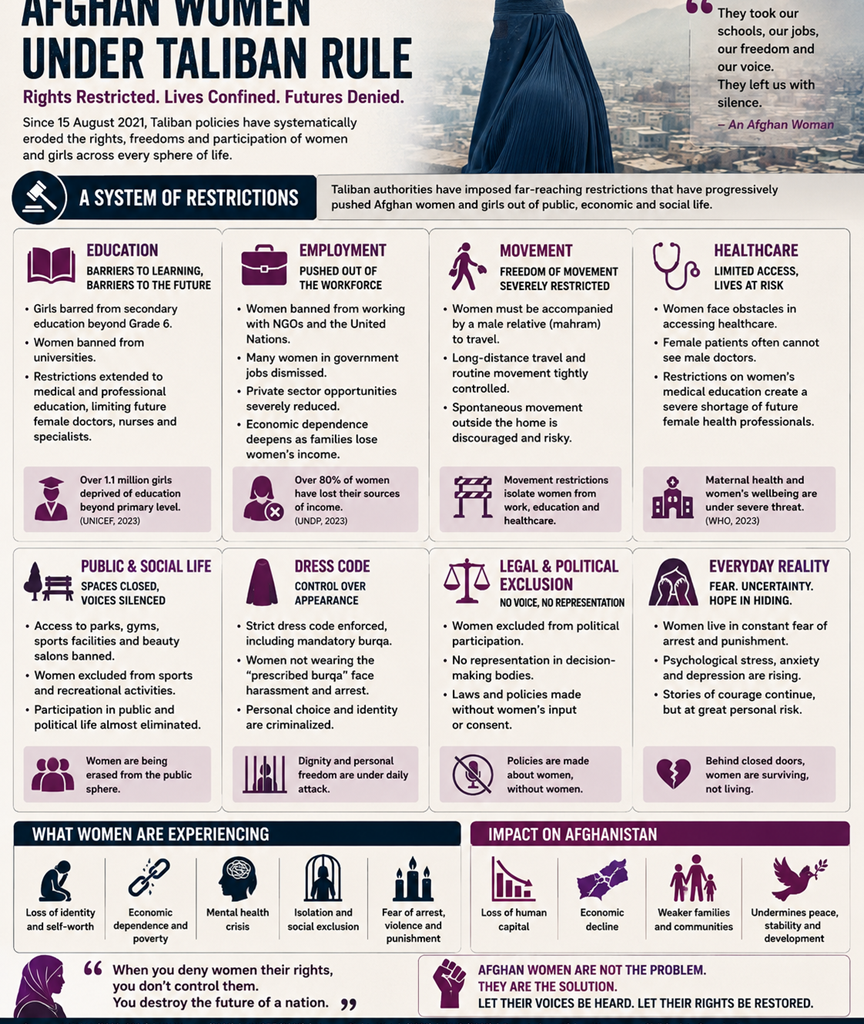
Taken together, these measures have progressively confined women’s access to education, employment, healthcare, economic independence, and public life, making gender restrictions one of the defining features of Taliban rule.
These policies of the Afghan government are affecting the lives, internal stability, and peace of South Asia. There is a strong need for accountable and transparent governance to improve public life and the social structure. Afghanistan’s legitimacy is also tied to its institutional policies and engagement with neighbouring countries.

Your go-to editorial hub for policy perspectives and informed analysis on pressing regional and global issues.
Umama Saifeen
Umama is undergraduate scholar of Strategic Studies at National Defense University