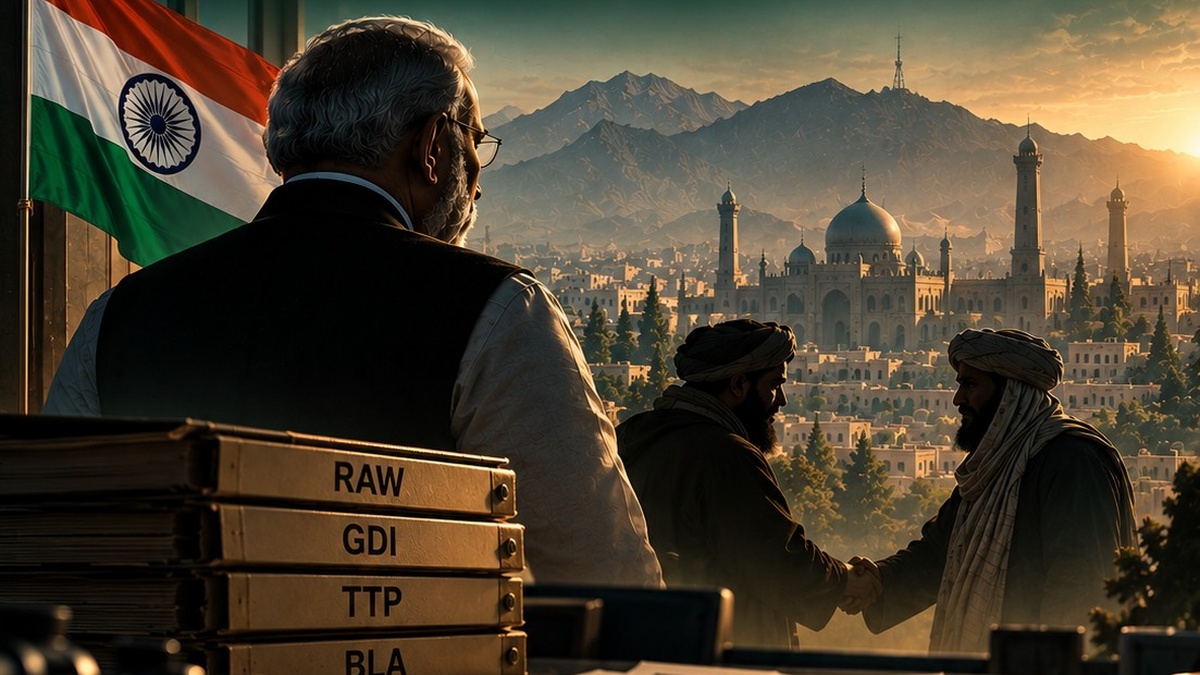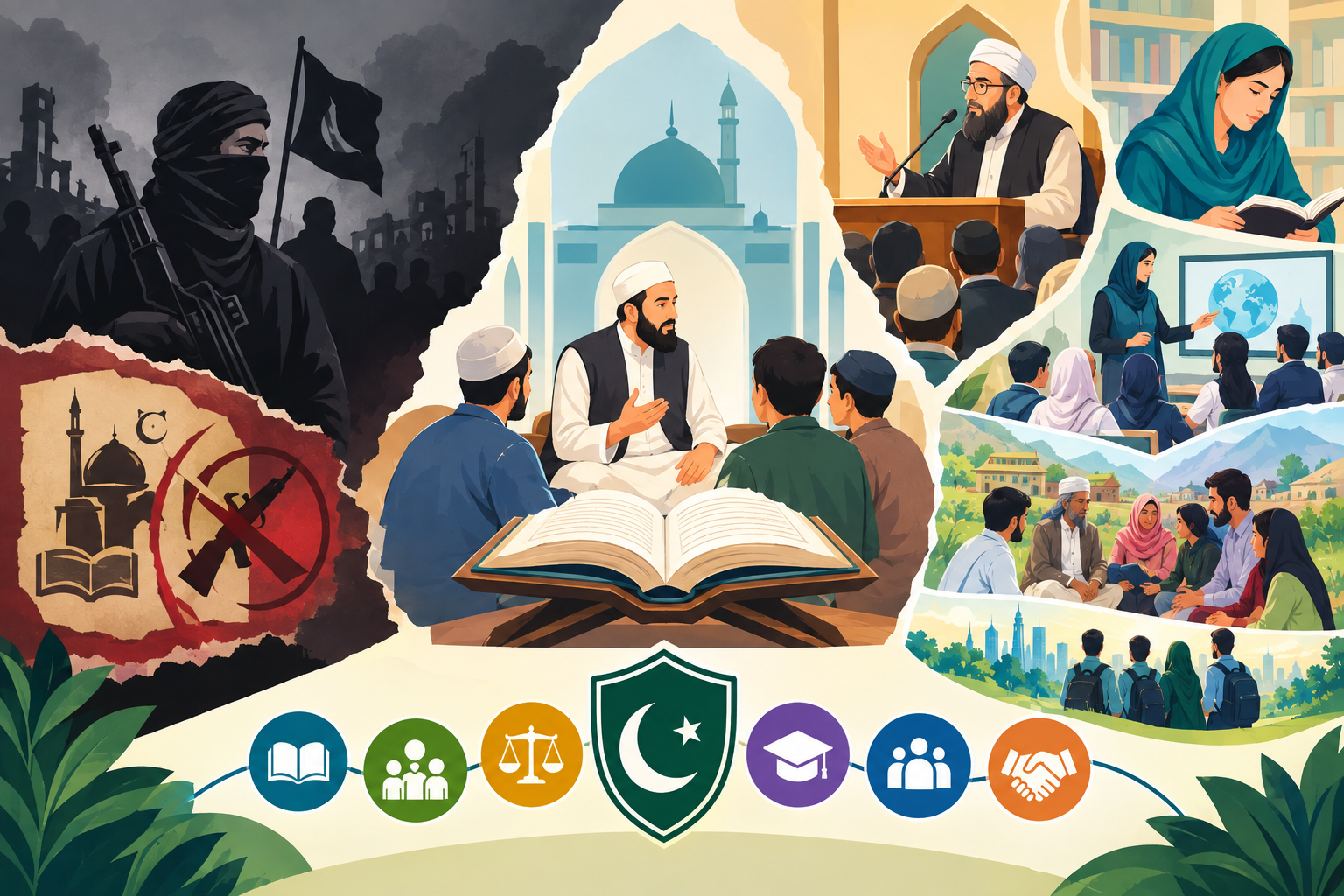
Violence becomes harder to defeat when it arrives wrapped in the vocabulary of faith. In Pakistan, militant organizations do not rely on weapons alone; they seek moral permission. Terms such as jihad, shahada and takfir are lifted from centuries of juristic debate, stripped of conditions and institutional authority, and repackaged as slogans that can turn grievance into license for bloodshed.
The scale of the challenge is measurable. The Pakistan Institute for Peace Studies recorded 699 terrorist attacks in 2025, up 34 percent from 2024, killing 1,034 people. Of those attacks, nearly two-thirds were attributed to religiously motivated militant groups.
Using a different international dataset, the Global Terrorism Index 2026 ranked Pakistan as the country most affected by terrorism in the world for the first time since the index began, and identified the Tehrik-e-Taliban Pakistan (TTP) as the deadliest group operating in the country and the third deadliest globally.
The pressure did not disappear in 2026. CRSS recorded 813 violence-linked fatalities across 248 incidents in the first quarter, followed by 774 fatalities across 267 incidents in the second. PICSS reported 199 militant attacks in August 2026 alone. The battlefield, in short, remains active. The battlefield remains active. But the deeper crisis is that militant propaganda still finds audiences among young people navigating anger, injustice, online manipulation and weak local guidance.
The issue is not whether militants can quote scripture. The issue is who may authorize armed force, against whom, under what conditions, and whether a gunman can appoint himself interpreter, judge and executioner.
This is the theological fault line. Classical jurisprudence tied jihad to lawful state authority and strict restraint, not private will; militants narrow it into a permission slip for personal violence.
Shahada was never an automatic reward for suicide killing, even then it is marketed today as guaranteed martyrdom. Takfir, declaring another Muslim an unbeliever, was reserved by mainstream scholarship as an exceptionally grave judgment, not a political shortcut for stripping opponents of moral protection.
And amr bil ma’ruf, the duty to enjoin good, carried real constraints of law, due process, and the prevention of greater harm; today it is recast as coercive vigilantism. When militants collapse these distinctions, they do more than distort doctrine; they replace scholarship with theatre and law with rage.
Pakistan already possesses a valuable foundation for rebuttal. Paigham-e-Pakistan, developed through the Islamic Research Institute at the International Islamic University and endorsed by 1,829 scholars from multiple schools of thought, declares suicide attacks forbidden and rejects unilateral armed jihad by individuals or groups.
NACTA’s counter-extremism framework similarly rejects vigilantism, sectarian coercion and the use of religion as a private warrant for violence. The problem is not the absence of religious scholarship. It is the weak social transmission of that scholarship.
That transmission must now move from conferences into everyday religious life. Credible scholars should explain not only that terrorism is forbidden, but how Islamic legal reasoning reaches that conclusion: the sanctity of life, the prohibition of suicide, the protection of non-combatants, the gravity of takfir, lawful authority, due process and the duty to avoid greater harm. Sermons, madrasa lessons, university discussions and short digital videos should answer the actual arguments militants circulate, in Urdu, Pashto, Balochi and other local languages.
Education matters just as much. Pakistan’s National Prevention of Violent Extremism Policy calls for stronger resilience through curricula, teacher capacity and early identification of extremist trends. UNESCO likewise treats education, dialogue and critical thinking as tools for resisting violent narratives.
Students should learn how propaganda cherry-picks scripture, removes historical context, manipulates images of suffering, and converts real political grievances into permission to kill. Media literacy is now part of religious resilience.
Finally, counter-narratives must be community-owned. A message rarely carries weight simply because of who issued it; it carries weight because of who delivers it – a trusted imam, teacher, mother, survivor, tribal elder, or local scholar the community already knows.
Communities need safe spaces to discuss anger, injustice and identity before militants monopolize those emotions. Religious rebuttal must therefore sit alongside justice, responsive governance, livelihood opportunity and dignified avenues for political expression.
Pakistan does not need to de-religionize society to defeat religiously framed militancy. It needs to restore religious method: scholarship over slogan, evidence over manipulation, moral restraint over absolutism, and lawful authority over vigilantism. The decisive question is not whether militants can quote scripture. It is whether society allows a gunman to become his own mufti.

Shomaila Mumtaz
Dr. Shomaila Mumtaz is a Senior Research officer at Pakistan Institute for Conflict and Security Studies (PICSS), Islamabad. She did her PhD in Islamic Jurisprudence from the National University of Modern Languages (NUML), Islamabad and has research interests spanning Islamic studies, international relations, peace and conflict studies, religious extremism and counter-radicalization, strategic affairs, and contemporary security challenges. Her work also explores the intersection of religion, peacebuilding, security, and emerging global challenge.
At PICSS, she regularly authors weekly and monthly security assessments, insights on militancy trends, counterterrorism operations, and Pakistan’s broader strategic and diplomatic landscape.