Pakistan has a legacy of religious, political and societal influences from the greater Middle East, Central and South Asia and the British raj. These are reinforced by the challenges of state and nation-building in 21st Century; further accentuated by the onslaught of social media and an ever-agitating street.
It was the religion and nationalism ‘combine’ that created Pakistan; however, these values could not serve as the ‘enduring basis of nationhood’. And consequently created problems for the establishment of a pluralistic, democratic, decentralized and participatory state that is inclusive of all ethnic, religious and sectarian groups.
The rise in the clout of what is called the ‘Religious Right’ has resulted in the lack of tolerance and increased extremism – at least on the surface – and has further eroded the much trumpeted ‘Jinnah’s Pakistan’. This ‘image problem’ per se has been causing difficult challenges for our domestic politics and foreign policy.
Interestingly ‘Religious Right’ is a Christian concept also called ‘The Christian Right’ – with roots in American politics as far back as the 1940s, denoting Christian political factions ‘strongly supporting socially conservative policies’.
Its influence enhanced especially after the 1970s and the term now is in wide usage to describe all religious groups with conservative outlook. Pakistan’s mainstream religious parties like JUI (F and S Factions), Jamat-e-Islami (JI), JUP, Markazee Jamiat Ahle-Hadith, Sunni Tehreek, TNFJ and the myriad other parties and movements subscribe notionally and operationally – in varying degrees – to religious, social and political conservatism.
Religious Right, Violence and Terrorism
Religious authority in Islam is highly dispersed as there is no ‘magisterium’ – or papacy. In the Pakistani context, this authority flows through debating and mostly feuding scholars or ulema, with at times conflicting views and interpretations of religious injunctions.
These ulema – generally speaking – unanimously act to legitimize religious authority mostly under a self-serving patronage system. There are countless examples where ulema – with exceptions, of course – supported the British rulers in united India, and later Pakistan’s ruling elite in justifying their acts of omission and commission.
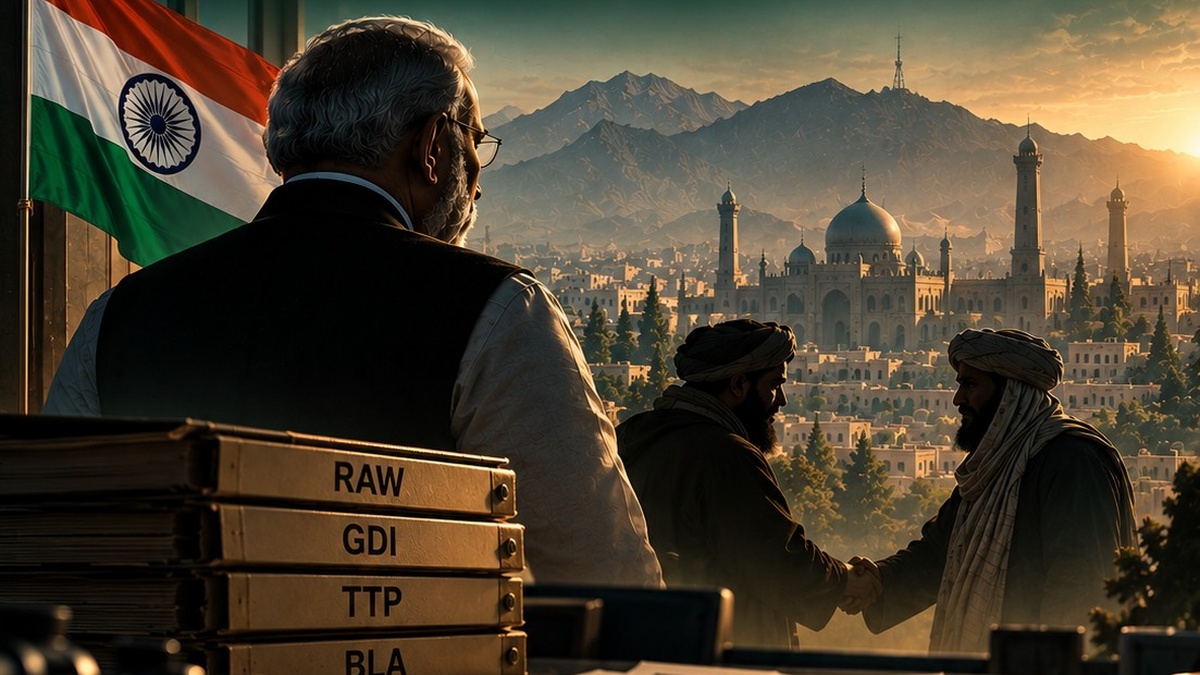
Terrorism and war on terror spotlighted Pakistan’s religious credentials. Ashley J. Tellis, of Carnegie Endowment for International Peace, during testimony in the US Congress (January 2008), categorized terrorism in Pakistan as sectarian, anti-Indian, of Afghan origin (TTA), from Al-Qaeda and affiliates, and from Pakistan’s Taliban groups. Most of these groups subscribe to religious philosophy and conservatism, espoused by mainstream religious parties and movements.
In the wider regional context, there were ‘butterfly events’ (localized events with far-reaching consequences), like the 1979 Iranian Revolution, that shaped perspectives in the Islamic World. Sweeping away the liberal order of Pahlavi Iran, the Revolution created permanent forces like the Revolutionary Guards or IRGC/ Pasadaran-e-Inqilab, whose policies and operational control over Irani decision-making have global implications, as validated from the ongoing Iran-US conflict.
From this catalyst (Irani Revolution) onwards, all events in the Greater Region have had a religious and/ or sectarian tinge, such as the wars in Afghanistan, Iran-Iraq War, the Gulf Wars, and wars in Iraq, Libya and Syria etc. In all these conflicts, the ‘Religious Right’ provided and solidified a casus-belli – rationale for war, that was packaged in jihadi metaphor.
Collusion with Elite or Elite in its Own Right
The ‘Religious Right’, as an extension of the elite or ashhrafiyya under the chosen few, having cemented its political base. It continues to bolster its appeal by cleverly mixing religion with politics and banishing detractors as heretics.
The clergy of ‘Right’ also stands as a bulwark against the forces of modernity. Generally, in Pakistani context, it is believed that Sunni orthodox parties benefited most from the political space provided by military regimes. President Zia’s Islamization process and President Musharraf ceding two of the four provinces to the MMA (Muttahida Majles-e-Amal) Government of Islamists, after elections (2002), are cases in point.
All major parties – the PPP and PML-N – continue to appease the ‘Religious Right’ through political concessions. Molana Fazlur Rehman (JUI-F)’s military style salute from his stick-yielding ‘Ansarul Islam’, his recent anti-military diatribes, besides continuing Muharram sensitivities, and events in Skardu after the martyrdom of Iran’s Ayatullah Ali Khamenei in February 2026, validate the increased clout of the ‘Right.’
However, ‘Religious Right’ also embraces popular causes like inflation, injustice and poor governance that affect common man. It also champions other segments of society, disaffected with the Govt, like doctors and teachers etc.
It blends these causes into a religious context, garnering larger public support of mainly the gullible rural public, who have a conservative affinity with Islam. It has the unmatched ability to mobilize public opinion through the pulpit, asthanas (seats of religious order), durbars (shrines) etc besides raising the needed finances.
Consequently, not only does the ‘Religious Right’ enjoy a nation-wide moral authority, irrespective of its representative political standing, it also has the ability to influence political decision-making in general, and decisions having some religious context in particular.
Hostile outside powers know this and exploit it to their advantage. The ‘Right’ knows that blackmailing the Administration causing minimal violence, is possible, leading to appeasement by the Government and uneasy compromises. Army with its motto of Eiman, Taqva and Jihad-fe-sabeel-Lillah (Faith, Piety, and Struggle for Allah) is never expected to use force in such situations. This remains the complex reality of Pakistan’s situation.
The Riddle
The Government, having publicly supported the political role for TTA or the ‘Afghan Taliban’; finds it hard to deny the same to domestic ‘Religious Right’ as it is at best, hypocritical. So, one of the practical solutions, therefore, is co-option of the ‘Religious Right’ into Governance/ decision-making in a systematic manner.
For this purpose, Governments may consider nominations besides elections, to retain some leverage and, thereafter, modernizing the ‘Right’ through well-thought-out strategies.
We also need to study the British colonial model of financial inducements and endowments, and the Turkish model of a paid cadre, to dilute the clout of clergy to manageable levels. There should be sure but ‘gradual implementation’ of NACTA guidelines against religion-based incitement, hate speech; disbandment of militant wings, reform of religious legislation and madrassahs besides banning radical outfits.
The alternative is history repeating itself – now and then – in the open spaces and D Chowk of Islamabad.
Maj Gen Inam Ul Haque
Maj Gen Inam Ul Haque (Retd) writes on Global Affairs and Political Sociology. He can be reached at [email protected] and his twitter handle @20_Inam.