“Three generations. Six love stories. One question: Is the love we carry enough?”
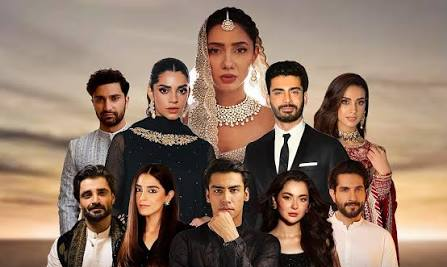
That is how Netflix MENA announced Jo Bachay Hain Sang Samait Lo, the first Pakistani original series on the platform, set to begin streaming on 4 December.
India has such a grip on Netflix’s South Asian catalogue that few other countries in the region get a chance to showcase their work. Now Pakistan has arrived, and the screams of protest are already loud. Call it irony if you like, but it is what it is.
The series is also unusual in how it was launched. Netflix would normally place a Pakistani title under its South Asia arm, yet the first poster came from its Middle East and North Africa (MENA) arm. It raises eyebrows: why MENA and not South Asia?
The series is based on Farhat Ishtiaq’s bestselling Urdu novel of the same name and produced by Momina Duraid. It follows a Harvard law student grappling with emotional trauma and an artist with a complicated past, whose paths cross in Italy in a story about love, loss, family and healing.
The cast brings together established names such as Fawad Khan, Mahira Khan, Sanam Saeed and Hamza Ali Abbasi with younger stars including Ahad Raza Mir, Iqra Aziz and Hania Aamir. It also includes Maya Ali, Khushhal Khan, Nadia Jamil, Samiya Mumtaz, Aamina Sheikh, Bilal Ashraf, Ahmed Ali Akbar, Omair Rana and Nadia Khan. Shahzayn Duraid, the son of Momina Duraid and Duraid Qureshi, makes his acting debut as Faizan.
The answer to the MENA question lies in how the project was handled. The series was ready and had been due for release in July, but insiders from entertainment industry said Monika Shergill, regional head of Netflix India (South Asia), is alleged to have kept blocking and delaying it simply because it was made in Pakistan. The project has indeed faced repeated delays that left fans uncertain about its future.
In response, the Pakistani makers asked Netflix International to place it under MENA, as the Indian-dominated South Asia arm, in their view, never lets Pakistani content through. According to MD Productions, teams from Netflix and Netflix MENA were set to visit Pakistan for the trailer launch and, impressed with the final product, are signing the company for two more Netflix Originals under the MENA banner.
With the premiere days away, a campaign against it has begun in India. On 24 November, the All India Cine Workers Association (AICWA) wrote to Prime Minister Narendra Modi demanding that the series not be released on Netflix in India on 4 December. The association called Pakistan a “terrorist country” whose content has no place on Indian screens, and it asked for a permanent law with the severest penalties against Pakistani content on streaming platforms.
Fawad Khan, who worked in Bollywood films such as Khoobsurat and Kapoor & Sons, is at the centre of the row. An India Today special broadcast has also called for the series to be banned, citing his support for Pakistan during India’s Operation Sindoor. Whether the series will be available in India is still unconfirmed.
The effort to weaponise culture has now gone too far. After sports diplomacy eroded, with refusals to shake hands and other formal gestures, India is now weaponising Pakistan’s art and culture too. But the public is not buying it. Pakistan’s most viral drama these days, Dar-e-Nijaat, is a favourite in India.
Over the weekend, a cafe in central Delhi became an unlikely gathering place for its fans. They gathered to watch the serial together and to interact with its director, Saqib Khan.
A communal screening of a Pakistani serial in India might seem improbable, yet it was not an isolated case: cafes in Dhaka have reportedly held similar gatherings. ARY Digital says the drama has drawn 1.7 billion social media views in just 23 episodes, making it the most-viewed Pakistani drama during its run. It premiered on 1 August.
The story, written by Umera Ahmed and directed by Saqib Khan, contrasts faith as a lived moral practice with religiosity as a rigid identity. Two men embody the tension. Zamil, a young man from a wealthy family, is drawn to a rigid reading of religion as he struggles with who he is.
Abu Bakar, the middle-class son of a single mother, shows his faith through his everyday conduct. When Abu Bakar discovers that his wife, Zaryab, had a premarital relationship with Zamil, he answers with empathy instead of condemnation and helps her through her guilt and turmoil. His patience and tenderness become central to her journey towards redemption.
That portrayal of a Muslim man whose faith deepens his compassion has become the show’s defining feature. In an article for Arab News, Sahar Ali argues that it offers a counterpoint to familiar stereotypes of Islam, in which Muslim men are seen through extremism, repression or violence.
She calls it a potentially effective form of soft diplomacy. In India, the character has become an internet sensation, and one creator’s Instagram reel confessing that she had fallen for him went viral.
A ban can block a release. It cannot stop audiences from falling for a story, and soft power, as Delhi’s cafes have just shown, does not need a visa. Right-wing groups in India are now campaigning against this series, after pushing for bans on Pakistani artists working in India and getting Atif Aslam’s songs pulled from T-Series. But art, as they say, has no boundaries. While one work faces a ban and pre-emptive blocking in India, the other has already gone viral there.