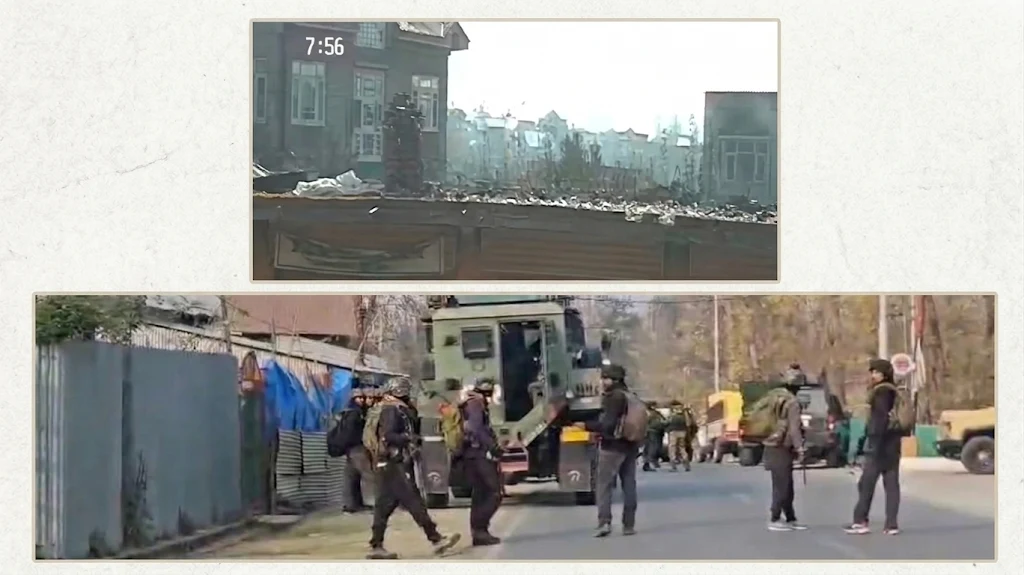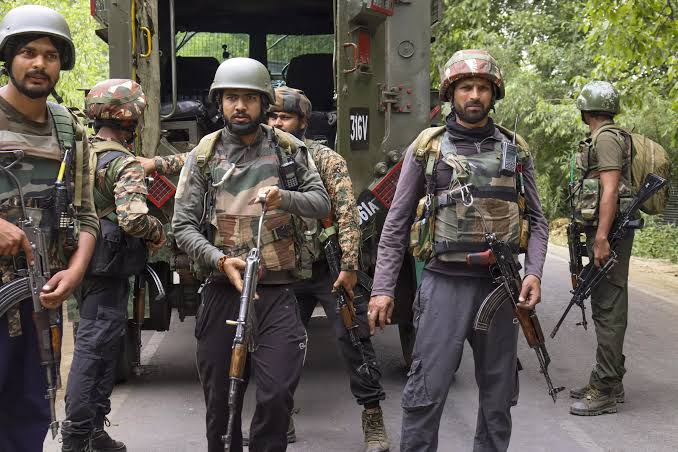
On 11 November 2026, early afternoon unidentified motorcycle-borne assailants opened fire on Indian security personnel at a checkpoint near Mir Bazar in Kulgam, Indian held Kashmir injuring at least two personnel, with PTI reporting three. The wounded were shifted to a hospital in Anantnag, while forces cordoned off the area and launched a search. Indian media report that investigators have traced the motorcycle to Yasir Yusuf of Kaimoh, Kulgam, though his link to the attack has not been established.
Before the investigators could identify the assailants and before even investigations could commence, the Indian electronic media and Indian retired military officials, appearing on TV, started blaming Pakistan for the attack. It is interesting to see Indian political commentators levelling allegations against Pakistan with investigations into the attack yet to start.
The Indian right to investigate a terror attack is not the problem. The problem is Indian jumping into allegations mode and its practice of treating Pakistan as presumed suspect in the attack without any evidence.
Intelligence is primarily the evidence gathered after thorough investigations of the situation and the circumstances. Whereas Indian allegations are in the realm of political speculations—which are a kind of interpretation before the evidence or facts about the case has been established.
Indian electronic media and political commentators were blaming Pakistan for the attack within hours of the attack. A retired Indian army general was openly pointing fingers towards Pakistan, before CCTV footage was even checked, before any terror group claimed the attack and before any investigation began. That is not intelligence, that is habit. Only TV anchors, retired generals and planted sources are pointing fingers. Why unofficial? Because official blame needs proof, and they have none.
On the other hand, the presence of a senior Indian army official in the vicinity of the attack in Kulgam, in broad daylight raises questions about the effectiveness of Indian security arrangements. We cannot ignore the question related to the fact that the attack took place in an area which New Delhi routinely identifies as secure and normal.
Indian security arrangements in Indian held Kashmir experienced this security failure in Pahalgam in 2025. It was also followed by events of blaming Pakistan for the attack. And this was followed by dangerous escalation between two South Asian nuclear rivals. India attacked Pakistan on May 7, 2025 and it was followed by Pakistan’s counterattack which led to a four-day war.
The point is not that the two attacks are similar. The point is that the pattern that followed two attacks are similar: The attacks lead to questions about the effectiveness of Indian security arrangements. But public opinion is redirected towards Pakistan.
When retired military officials and political commentators blame Pakistan for the attack without any evidence they are contributing to an environment in which public pressure dictates foreign and security policies.
Indians simply cannot construct a credible security narrative by making Pakistan a permanent suspect.
Intelligence must come before allegations. Evidence must come before attributed and accountability must begin at home.

Your go-to editorial hub for policy perspectives and informed analysis on pressing regional and global issues.