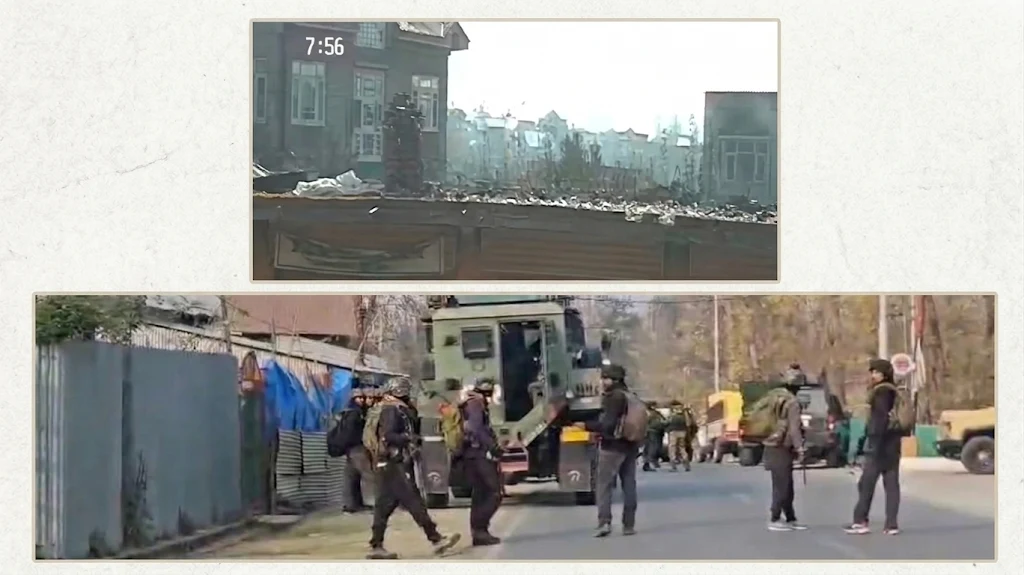
On 11 November 2026, at around 1:45 pm (PKT), unidentified motorcycle-borne assailants opened fire on CRPF personnel at a checkpoint near Mir Bazar in Kulgam, IIOJK, injuring at least two personnel, with PTI reporting three. The wounded were shifted to a hospital in Anantnag, while forces cordoned off the area and launched a search. Indian media report that investigators have traced the motorcycle to Yasir Yusuf of Kaimoh, Kulgam, though his link to the attack has not been established.
Initial coverage by PTI, NDTV, Times of India and Zee News focused on the attack, the casualties and the security response. No official statement, no FIR and no evidence has named Pakistan. The identity, affiliation and motive of the attackers remain unconfirmed.
Yet within hours, the familiar script was running. Republic TV claimed the attackers were caught on camera. LG Manoj Sinha was himself in Kulgam at the time. A high-level Home Ministry meeting was convened and the DG CRPF scheduled a press conference. Meanwhile, retired General Dhillon on Times Now blamed Pakistan, and commentators quoted by The Week floated “Pakistan-backed elements” with nothing to support it.
India blamed Pakistan before the smoke cleared, before the CCTV was checked, before any group claimed it, before any investigation began. That is not intelligence, that is habit. Only TV anchors, retired generals and planted sources are pointing fingers. Why unofficial? Because official blame needs proof, and they have none.
The truth is brutal. Their LG was in Kulgam, their checkpoint was attacked in daylight, and their normalcy claim collapsed. Kulgam sits on the Jammu–Srinagar corridor, one of the most heavily guarded stretches in the world’s most militarised region. If gunmen can strike a CRPF post there in broad daylight and vanish, the failure belongs to India’s security grid, not to Pakistan.
This is a pattern, not an exception. In April 2025 at Pahalgam, 26 people were killed in Baisaran, a meadow just kilometres from a town ringed by fortified checkpoints and patrols. Despite hundreds of thousands of troops in the region and a security review chaired by Amit Shah only weeks earlier, New Delhi itself admitted intelligence lapses and conceded that Baisaran had been opened to tourists without informing the agencies. A year later, no accountability had been fixed. Instead of answering for its own failure, India blamed Pakistan and pushed the region to the brink of war.
Whenever India’s heavily militarised occupation falters, Pakistan is handed the blame. Rather than owning its failures, New Delhi outsources responsibility. Pakistan dismisses this rehearsed propaganda outright. Produce evidence or stay silent.

SAT Commentaries, a collection of insightful social media threads on current events and social issues, featuring diverse perspectives from various authors.