India’s recent entry into France’s Future Combat Air System (FCAS) signals a major turning point in South Asia’s military-technological trajectory. Since the original Franco-German relationship fell apart in June 2026 over irreconcilable differences on industrial leadership, IP rights, work sharing, and the two companies’ operational needs, Paris is now looking at a bilateral route with New Delhi.
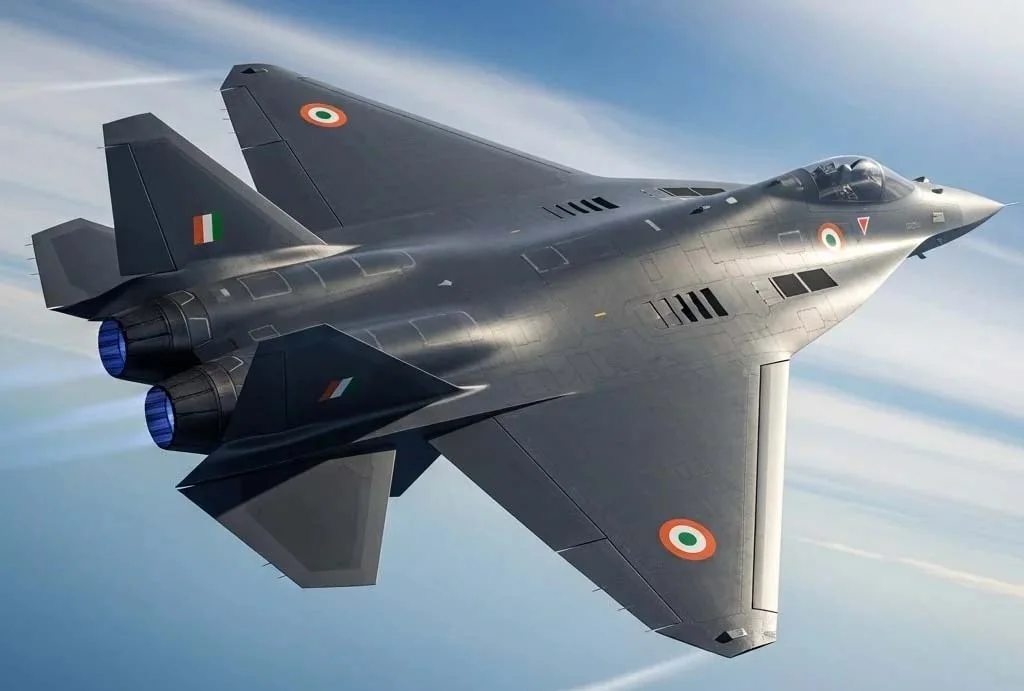
The Defense Minister of India has officially informed the Parliament that the government is looking for co-development and industrial participation in this 6th generation system-of-systems, which has a manned Next Generation Fighter as its backbone, accompanied by unmanned “loyal wingmen,” advanced sensors, artificial intelligence-based combat cloud networking, and collaborative combat capabilities.
Pakistan cannot see this as another procurement decision; rather, it is India’s bid to leapfrog into the technologies of fighting future wars in the air and, at the same time, enhance its already extensive strategic partnership with France that encompasses Rafale procurements, envisaged extensive local production, and engine technology cooperation.
The impact goes beyond just the number of platforms in Pakistan and the region. They sit at the heart of strategic stability, the conventional-nuclear balance, and the risk of starting a multi-domain arms race.
The 6th-generation systems are not meant to function as a single aircraft, but as a networked combat system. They combine manned platforms, autonomous systems, real-time data fusion, electronic warfare dominance and precision strike in a contested environment.
India may achieve a strategic breakthrough if it is able to make itself part of a French-led FCAS architecture, which would give it access to a series of technologies that reduce decision times, increase situational awareness and amplify combat capability — technologies largely unavailable to most regional air forces.
Such capabilities would add to the general trend of shorter warning times and more densely distributed air defense networks coupled with overlapping conventional and nuclear postures that already characterize the theatre.
Pakistan has always said that the concept of Full Spectrum Deterrence within Credible Minimum Deterrence. is there to offset Indian growing conventional superiority and to not allow space for limited war or coercive action.
If the Indian sixth-generation fighter jet is complemented by French industrial and technological capabilities, it will increase the strain on Pakistan’s air defense, early warning, and nuclear command and control systems. It would also encourage counter-reciprocal modernization, either through speeding up indigenous modernization or through more extensive cooperation with other major powers or qualitative improvements in unmanned systems, electronic warfare, and long-range precision capabilities. The end result is a classic action/reaction scenario that increases cost and the risk of miscalculation.
South Asia’s volatile strategic landscape is already under systemic pressure. India’s simultaneous development of an indigenous Advanced Medium Combat Aircraft (AMCA), procurement of large numbers of additional Rafales and now possibly FCAS is an ambitious growth path that is difficult to reconcile with the nature of its modernization as being purely defensive.
The combination of investments in missile defense, space-based assets, and conventional long-range strike, along with continuing investments in deterrence, mitigates stable deterrence.
Arms race stability collapses when one side thinks it has a chance for significant air superiority early in a conflict; crisis stability collapses when qualitative jumps require catch-up spending by the other side.
France’s motivations are understandable too. After the Franco-German fighter co-operation ended, Paris was looking for a partner that had financial resources, manufacturing facilities and operational needs closer to its own – carrier compatibility and the delivery of nuclear weapons among them. India has all three.
However, there is responsibility with technology transfers from Europe to South Asia. France, like other major powers, has to consider whether helping one side in a historically volatile dyad to make a qualitative jump is a way to promote or to jeopardize regional stability, in a nuclearized environment. Technology partnerships are not just commercial, but they increase the security dilemma.
For Pakistan, alarmism should not be the potential response; it must set its priorities, which include investment in indigenous Research and Development. Similarly, Pakistan should utilize China’s potential in terms of advanced unmanned systems and electronic attack for an integrated air defense system and propagate the strategic restraint and risk reduction options in South Asia.
Islamabad should keep its deterrent strong, credible and stabilizing. Developments like the FCAS trajectory underscore the need for vigilance, technological adaptation, and for continuing to prevent the very conflict that nuclear deterrence was intended to prevent.
To sum up, India’s participation in a French programme, if it ever moves beyond the exploratory phase – or “sixth generation” – will not alone define the future of security in the South Asian region. But it will drive technological and doctrinal trends which are already in play.
But the region’s stability will depend less on who gets the next generation of combat systems first than on both sides understanding that absolute security for one cannot coexist with lasting peace for all.
In an era of networked warfare and ever-shrinking decision cycles, the value of a policy of restraint, a clear red line, and arms-control thinking has never been greater.

Musavir Hameed
Musavir Hameed Barech is a Research Officer at the Balochistan Think Tank Network (BTTN)