Historic Kuwait Visit by PM Modi: First by an Indian PM in 43 Years

Historic visit of PM Modi to Kuwait aims to strengthen ties, meet leadership, and address Indian diaspora. [Image via PTI]

PM Modi embarked on a two-day visit to Kuwait, becoming the first Indian Prime Minister to tour the Gulf nation in 43 years. On Saturday, the PM said that India and the Gulf nation have a shared interest in peace, security and stability of the West Asian region. 

Invited by Amir Sheikh Meshal Al-Ahmad Al-Jaber Al-Sabah, PM Modi will meet Kuwait’s top leadership, which includes the meeting with the Crown Prince and the Prime Minister. In another notable engagement, the PM will visit a labour camp which houses blue-collar Indian workers. The PM will also address the Indian diaspora at the Sheikh Saad Al Abdullah Sports Complex in the ‘Hala Modi’ event. 

Also See: Modi Visit to Nigeria: Indian PM Boosts Security and Economic Ties

From Hala Modi to Labour Camp Visit: Top agenda  

On Modi’s visit to the labour camp, Ministry of External Affairs Secretary, Arun Kumar said, “We have a community of around one million in Kuwait. The idea of the visit to the labour camp is to express the amount of importance the government of India attaches to our workers who are working in a foreign country.” 

Before PM Modi’s visit, the MEA said that discussions are underway between both nations on a bilateral investment treaty and a defence cooperation pact. The MEA in this weekly media briefing expected that PM’s visit will bolster India-Kuwait ties. 

Notably, the visit of PM Modi to Kuwait is taking place two weeks after the collapse of President Bashar al-Assad’s regime in Syria and the continuing Israeli offensive in Gaza.

Moreover, the visit is also crucial for strengthening India-Gulf Cooperation Council (GCC) ties. GCC is an important bloc, comprising nations like Saudi Arabia, United Arab Emirates, Oman, Qatar, Bahrain, and Kuwait. 

Here’s what the PM said

In a departure statement, PM Modi said that his talks with Kuwait’s top leadership will be an ‘ opportunity to chalk out a roadmap for a futuristic partnership’ between both countries. 

“We deeply value the historical connection with Kuwait that has been nurtured over generations. e are not just strong trade and energy partners but also have shared interest in peace, security, stability and prosperity in the West Asia region,” he said.

“It would be an opportunity to chalk out a roadmap for a futuristic partnership for the benefit of our people and the region,” he said. “I eagerly look forward to meeting the Indian diaspora in Kuwait who have immensely contributed to strengthening of bonds of friendship between the two nations,” he added.

This news is sourced from India TV News and is intended for informational purposes only.

News Desk

Your trusted source for insightful journalism. Stay informed with our compelling coverage of global affairs, business, technology, and more.

Recent

The Taliban’s Broken Promises: Time for a New U.S. Strategy in Afghanistan

The Taliban’s Broken Promises: Time for a New U.S. Strategy in Afghanistan

Since the Taliban’s return to power, Afghanistan has once again become a hub for militant activity despite their promises under the 2020 Doha Accord. UN and SIGAR reports reveal that Afghan soil now shelters TTP, Al-Qaeda, and ISIS-K operatives involved in cross-border attacks, particularly against Pakistan. The Taliban’s failure to uphold intra-Afghan dialogue, misuse of international aid, human rights abuses, and deception in regional agreements have eroded trust globally. With terror networks thriving under their protection, it is time for the U.S. and international community to adopt a new, accountable strategy toward Afghanistan’s Taliban regime.

Read More »
Instability as Strategy: How India Benefits from the Afghan-Pakistan Breakdown

Instability as Strategy: How India Benefits from the Afghan-Pakistan Breakdown

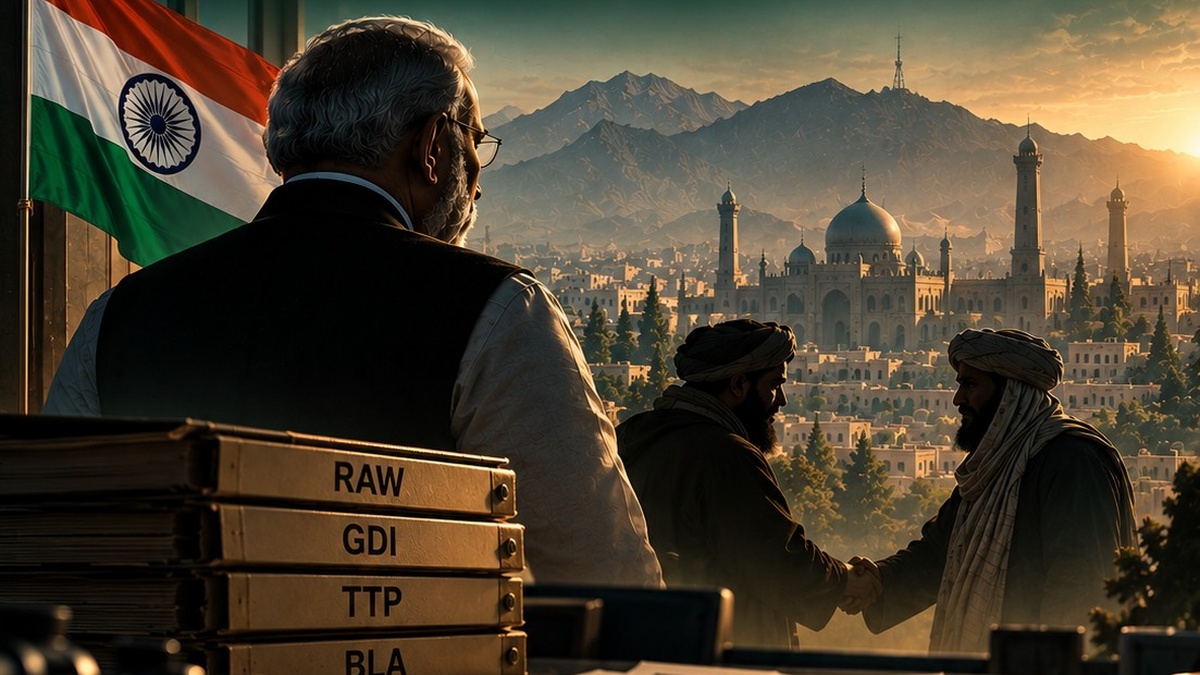
The escalating tensions between Pakistan and Afghanistan’s Taliban-led regime have reignited South Asia’s most volatile frontier. As cross-border attacks intensify and the Taliban refuses to dismantle the Tehreek-e-Taliban Pakistan (TTP), Islamabad faces mounting security and sovereignty challenges. Yet, amid this chaos, India emerges as the silent beneficiary, leveraging regional instability to weaken Pakistan strategically while maintaining its image as a victim of terrorism. This calculated exploitation threatens to entrench South Asia in a new cycle of proxy conflict.

Read More »
Five years after the Doha Accord, the Taliban break commitments, harbor terrorists, exclude women and minorities, and defy international agreements.

Broken Promises, Renewed Threats: Time to Hold TTA Accountable

Five years after the Doha Accord, the Taliban have broken key commitments: 5,000 released prisoners returned to combat, 89% of government posts are held by Pashtuns, and women remain barred from education and work. Afghan soil hosts 6,000–6,500 TTP and Al-Qaeda fighters, with TTP chief Noor Wali Mehsud receiving $43,000/month. Pakistan has neutralized 267 Afghan terrorists in 2025, while 58 terrorist camps operate under Taliban knowledge. Despite the US aid, compliance is minimal. International recognition and support must now be tied to verifiable reforms to prevent further regional instability.

Read More »
The Istanbul dialogue between Pakistan and the Afghan Taliban collapsed over the TTP issue, exposing the limits of regional diplomacy and mediation.

The Istanbul Dialogue: How the Taliban’s Intransigence Doomed Diplomacy

The highly anticipated Istanbul dialogue, facilitated by Turkey and Qatar, has ended in deadlock. The Taliban’s refusal to act against the Tehrik-e-Taliban Pakistan (TTP) and their introduction of provocative counter-demands have effectively derailed the diplomatic process, underscoring the ideological rigidity driving Kabul’s foreign policy.

Read More »
Centralized Power and the Core–Periphery Divide in Afghanistan

Centralized Power and the Core–Periphery Divide in Afghanistan

The Islamic Emirate of Afghanistan’s return in 2021 brought rapid consolidation of power, but also the revival of a historical flaw. By concentrating authority in the hands of southern Pashtun elites, the Taliban have recreated the core–periphery divide that has destabilized every Afghan regime since the 19th century. This hyper-centralization, rooted in ethnic exclusivity and Kandahar dominance, risks a repeat of past collapses as non-Pashtun regions turn toward functional autonomy.

Read More »