After becoming a self-styled Amir al-Mu’minin, and then a self-styled Sheikh al-Islam, Mullah Hibatullah’s address in Wardak is being discussed, in which he said about those who go to neighboring areas for jihad without his permission: “I am angry with them,” and told his officials to bring them back. Taliban-linked social media is presenting this address as Hibatullah’s achievement against terrorism.
The gentleman did not name any neighboring country, but even if the social media sympathetic to the Afghan Taliban had remained silent, it is no secret to anyone that his remarks were directed toward Pakistan, from where people linked to the Afghan Taliban are coming for terrorism.
At the same time, the news was also floated that in Kabul the Afghan Taliban summoned the TTP leadership and ordered them: “They should move their families away from areas along the Pakistani border to distant areas; second, they will not use the weapons left by America; and they will not recruit any Afghan citizen.”
Even if the doubts about the authenticity of this news are set aside, Mullah Hibatullah’s address and this Kabul meeting amount to an admission of guilt regarding Pakistan’s three allegations against the Taliban.
First, the address and the news of the Kabul meeting admit that the TTP leadership is present in Kabul and is spreading terrorism under the shadow of the Afghan Taliban. Second, Hibatullah has accepted Pakistan’s claim that the Afghan Taliban are involved in the terrorism occurring in Pakistan. Third, Hibatullah himself is admitting that he does not even have control over his own Taliban, let alone the whole of Afghanistan.
By dusting off both these pieces of news, the Taliban social media, which is controlled by the GDI and Zabihullah Mujahid’s Ministry of Information, is trying to prove that the Taliban are fulfilling their promise to control the TTP, which they made in Urumqi, Doha, and Istanbul.
This means that in the coming days they are attempting to stage a drama of mediation and negotiations through some other country. Before that, this propaganda is being carried out on social media so that they can say, “Look, we are fulfilling our responsibility,” while Pakistan is committing excesses against us.
The fact is that Pakistan’s position is very straightforward, simple, and based on reality: if the Taliban take verifiable action against the terrorists in Kabul, then dialogue is possible.
Not only Pakistan but the whole world knows that this theoretical deception by the Taliban is not appearing for the first time; in the past five years they have staged the farce of serious action against terrorism at least ten times and deceived every time.
A Tale of Failed Negotiations
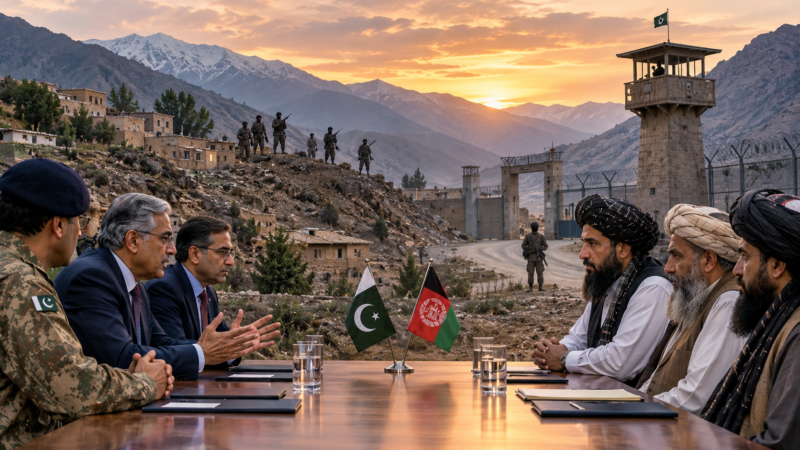
If we look not at the past five years but only at the record of four years up to August 2025, the history of the Taliban’s reneging on negotiations becomes clear. After the Taliban’s return to power in Afghanistan on 15 August 2021, formal and informal diplomatic contacts between Pakistan and Afghanistan took place at least 250 times.
These contacts included high-level diplomatic delegations, intelligence negotiations, military flag meetings, multilateral conferences, and agreements reached through international mediation, while 849 protest notes were issued at the diplomatic level.
The fundamental story of this entire period revolved around a single central issue: the Afghan Taliban’s failure to act, or inability to act, against those TTP terrorists who remained present on Afghan soil. Every ceasefire ultimately broke, and every delegation returned without workable guarantees.
5 Years, 10 False Claims, and Deceptions
| S.No. | Assurance or Development | Outcome |
| 1 | (August–September 2021) The Taliban said Afghan soil would not be used against any country. Pakistan handed over a list of wanted TTP members. | No action was taken. A Taliban spokesman said Pakistan should decide for itself whether the TTP’s war is legitimate or not. |
| 2 | (November 2021 to 2022) Talks and a ceasefire between Pakistan and the TTP took place under Taliban mediation. In May 2022, a temporary ceasefire was agreed at the Kabul talks. | The talks collapsed. The TTP ended the ceasefire in November 2022. |
| 3 | (June 2023) The Taliban indicated they would relocate the TTP away from the border. In one round of talks, an assurance of “concrete steps to end TTP activities” was also reported. | According to a UN report, some elements were moved away from the border in June. Attacks did not decrease. |
| 4 | (July–August 2023) An edict from Supreme Leader Hibatullah Akhundzada emerged declaring cross-border attacks, including those against Pakistan, forbidden. The Pakistani delegation was also informed. | TTP attacks continued. According to one analysis, the group carried out some attacks under new names such as “Tehreek-e-Jihad Pakistan.” |
| 5 | (September 2023) After the Chitral attack, Pakistani officials said the Taliban arrested about 200 TTP fighters returning from it. | This claim comes from Pakistani sources. It has not been independently verified. |
| 6 | (2024) According to one report, a trilateral arrangement between Pakistan, the United Arab Emirates and the Taliban settled the relocation of the TTP away from the border. | The report comes from a Pakistani outlet. No evidence of implementation was found. |
| 7 | (19 October 2025) A ceasefire was agreed in Doha through Qatari mediation. | The ceasefire held, but no guarantee was obtained regarding the TTP. |
| 8 | (25–30 October 2025) At the Istanbul talks, both sides agreed to continue the ceasefire and to monitor violations. | The talks broke down in the next round on 6 and 7 November. |
| 9 | (1–7 April 2026) Talks were held in Urumqi with Chinese facilitation. | Only a temporary ceasefire was reached. TTP attacks continued. |
| 10 | (June 2026) It was reported that Akhundzada directed the TTP to stop cross-border attacks. | Pakistani sources doubted the directive might only mean moving fighters away from the border. Pakistan asked the Taliban for their official position. |
At least ten times it happened that the Taliban gave the impression that they had started action against terrorism, but every time the result came out as deception and it turned out that this nexus of terrorism had become stronger than before. The limit was that in 2024, under the mediation of the United Arab Emirates, an agreement was reached that the Taliban would relocate the terrorists away from the border. For this purpose, heavy funds were also obtained from the United Arab Emirates, fake news of relocation and transfer was also run, and grief, anger, and protest from the TTP against this so-called transfer also appeared, but in the end it became known that the funds obtained from the UAE for the purpose of controlling those terrorists were given to the same terrorists. The outcome was that a statement by Mullah Muttaqi and Zabihullah came out that there is no terrorist on Afghan soil.
The Murder of Hopes and the Massacre of Promises
When the Taliban took control of Kabul in August 2021, a large number of people in Pakistan had the hope that a friendly government had been established across the border and that the chapter of decades-long unrest on the western border would be closed. Five years later the situation is the opposite.
According to Pakistani officials, in the first ten months of 2026 alone, more than 2,800 attacks claimed the lives of approximately three thousand people. The banned Tehreek-e-Taliban Pakistan, i.e., TTP, which plays the game of bloodshed, and the Baloch Liberation Army, both these groups are active from Afghan soil.
If only the Taliban’s history of deception is reviewed, it is not difficult to understand why Hibatullah has suddenly become active and why stories of the Kabul meeting are being spread.
2021: Hopes and the First Indifference
After August 2021, Islamabad not only had expectations but the Taliban’s promise that, in accordance with the counter-terrorism commitments made in the Doha agreement, they would disarm the TTP and stop it from attacks against Pakistan. In the same month Pakistan also handed over a list of wanted TTP leaders to the Taliban.
The Taliban generally assured that Afghan soil would not be used against any country. But at the same time a spokesman said that Pakistan itself should decide whether the TTP’s war is legitimate or not and how to deal with it. This sentence was already indicating from the beginning that Kabul was viewing this group not as its own responsibility but as Pakistan’s matter.
The United Nations monitoring team’s July 2021 report had already pointed out that, despite growing mistrust, the relations between the TTP and the Taliban remained fundamentally the same as before. According to the report, the number of TTP’s armed fighters was between 2,500 and 6,000, and the higher estimate was considered more accurate. That is, the government that came to power was the ideological and practical companion of a group against which Pakistan wanted action.
2022: The Experiment of Mediation and Failure
Instead of taking action against the TTP, the Taliban showed Pakistan the path of negotiations. The Pakistani government of that time, which itself favored negotiations, accepted talks with the TTP under Taliban mediation. Pakistan released dozens of TTP prisoners and the TTP announced a ceasefire.
After the negotiations held in Kabul in May 2022, the Taliban spokesman announced a temporary ceasefire and the TTP confirmed it and extended it until the end of May.0
In June 2022 the organization also announced a ceasefire for an indefinite period, but after securing the release of terrorists through deception, this series broke in November 2022. Pakistan summoned Kabul’s chargé d’affaires and protested that strict action should be taken against cross-border operations from Afghan soil.
But in response the Taliban’s lie appeared that there is no terrorist on Afghan soil, the TTP is Pakistan’s own problem.
During the same period, terrorist attacks in Khyber Pakhtunkhwa increased by 93.6 percent in the first half of 2022 compared to the first half of 2021. That is, the negotiations that were considered a means of peace turned out to be facilitators of terrorism.
2023: Relocation Drama and Chitral Attack
2023 was the year in which the most positive signals appeared from the Taliban side. In February the Pakistani Defense Minister went to Kabul and the Pakistani delegation repeated the demand to disarm the TTP and relocate it from the Afghan border areas. In these negotiations the Taliban demanded one hundred billion to control the terrorists.
Despite this, in May the Taliban Foreign Minister visited Islamabad and after the talks the officials described it as hopeful. In June Pakistani officials stated that the Taliban had agreed to relocate TTP members from the border to other areas of Afghanistan.
In the same month the Taliban spokesman announced that Pakistani refugees would be moved from border provinces to distant provinces so that they would not have access to the border lines and would not be able to get involved in attacks in Pakistan.
In another meeting Kabul officials also gave assurances of “concrete measures” to neutralize TTP activities, but no details were provided. According to one report, TTP members were angry at this relocation decision and the possibility of some factions going toward ISIS was also expressed.
In July and August a decree of the Taliban’s supreme leader Hibatullah Akhundzada appeared in which cross-border attacks, including against Pakistan, were declared forbidden according to Islam.
The Taliban leadership also conveyed this order to the Pakistani special representative and his delegation, who had held three days of negotiations with the Taliban foreign and interior ministers. A Taliban minister said that the supreme leader had ended jihad and obedience to this order was obligatory on everyone. Apparently this was the biggest assurance, because a decree had come from the highest authority within the Taliban.
But all this proved to be a deception. In September TTP terrorists carried out a major attack on two border posts in Chitral. The United Nations report called it the “biggest TTP attack of the year.”
Later it was claimed that the Taliban had arrested approximately 200 terrorists returning from this attack, but all these were stories. Despite Akhundzada’s decree, TTP members present in Afghanistan continued to carry out attacks in Pakistan under new names such as “Tehreek-e-Jihad Pakistan,” and that the Taliban leadership was aware of this and was perhaps avoiding strict action merely to save face.
2024 to 2025: United Nations Reports
In 2024 the United Nations sanctions monitoring team’s report raised questions in plain words about the Taliban’s claims. According to the report, the TTP is now the largest among more than two dozen groups active in Afghanistan and the number of its fighters is between 6,000 and 6,500.
The report’s sentence was that the Taliban do not consider the TTP a terrorist group, the relations are close, and the TTP has a heavy favor upon them. The report mentioned the Taliban’s “ad hoc support and tolerance,” and it was also said that some parts of al-Qaeda provide training and fighters to the TTP. Pakistan’s concern was also confirmed that modern NATO-standard weapons, especially night-vision devices, fell into the hands of the TTP after the Taliban’s capture.
According to a report in a Pakistani journal, in 2024 a tripartite arrangement took place between Pakistan, the United Arab Emirates, and the Taliban which included the relocation of the TTP from border areas.
In the February 2025 report the United Nations team said that despite Pakistan’s increasing pressure, the Taliban’s financial and logistical support continues, and because of this support the TTP has been able to intensify its operations against Pakistan.
The same report also pointed out the danger that the growing cooperation between the TTP and al-Qaeda could turn this group into an “extra-regional threat.”
October 2025: The Decisive Turning Point
October 2025 proved to be the biggest turning point in the relations between the two countries. On 9 October Pakistan carried out airstrikes on TTP hideouts in Afghanistan. On 11 October clashes began on the border and continued for several days. Then on 19 October a ceasefire was reached in Doha through Qatar’s mediation. The Taliban spokesman said that both sides renew their commitment to peace, mutual respect, and strong neighborly relations. After that several rounds of negotiations took place in the Turkish city of Istanbul. After the round from 25 to 30 October a joint statement was issued under Turkey’s hosting in which it was announced that the ceasefire would be continued and the mechanism for its implementation would be considered in a high-level meeting on 6 November. According to one report the parties had also agreed on monitoring and punishment for violations of the ceasefire.
Pakistan’s basic demand was “clear, verifiable, and irreversible” action against the TTP and other terrorist groups. In the round of 6 and 7 November, in which the head of their secret agency was included from the Taliban side and the head of the ISI from the Pakistani side, the talks broke. Pakistan says that it demanded a written guarantee and the Taliban delegation was not ready to sign any written agreement. The Pakistani Defense Minister said that the negotiations have ended. Before this a Pakistani minister claimed that when the matter reached the written guarantee of TTP sanctuaries, the Kandahar faction quietly expressed readiness, but during the break the Kabul group created “artificial complexity.” The Taliban spokesman placed the responsibility for the failure on the Pakistani delegation’s “irresponsible behavior and lack of cooperation.” According to some reports one point of disagreement was also the use of Pakistani airspace for American drones. Observers described this failure as the end of the long-held idea that the Taliban could become Pakistan’s partners in regional stability.
2026: War, Mediation, and the New Directive
The year 2026 began with rising tension. In February the Pakistani Defense Minister warned that action could be taken against TTP hideouts before Ramadan. Inside the country a suicide attack on a Shia mosque in Islamabad killed 36 people and in an attack in Bajaur eleven soldiers and one child were martyred. On 19 February Pakistan formally warned the Afghan ambassador and on the night of 21 February carried out airstrikes on seven alleged camps of the TTP and ISIS-Khorasan in Nangarhar, Paktika, and Khost. On 26 February Afghanistan carried out a retaliatory action and Pakistan launched “Operation Ghazab-e-Haq.” The Taliban said that Pakistani attacks targeted Kabul and several other areas and most of those killed were ordinary citizens. Pakistan itself called it an “open war.” In weeks of fighting hundreds of people were killed and trade and border movement remained closed.
From 1 April to 7 April, under China’s facilitation, talks between the officials of both countries took place in Urumqi. On one side there was a mid-level Afghan Taliban delegation and on the other side Pakistan called it “working-level” negotiations. Beijing described the talks as constructive and stated that both had agreed not to escalate tensions. But according to one analysis the result of these efforts did not go beyond a temporary ceasefire; even during the same period the TTP continued to carry out attacks in Pakistan. On 3 April a suicide attack took place on a police station in Bannu.
In June 2026 an attempt was once again made to sell the lollipop of a directive from Akhundzada to the TTP to stop cross-border attacks against Pakistan. Pakistani sources expressed doubt about the reality of this report and said that this directive was perhaps limited only to moving fighters away from border areas, not to ending the group’s operational capability. Pakistan sought an official position from the Taliban on this matter. In October 2026 Pakistan again repeated the demand for verifiable action from the Taliban and this time also named the Baloch Liberation Army and al-Qaeda in the Indian Subcontinent along with the TTP. Kabul replied that Pakistan was blaming it for its own security failures.
Recent United Nations Reports
The United Nations team’s report covering July to December 2025 placed a serious seal on this entire dispute. According to the report, the authorities in control of Afghanistan provided an “enabling environment” to multiple terrorist groups, but the TTP received more freedom and support compared to others, and as a result its attacks on Pakistan increased and regional tension grew. According to the reports, the TTP obtained safe hideouts, even guesthouses in Kabul, movement permits, and weapons licenses. Conservative estimates of the number of its fighters are around 6,000 and they are in the provinces of Khost, Kunar, Nangarhar, Paktika, and Paktia, while it is said about their leader Noor Wali Mehsud that he resides in Kabul.
Another point of the same report is also important. According to a United Nations report there are different opinions within the Taliban. Some senior leaders have begun to consider the TTP a burden, while others continue to support it. It was also reported that the Taliban themselves are afraid that excessive pressure on the TTP could push it toward ISIS. The reports also noted the Taliban’s attitude that “they deny responsibility for failing to stop the TTP and try to evade it.”
Taliban-TTP Relations
The Taliban avoid strict action against the TTP because of their cultural, ideological, and historical ties with this group. An Afghan analyst expressed this point by saying that the Taliban do not have any comprehensive commitment to strict action against the TTP and perhaps never will. According to analysts, the Taliban do not want to be seen as weak or subordinate to Pakistani influence, and the border issue, which no Afghan government has ever been able to accept, further complicates the dispute.
Conclusion
If this five-year story has to be summarized in one sentence, it can be said that the Taliban made claims of relocation, decrees, mediation, and ceasefires on multiple occasions, but there was no decrease in the number of TTP terrorists and attacks on Pakistan; rather, according to United Nations reports and Pakistani figures, both increased. That is why Islamabad considers these occasions failed assurances and Kabul declares itself free of such responsibility. The real difference between the two positions is the written and verifiable guarantee, on which the negotiations broke in Istanbul, after which war occurred, and which, despite the mediation of China, Qatar, and Turkey, has not been obtained in any round of talks to this day. As long as this gap remains, the question will also remain as to how long each new assurance can be considered credible.
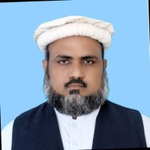
Saifullah Khalid
A senior journalist, editor, security analyst, and columnist with 35 years of experience. Since 2001, he has extensively covered political and strategic developments in Afghanistan and Central Asia since 1991. He has authored 4 books , 2 on Afghanistan. In 1994, he authored a book on Afghanistan titled Main Ne Kabul Jaltay Dekha (I Saw Kabul Burning), and in July 2026, he published his book Taliban Ka Asli Chehra (The Real Face of the Taliban) in Urdu.