On October 2, 2025, South Asia Times (SAT) hosted an insightful X Space session on the “Ongoing Protests in Azad Jammu and Kashmir (AJK).” Moderated by Usama Khan, Director SAT, the discussion brought forward perspectives from Farzana Yaqoob, former AJK minister and prominent political leader, and Sardar Sohail Hassan, an AJK-based activist with extensive grassroots exposure.
The dialogue explored the roots of the unrest, the role of the Joint Awami Action Committee (JAAC), governance challenges, youth mobilisation, and the broader regional implications for Pakistan and Kashmir.
Highlights from Farzana Yaqoob
Government–Funds Debate
Farzana Yaqoob clarified that JAAC has exaggerated the privileges of AJK ministers. While certain benefits exist, the actual funds are lower than those of provincial ministers in Pakistan, and misrepresentation of this issue which works largely on the same mechanism as in Pakistan regarding matters like privileges to ministers has fueled public discontent.
Voter–Leader Relations in AJK
She noted that unlike Pakistan, voter-leader bonds in AJK remain resilient. Rooted in close community ties, high literacy, and a culture of respect and honor, this dynamic sustains strong political engagement across the region which is now fading at hands of both the incompetent political leadership and the malicious elements.
Youth and JAAC’s Role
Madam Farzana Yaqoob emphasized that AJK’s youth are deeply capable and engaged, but some are being misguided by JAAC factions. Violent clashes undermine their credibility and risk delegitimizing their activism. She urged the government to address developmental gaps so that genuine concerns of youth are not exploited.
Legitimacy of Protests
While acknowledging that some grievances are justified, she stressed that not all demands are constitutional or just. The movement risks losing legitimacy if it departs from peaceful and constitutional means.
Governance and External Forces
She highlighted AJK’s weak administrative capacity and shortage of police, just a few thousand for 4 million people. She noted that Pakistani police are deployed at the request of AJK’s government, not imposed externally. Referring to JAAC’s rhetoric on “external forces,” she said these are our own forces and cautioned that both sides must exercise restraint, as casualties, whether in uniform or not, are our people.
Administrative Issues and Stability
She warned that governance shortcomings are being ballooned deliberately, endangering the valley’s stability. The unrest, she said, mirrors the wider playbook in Pakistan where ultra-nationalist groups are backed to create a vacuum between the people and their legitimate representatives.
International Implications
Yaqoob drew attention to how protests in AJK are weaponized internationally. Indian media, including Defense Minister Rajnath Singh, has shifted its narrative, moving from military threats against AJK to suggesting that unrest will “bring AJK to India on its own.” Such framing, she warned, damages Pakistan’s global position by creating a false equivalence with India’s illegal occupation of Kashmir.
Social Harmony
She lamented the rise of abusive and aggressive political behaviour in AJK since 2021, calling it alien to Kashmiri traditions of kinship and peace.
Highlights from Sardar Sohail Hassan
While both the speakers maintained a coordinated and aligned stance upon the subject core, Sardar Sohail Hassan especially highlighted the technicalities lingering under the guise of the mainstream narrative being projected and sold by the questionable credentials of people involved in the protests.
Pakistan’s Subsidy Support
Mr. Sohail Hassan underlined that Pakistan has extended 65 billion rupees in wheat and electricity subsidies, along with additional relief packages, the same Pakistani government they raise the slogans against. Yet, JAAC continues to exploit these issues for agitation rather than seeking genuine resolution.
Acceptance of Demands
He pointed out that of JAAC’s 38 demands, 36 were already accepted by Pakistan’s federal delegation. The two remaining demands require constitutional amendments, which might risks undermining the identity of migrant Kashmiris who sacrificed everything to resettle in AJK.
JAAC’s Composition
Hassan revealed that JAAC’s membership is dominated by vested interests: 17 of its 30 members are traders who received massive subsidies from Pakistan but failed to pass relief to the public, monopolizing benefits. The remaining 13 are ultra-nationalist elements with no genuine public base, raising anti-Pakistan slogans despite AJK’s people being firmly pro-Pakistan.
Compromised Elements
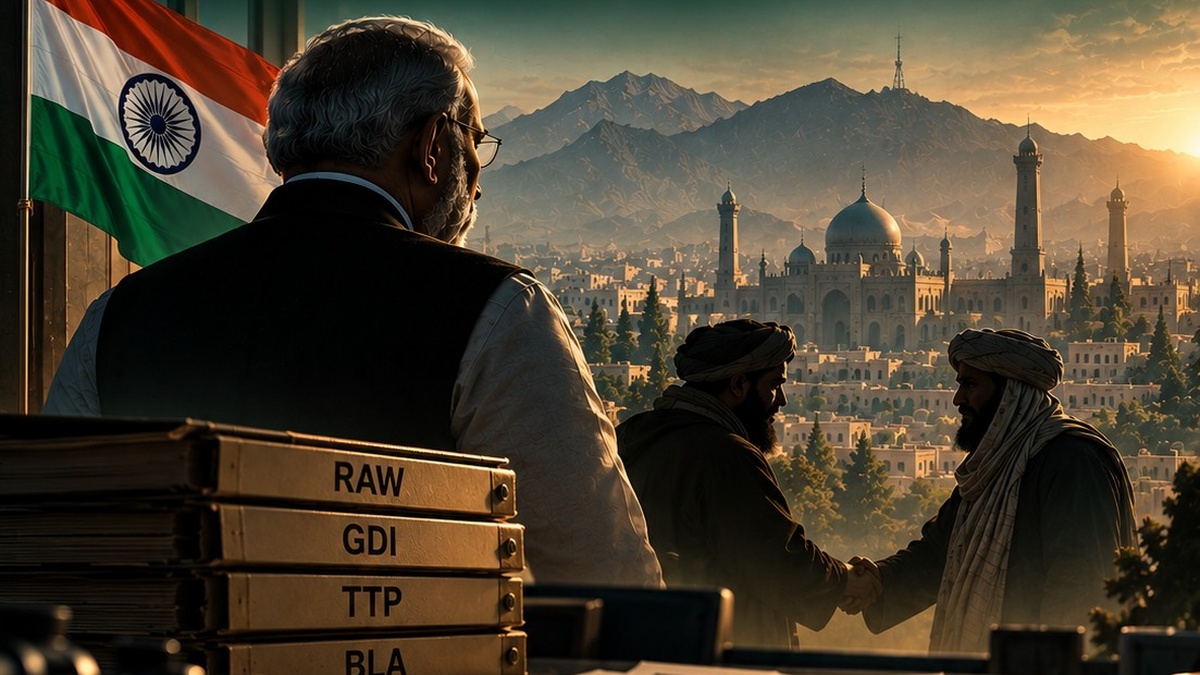
He also cautioned that many JAAC leaders have records of direct or indirect links with external actors, having publicly available records of such links, including Indian agencies. He urged the AJK government to take firm action against such compromised groups.
Shared Perspectives
Both speakers agreed that:
- JAAC’s agenda is being driven by a mix of trader interests and externally backed ultra-nationalist elements.
- The protests, while rooted in some real grievances, are being manipulated for political and external purposes.
- Kashmiri society remains overwhelmingly aligned with Pakistan. They cited Syed Ali Shah Gilani’s lifelong stand against Indian aggression and his vision of Pakistan as the natural home of all Kashmiris as a testament to the enduring bond.
Takeaway
The discussion revealed that AJK’s protests, while emerging from genuine governance challenges, are being exploited by trader lobbies and ultra-nationalist groups with external links. Despite Pakistan’s extensive subsidies and relief support, these contributions are downplayed to fuel unrest.
Speakers concluded that while the government must urgently address administrative shortcomings and meet legitimate demands, it must also firmly counter anti-Pakistan agendas. At its core, Kashmir’s social fabric and political identity remain tied to Pakistan, a bond external actors have repeatedly failed to weaken.
Also See: Syed Ali Shah Gillani: The Ideologue Who Defined Kashmir’s Defiance