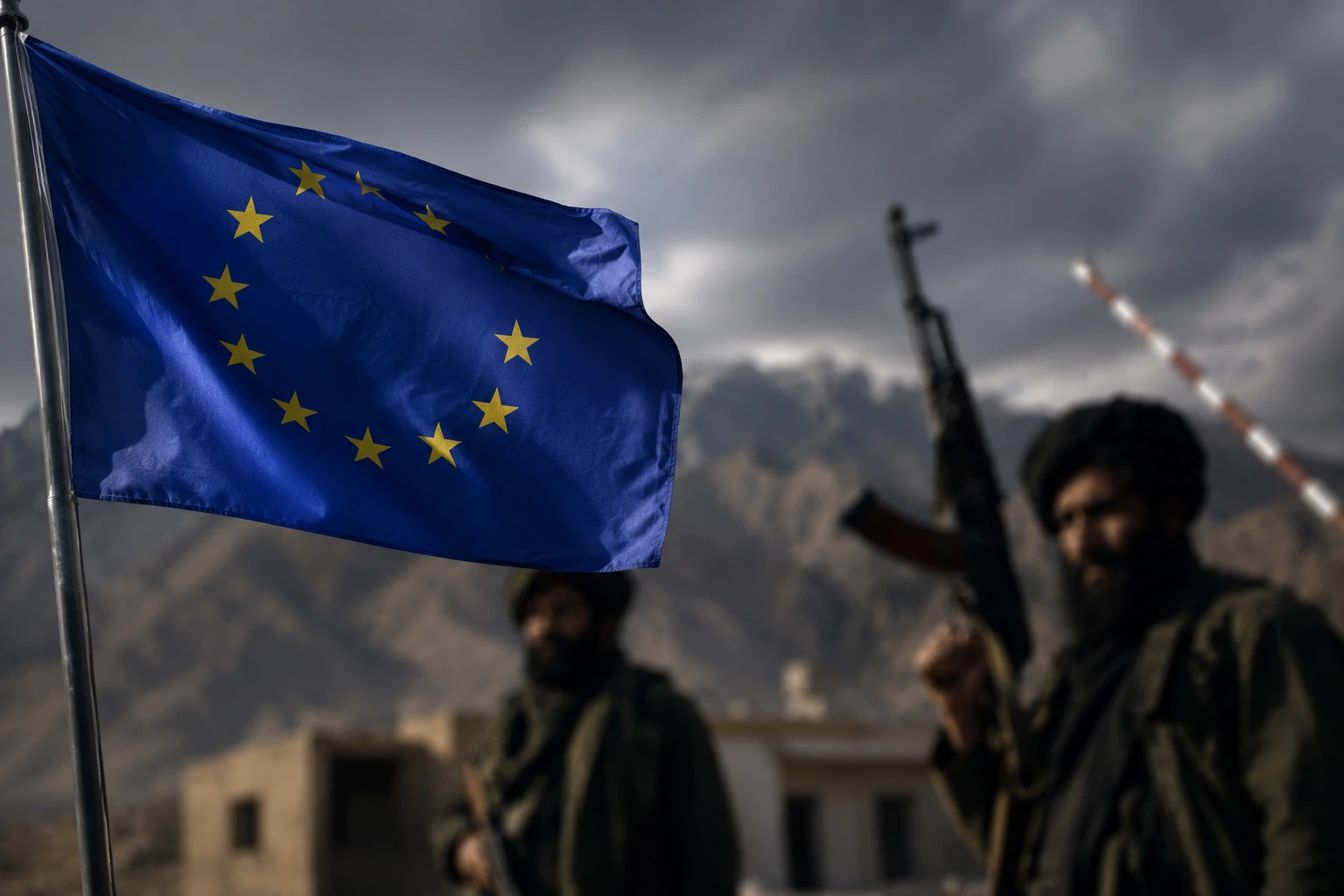
When the United Kingdom’s Special Representative for Afghanistan, Richard Lindsay, and the European Union’s Special Envoy, Gilles Bertrand, both publicly confirmed in separate interviews that the Tehreek-e-Taliban Pakistan (TTP) continues to operate safe havens, training camps, and logistical networks inside Afghanistan under Taliban patronage, they were not merely expressing diplomatic concern. They were participating in a gradual but consequential reconfiguration of how the international community frames the challenge of Taliban governance and, more specifically, how it assigns responsibility for the terrorist infrastructure that has taken root on Afghan soil since August 2021.
For years, Pakistan has argued before international forums, bilateral partners, and multilateral institutions that Afghanistan under the Taliban has become a permissive operating environment for terrorist organisations, most urgently the TTP, which has conducted sustained and lethal cross-border attacks against Pakistani security forces and civilians. That argument was frequently received with caution, framed as a bilateral dispute, or overshadowed by humanitarian concerns that dominated Western engagement with Kabul. Lindsay’s and Bertrand’s statements suggest that this diplomatic deference is giving way to something more candid, and more consequential.
The substance of both statements deserves careful attention. Lindsay acknowledged that TTP fighters who conduct attacks in Pakistan subsequently find refuge across the border, that Taliban authorities provide the group with weapons access, financial support and operational freedom, and that this arrangement contributes directly to regional instability. He went further, recognising Pakistan’s right under international law to defend itself against clear terrorist threats, a formulation that carries legal and moral weight far beyond routine diplomatic language. Bertrand, for his part, described the TTP as a terrorist organisation and warned that Taliban authorities bear sovereign responsibility for preventing Afghan territory from being used against neighbouring states.
These are not novel positions in isolation. Successive United Nations Security Council Monitoring Team reports, the 35th, 36th, 37th and the Sixteenth Analytical Support and Sanctions Monitoring Team reports, have documented the continued presence of more than twenty terrorist organisations in Afghanistan, estimating between 13,000 and 23,000 fighters operating across the country, including between 6,000 and 6,500 TTP members and family units concentrated in the eastern provinces. The death of al-Qaeda leader Ayman al-Zawahiri in a Taliban-controlled safe house in Kabul in 2022 provided perhaps the starkest illustration of the sanctuary Taliban authorities have extended to internationally designated terrorists. What is significant about the recent European statements is not that they introduce new evidence, but that they translate that evidence into diplomatic language openly, publicly, and in terms that assign accountability.
The broader strategic context is essential to understanding why these statements matter. The international community’s engagement with the Taliban since 2021 has been shaped by a fundamental tension: the humanitarian imperative to prevent the collapse of Afghan society, and the security imperative to ensure that Afghan territory does not once again become a launchpad for transnational terrorism. For much of the past four years, the humanitarian dimension has constrained the security dimension, producing a pattern of cautious diplomacy in which Western governments avoided the language of accountability lest it jeopardise access to Afghan civilians.
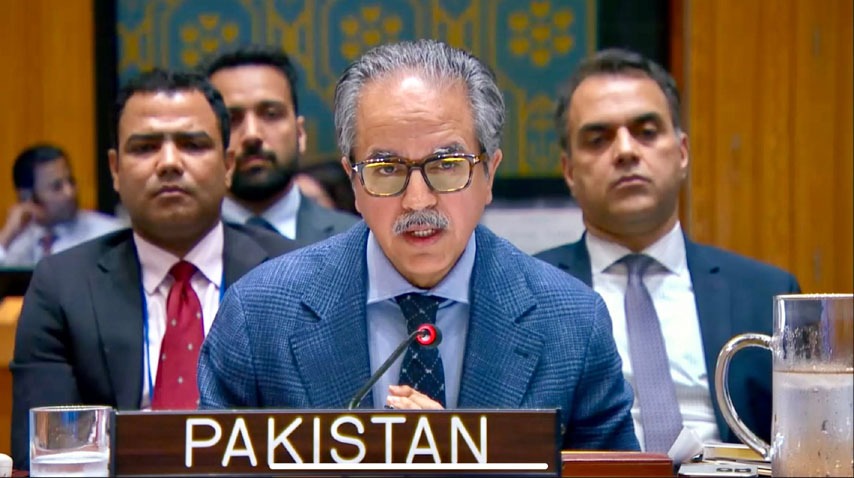
That calculation is shifting. The convergence now visible at the UN Security Council is striking in its breadth. Russia has publicly warned that Afghanistan hosts more than twenty terrorist organisations and between 18,000 and 23,000 militants. China has repeatedly called on the Taliban to take action against the TTP, the East Turkestan Islamic Movement (ETIM), al-Qaeda and the Islamic State Khorasan Province (ISKP). The United States has criticised the Taliban for sheltering terrorist groups in violation of its Doha Agreement commitments. Pakistan has raised these concerns consistently and directly. European voices are now joining this convergence, not as isolated commentary, but as part of a widening international consensus that Taliban governance is failing its most basic counterterrorism obligation.
The regional implications of this shift are significant. Pakistan faces a deteriorating security situation along its western frontier that is directly linked to the operational freedom enjoyed by TTP inside Afghanistan. Attacks on military installations, mass-casualty bombings, and the targeting of development workers have all intensified in recent years. Lindsay’s formal acknowledgement that Pakistan possesses the right to self-defence under international law, however carefully worded, represents a meaningful diplomatic signal to Islamabad that European partners do not view Pakistan’s security concerns as merely bilateral noise.
Beyond Pakistan, the implications extend to Central Asia, where states bordering Afghanistan have grown increasingly anxious about militant infiltration. The SCO, CSTO and Moscow Format consultations have all, in various registers, reflected alarm about Afghanistan’s trajectory as a hub for terrorist recruitment, financing and cross-border operations. European engagement with this broader architecture of concern, rather than treating the Afghan terrorist question as exclusively a South Asian problem, marks a maturation of European strategic thinking about the region.
The Doha Agreement, which the Taliban signed in February 2020, committed the movement to a single overriding security obligation that Afghan territory would not be used to threaten the security of other countries. Nearly five years on, the international consensus reflected in UN reports, European diplomatic statements, and multilateral security assessments is that this commitment has not been honoured. The growing willingness of European officials to say so plainly, rather than in the carefully hedged language of diplomatic ambiguity, is a development Kabul cannot afford to ignore. Legitimacy, international recognition and any prospect of normalised relations with the outside world will ultimately depend not on what Taliban authorities claim about their counterterrorism posture, but on whether the terrorist infrastructure operating from Afghan soil is dismantled. Europe’s willingness to say so openly is not the beginning of a pressure campaign, it is evidence that the international community’s patience is approaching its limits.

Your go-to editorial hub for policy perspectives and informed analysis on pressing regional and global issues.