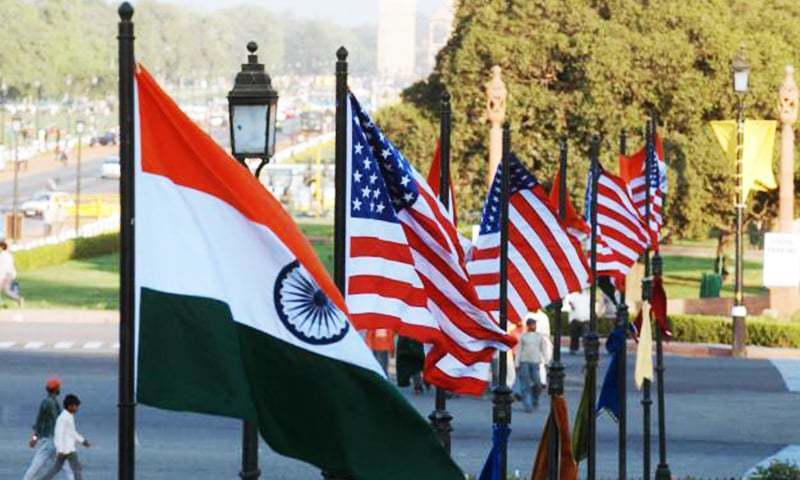
When the results of the US midterm elections came in this week, a hopeful idea quickly took hold in New Delhi. With Democrats now in control of both houses of Congress, a weakened Donald Trump might want quick wins abroad, and a trade deal with India could be one of them. One Delhi trade think tank suggested a deal could come within two months. Modi and Trump are expected to meet in Manila this month, at the first Quad leaders’ summit in more than two years, before Trump travels on to meet Xi Jinping in China.
The hope is understandable, but much of what has shaped the relationship over the past year happened well before the midterms, and little of it depends on Congress. Looking at that record helps answer a simple question: how does Washington value India today?
The Trade Talks
The two sides announced a framework in February which would reduce US tariff rates on most Indian products from 50 percent to 18 percent. There remains no signed deal after 9 months. After the US Supreme Court struck down Trump’s emergency tariffs, Indian goods have faced a 10 percent duty, and a second US investigation, into industrial overcapacity is still open. Marco Rubio has said the deal is 99 percent done. Trade Representative Jamieson Greer said it is not imminent. The talks have now reached a “plateau”, said Finance Minister Nirmala Sitharaman.
Main issue is regarding agriculture. Washington desires India to open up its market to U.S. dairy, GM corn and soymeal. Narendra Modi in August 2025 said that he would not bow down to anyone on the issue of farmers’ interests, even if it cost him “a heavy price”. The position is popular at home, but it leaves India’s negotiators with little room.
What the Numbers Show
India’s exports to the U.S. increased by 11 percent to $50.8 billion in the first quarter of the year ending in September. Its imports from the US have increased at a higher rate (26 percent) to $32.3 billion. India is purchasing more from the US, but it has not yet resulted in tariff relief.
India’s aim in the talks has also become more modest. It now seeks lower US tariffs than those applied to Bangladesh, Vietnam and Cambodia. At the same time, it faces two US trade investigations while Pakistan and Sri Lanka face one, and it pays the same 10 percent forced-labour tariff as Pakistan and Bangladesh. For a country often described as Washington’s key partner in Asia, this is not the treatment many in New Delhi expected.
Words and Policies
Washington’s tone has not helped. Rubio made his second visit to India this year in October, but not to New Delhi, visiting Mumbai and Reliance’s refinery in Jamnagar. Commerce Secretary Howard Lutnick said in January that an earlier deal had been scrapped as a result of “Modi not calling” Trump. Five Indian IT companies were suspended from a green-card sponsorship programme in October, which JD Vance described as foreign indentured servants of H-1B workers. The impact of the move was felt keenly in India as Indians receive nearly 70 percent of the H-1B visas. The policy remained in place despite New Delhi’s objections.
Another potential pressure point is Russian oil. The biggest purchasers of Russian energy would face duties of up to 100 percent under a US sanctions law passed in September, India is among them. In October, Trump lifted those duties but there’s no expiration date for the waiver and it can be withdrawn at any time.
What the Midterms Change
Directly, quite little. The interim trade agreement does not require Congressional approval and the important tools, including tariffs, trade investigations, the waivers on sanctions, and visa regulations are retained by the president. Some analysts believe a Trump after losing midterm might leverage these powers to pressure India more for entry for American agricultural products.
The China Question
For two decades, the case for close India–US ties rested largely on China. India was seen as the large democracy that could help balance Beijing. That case now looks weaker. Quad leaders have not met since 2024, and the summit India was due to host in 2025 did not take place. The Pentagon’s 2026 defence strategy does not mention India. Meanwhile, Washington’s own ties with Beijing have warmed, with Trump and Xi meeting several times this year. Beijing for its part has placed India-specific curbs on exports of manufacturing equipment, battery technology and critical minerals, a reminder that closer US–China ties do not ease India’s own difficulties with China. Chietigj Bajpaee of Chatham House has said that the idea of India as a counterbalance to China has weakened under Trump. Aman Thakker of CSIS has noted that Washington is seeking “strategic stability” with Beijing while increasing economic pressure on New Delhi.
This does not mean that the partnership is over. The defence ties would continue to proceed, and Washington still calls India one of its most important relationships. However, the record of the past year suggests that the US currently sees India importantly by what it buys, sells and supplies rather than by its strategic role.
When the Quad leaders going to meet in Manila on November 16-18, the visuals will show four partners standing side by side. The more useful test will come in the months that follow: whether Washington’s actions still treat India as a strategic partner.

Amna Munawar Khan
The writer is an International Security Analyst focused on regional conflict dynamics, human security and strategic signalling. She holds an MPhil in Defence and Strategic Studies from Quaid-i-Azam University, Islamabad, and a degree in Peace and Conflict Studies. She can be reached at LinkedInandamnaakhan74@gmail.com.