Originally published by The News. Featured by South Asia Times (SAT) for informational purposes, with attribution to the original author and publisher.
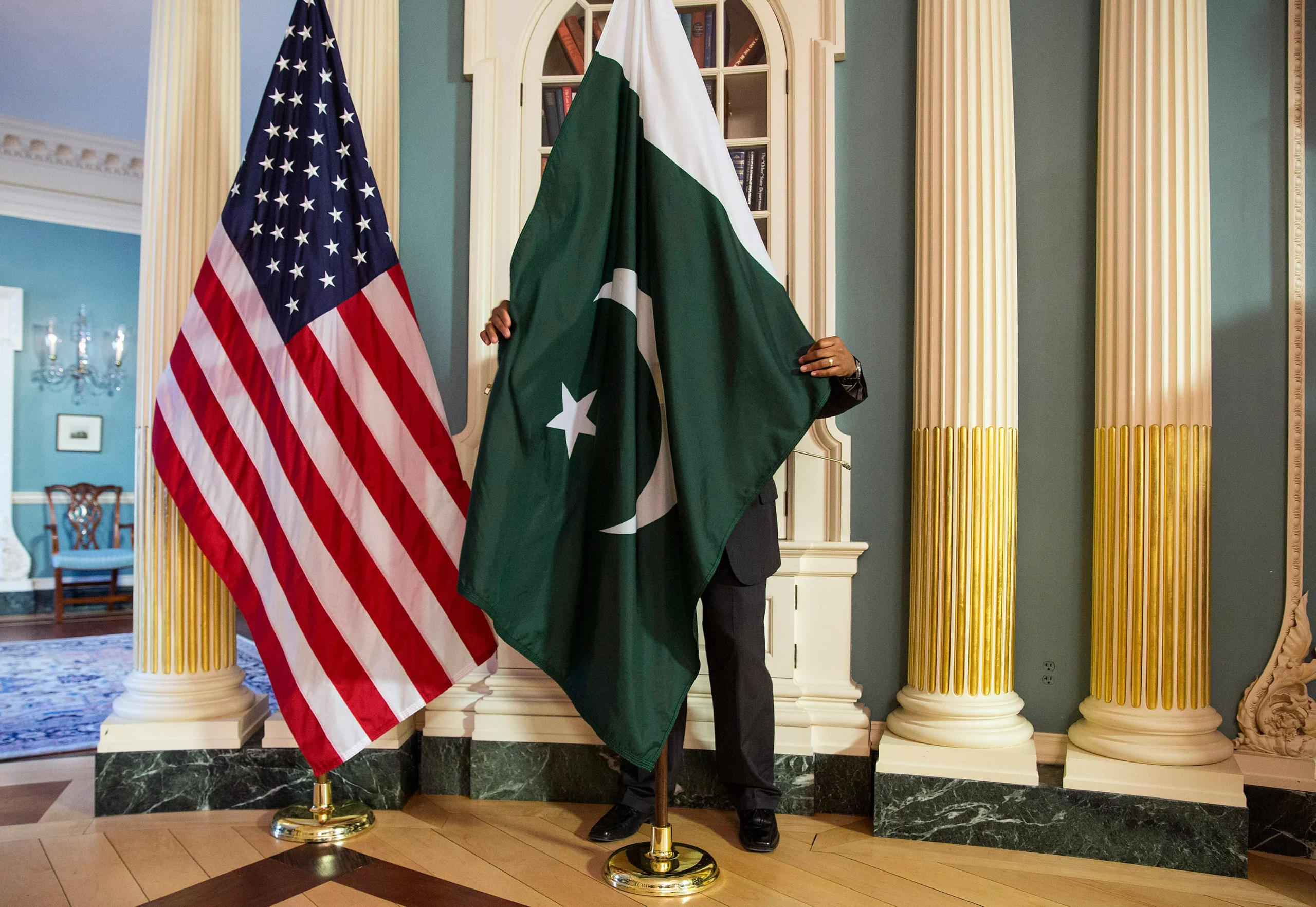
Pakistan’s relationship with US cannot be read through the results of a single American election. Yet the midterm results have prompted speculation that relations could slide from the diplomatic highs associated with President Donald Trump.
This concern draws much of its force from his highly visible engagements with Pakistan’s civilian and military leadership. It deserves examination, but visibility alone is an insufficient measure of a relationship’s strength or its vulnerability.
Democratic control of Congress changes the environment in which Trump operates but does not change the occupant of the White House. Nor does it automatically replace the administration’s foreign policy or remove the interests sustaining engagement with Islamabad. The more useful question is whether those interests have materially changed.
Congress remains consequential. It controls appropriations, passes legislation and conducts oversight. A different majority can intensify scrutiny, influence assistance and complicate executive decisions.
Pakistan has navigated these distinctions for 79 years. Since diplomatic relations began in 1947, it has worked with Democratic and Republican presidents, congressional majorities of both parties and periods of divided government. The relationship has never depended exclusively on one political configuration in Washington.
The recent improvement should be understood within that history. The period following the May 2025 India-Pakistan confrontation created opportunities for renewed engagement. Developments in the Middle East, including diplomacy concerning Gaza, added areas in which Pakistan could contribute alongside other Muslim countries. The September 2025 White House meeting brought regional security, counterterrorism, trade and Middle Eastern diplomacy into the same conversation.
Trump’s personal engagement helped give this convergence momentum. Pakistan’s civilian and military leadership used that access to advance dialogue. Nevertheless, the underlying circumstances were larger than the personalities involved: regional instability, counterterrorism and the search for diplomatic partners.
It is reasonable to infer that Pakistan would have sought a similar constructive role under a different American president facing comparable circumstances. The precise access and tone might have differed, but Islamabad’s incentives would have remained. Pakistan has consistently sought workable relations with the world’s leading power, particularly given concerns regarding India.
English-language education, professional networks, universities, diaspora communities and American cultural influence provide enduring links. They do not determine foreign policy, but they help explain why the relationship extends beyond official security encounters.
An equally important distinction separates diplomatic warmth from material outcomes. High-level meetings can restore confidence and create opportunities. Their value must ultimately be assessed through investment realised, market access secured, technology transferred and security cooperation delivered.
It would be inaccurate to suggest that recent engagement produced no concrete results. Pakistan secured a tariff arrangement in July 2025, while Washington designated BLA as a Foreign Terrorist Organisation in August 2025. These were substantive developments. But Pakistan’s further objective is to secure action against BLA through the relevant UN sanctions framework. That requires a separate diplomatic and legal process, including meeting the applicable listing criteria and securing sufficient international support. American designation is therefore an important bilateral achievement, while broader multilateral action remains a distinct objective.
Similarly, approval of a possible $686 million F-16 support and upgrade sale represented defence cooperation, rather than a grant of equivalent financial assistance. Announcements, commercial commitments, approved sales and completed deliveries must be assessed separately. Diplomatic success becomes more durable when expectations reflect these distinctions.
This matters when assessing the possibility of a downward slide. A reduction in ceremonial warmth would not necessarily mean the loss of substantial economic benefits. Conversely, continued cordiality would not guarantee their delivery. The proper benchmark is the relationship’s capacity to produce reciprocal, measurable outcomes.
Washington’s institutional planning provides a useful guide. The Integrated Country Strategy for Pakistan, approved in March 2022 and revised in June 2024, identifies counterterrorism, regional stability, inclusive economic growth, and democratic institutions and human rights as its four broad priorities. Its scope shows that engagement includes both cooperation and scrutiny.
The document links Pakistan’s prosperity with regional stability and American commercial opportunities. It also records disagreements over strategic capabilities and governance. Written under former US president Biden, it cannot establish that every programme continues unchanged under Trump. It does show that American interests have an institutional expression extending beyond presidential rapport.
Economic connections provide another anchor. The United States Trade Representative estimates bilateral goods and services trade at $11.5 billion in 2025. US Census Bureau data show that goods trade alone reached $6.57 billion during January–September 2026, including $4.01 billion in Pakistani exports and $2.55 billion in American exports. Businesses, workers and customers on both sides have a material interest in maintaining these connections.
Security cooperation follows a comparable logic. The August 2026 counterterrorism dialogue identified common concerns involving ISIS-K, al-Qaeda, TTP, BLA and its affiliates. Such cooperation reflects overlapping requirements, while leaving room for differences over regional policy.
Pakistan should therefore use the present moment to broaden support across Washington. Integrated Country Strategies are four-year plans. Engagement before the next strategy is finalised offers an opportunity to explain Pakistan’s interests while priorities are being shaped. Waiting for approval leaves Islamabad responding to an agenda already established.
That effort should encompass the administration, both congressional parties, businesses, universities and policy institutions. Pakistan needs credible proposals on market access, investment, technology, regional connectivity and cooperation against terrorism. It must also demonstrate the governance and implementation capacity required to make those proposals attractive.
The midterms do not alter the reasons for engagement. Pakistan’s relationship with the US remains institutional, grounded in interests and capable of accommodating disagreement. Its next task is to convert diplomatic access into durable outcomes and broaden the constituency that supports them.

Amir Jahangir
The writer is a strategic communications expert, media executive, and policy adviser