What Was Different This Time? Pakistan-Afghanistan Skirmishes on the Pak-Afghan border
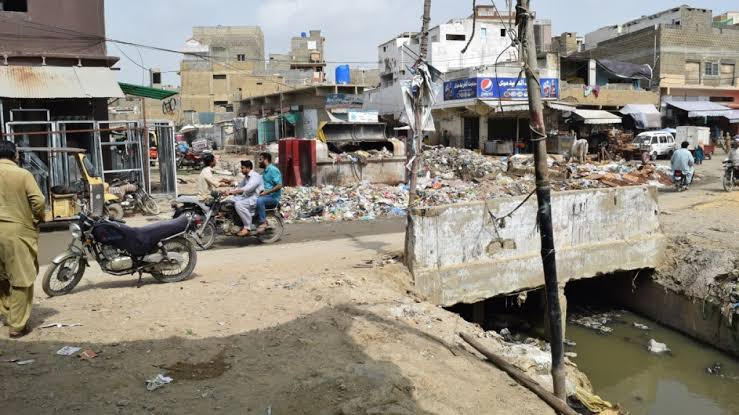
What changed in the Feb 26 Pak-Afghan clashes? From restraint to calibrated force, Pakistan signaled a tougher, proactive border doctrine.

What changed in the Feb 26 Pak-Afghan clashes? From restraint to calibrated force, Pakistan signaled a tougher, proactive border doctrine.
![2022-02-09T000000Z_1319661209_MT1NURPHO000HXCNME_RTRMADP_3_UKRAINE-CONFLICT-STOCK-PICTURES-scaled-e1661353077377 Ukrainian and Russian flags with soldier silhouettes representing ongoing conflict. [Image via Atlantic Council].](https://southasiatimes.org/wp-content/uploads/2026/02/2022-02-09T000000Z_1319661209_MT1NURPHO000HXCNME_RTRMADP_3_UKRAINE-CONFLICT-STOCK-PICTURES-scaled-e1661353077377.jpg)
Four years after Russia’s invasion of Ukraine, the war has evolved into a costly stalemate with far-reaching geopolitical and economic consequences.
![Deconstructing the Deprivation Myth; How Balochistan’s Underdevelopment Became a Political Instrument Truck traveling along the Makran Coastal Highway in Balochistan, with rugged cliffs and the Arabian Sea coastline in the background [Image via Getty Images].](https://southasiatimes.org/wp-content/uploads/2026/02/Balochistan-2.webp)
For decades, Balochistan’s underdevelopment has been framed as a story of federal neglect. But does the data support that claim?

Taliban’s acting Foreign Minister Amir Khan Muttaqi asked why only Pakistan complains about terrorism in Afghanistan. The truth is clear; Pakistan bears the heaviest burden. Since 2021, the Taliban regime has turned Afghanistan into a hub of terror and oppression, leaving Pakistan to face staggering human, economic, and security costs while the world watches.

Since the Taliban’s return to power, Afghanistan has once again become a hub for militant activity despite their promises under the 2020 Doha Accord. UN and SIGAR reports reveal that Afghan soil now shelters TTP, Al-Qaeda, and ISIS-K operatives involved in cross-border attacks, particularly against Pakistan. The Taliban’s failure to uphold intra-Afghan dialogue, misuse of international aid, human rights abuses, and deception in regional agreements have eroded trust globally. With terror networks thriving under their protection, it is time for the U.S. and international community to adopt a new, accountable strategy toward Afghanistan’s Taliban regime.

Five years after the Doha Accord, the Taliban have broken key commitments: 5,000 released prisoners returned to combat, 89% of government posts are held by Pashtuns, and women remain barred from education and work. Afghan soil hosts 6,000–6,500 TTP and Al-Qaeda fighters, with TTP chief Noor Wali Mehsud receiving $43,000/month. Pakistan has neutralized 267 Afghan terrorists in 2025, while 58 terrorist camps operate under Taliban knowledge. Despite the US aid, compliance is minimal. International recognition and support must now be tied to verifiable reforms to prevent further regional instability.

For over two decades, Pakistan has battled the scourge of terrorism. Yet, despite military successes, the absence of political consensus continues to jeopardize lasting peace. As divisions deepen and populist narratives gain ground, the question remains: can Pakistan truly defeat terror without unity at the top?

When the Taliban returned to power in 2021, Pakistan saw hope. Four years later, TTP and BLA attacks have surged, Kabul’s ties with India are deepening, and Islamabad faces a worsening security crisis along its western border.

India’s unchecked missile development raises concerns, while baseless allegations against Pakistan persist.

The development of hypersonic missiles, BMD systems, advanced surveillance assets, and nuclear submarines reveals India’s shift away from a purely defensive doctrine.