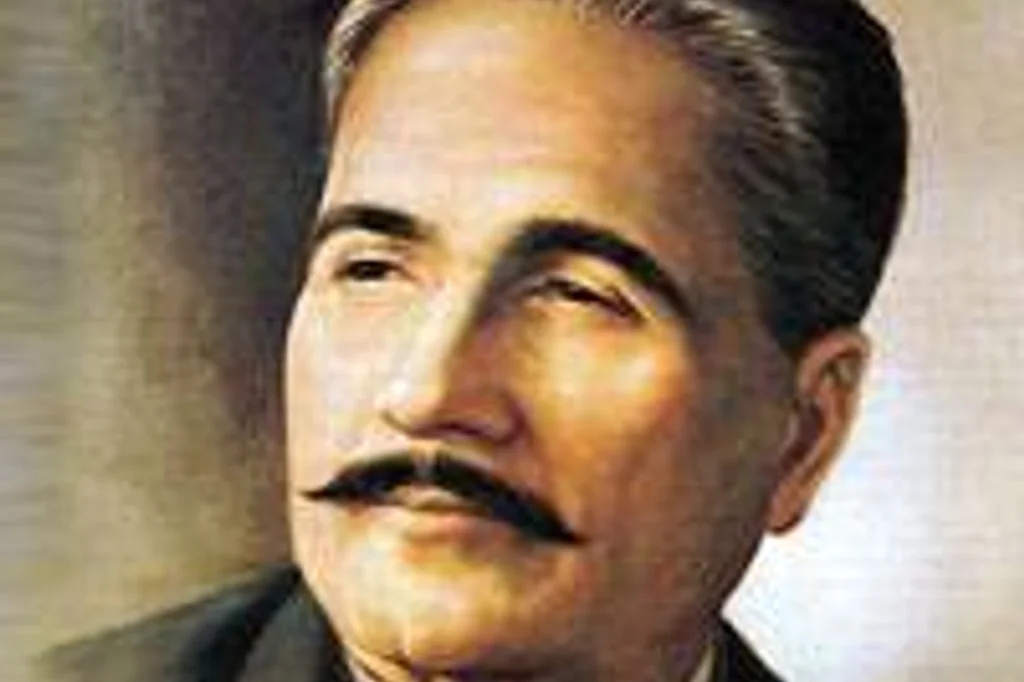
The birth anniversary of Allama Muhammad Iqbal on November 9 is an occasion to remember him not only as a prolific poet and philosopher but quite simply as one of the greatest Muslims born in South Asia. It was his vision of a political and cultural ideal for the Muslims of British-ruled India that went on to serve as the foundational inspiration for Pakistan. While it is important to highlight the role of his poetic works in reinvigorating the Islamic spirit of the region, it is equally crucial to chart the trajectory of this revival; especially in the current atmosphere wherein Pakistan is seemingly teetering on the precipice of predestination.
Secrets of the Self
Albeit it might be natural to be galvanized by the visuals of masses chanting revolutionary slogans on the streets, it is necessary today to reflect on what constitutes the core of Iqbal’s philosophical endeavor as well as the first prerequisite of any positive transformation: the self. The first of Allama Iqbal’s books of poetry, ‘Asrar-i-Khudi’ (Secrets of the Self), was released in Persian in 1915. Highlighting the ego and the spirit, Iqbal outlined his worldview centered around the ‘Self’ (Khudi), referring to a divine spark that resides within each and every person:
“The form of existence is an effect of the Self,
Whatsoever thou seest is a secret of the Self,
When the Self awoke to consciousness.
It revealed the universe of Thought.”
It is worthy of note that Allama Iqbal illustrated the “Self” as the route to the ultimate of all knowledge and realization and the very characteristic for which God commanded all of the angels to prostrate before Adam. However, the self on its own is not complete, but rather a summation of individual stages one passes through in order to “arrive.” The relationship between fragrance and seed can best be observed to comprehend this analogous journey. Every seed possesses within itself the capacity for fragrance. But the seed must go through several stages and alterations before it may become fragrant. Its emergence from the shell, proceeding to rise from the darkness of the soil while simultaneously establishing roots, then struggling against nature to manifest its leaves and blossoms Similarly, an individual remains subject to fundamental changes before his pinnacle can truly reflect on or restructure society. As enunciated in the poem ‘Baidaari’ (Awakening):
“The Truth‐seeking man whose self has awakened
Is like a sword which is cutting and brilliant.
To his keen eye is visible
The power to show what is latent in every atom.
To him you cannot be compared:
You are the slave of the heavens while he is their master.
You have not yet developed even a desire for the shore;
He has grasped the secrets of the deep through the purity of his soul.”
The True Awakening
Not all that is perceived as “awakening” is necessarily the force for the greater good it is projected to be. Often, freedom of thought and expression, when exercised by people with lowly or malevolent ideals, spells irreversible ruin. If lacking in the purity of intention or maturity of command, neither the individual nor his social environment will benefit in any significant measure. Conversely, such notions only lead men to dwindle between extremes. Allama Iqbal forebodes bondage and misery for nations without such clarity:
That race is doomed to bondage and much pain,
Which justice for its ego can’t attain.
The faults of one man Nature can reprieve,
But groups for crimes no pardon can receive.
Old Lessons, Modern Times
Nevertheless, ideas and energies, when channeled with adequate intellectual lucidity, are rays of hope for metamorphosing masses into nations. To imagine that positive sociopolitical outcomes will reveal themselves as a sudden consequence of intense rallying behind a cause is imprudent. As for consciousness of the self that undergoes phases before it can impart its distinct essence to the outer world, favorable transitions especially on a national footing will only follow in due course. However, patience for the culmination of such goals must not be construed as senseless waiting or reduced to inaction. In this regard, it is incredible how the message of Allama Iqbal still resonates almost a century later:
The dark surroundings of Hind it won’t forsake
Till natives sunk in slumber do not wake.
The hopes of Orient on this region hinge,
The tears that Iqbal sheds on it impinge.
Whilst the tribulations Muslims of the region are presently confronted with cannot be equated with their subjugation in the era of British colonialism, they are not as yet emancipated from the oft-illusive paradigms of nationalism and adulation. Brilliantly articulated in Allama Iqbal’s ‘Wataniyat’ decades ago, it appears that most have forgotten the once envisioned common destination grounded in faith, in lieu of a multitude of concocted fiefdoms. In the ultimate analysis, it remains to be seen whether modern waves of popular resentment will usher in the winds of change, or dissolve into nothingness where the more powerful will issue the final verdict:
Aware am I! but tells me my cosmic foresight:
No danger from what is but a masquerade for imperialism.
We ourselves have dressed imperialism in the garb of democracy
When man has grown to be a little self‐conscious and self‐observant.

Your go-to editorial hub for policy perspectives and informed analysis on pressing regional and global issues.