The midterm election in the United States on 3rd November 2026 have brought significant changes into the political configuration in Washington as the Democrats have acquired control of both the Senate and the House of Representatives.
This decisive control over the legislature in the US would drastically reduce President Donald Trump’s ability to use his executive powers not only on MAGA domestic agenda but can also cause foreign policy shifts including the US priorities in South Asia, relations with Pakistan and the conflict in West Asia.
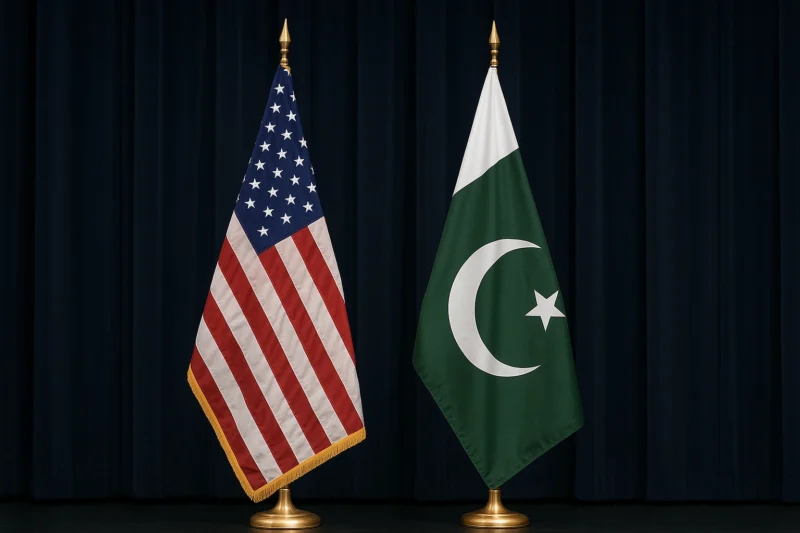
During the first two years of his term, President Trump established a close personal rapport with Pakistan’s Chief of Defence Forces and Chief of Army Staff Field Marshal Asim Munir and Prime Minister Shehbaz Sharif. As a result, the US and Pakistan developed close convergence on global and regional issues and Pakistan assumed a leading role on evolving developments in West Asia and the Middle East.
Pakistan’s recognition of President Trump’s claim of bringing ceasefire between India and Pakistan after their May 2025 clashes further boosted Pakistan’s strategic space with Washington while the US-India equation and particularly the terms between Trump and Modi suffered significant setbacks.
A possible fallout of the mid-term elections is likely to be a transition from personalized diplomacy to institutional scrutiny in the US-Pakistan relations.
Some analysts on South Asia expect a Democratic-controlled Congress to revert to an increased emphasis on the US-India strategic partnership as a counterweight to China, which could result into sidelining Islamabad’s recent diplomatic leverages in Washington, though such change would be subtle and gradual rather than sudden and abrupt.
It may also be argued that legislative focus will likely pivot back to conventional conditions regarding security assistance, human rights, and democratic governance, forcing Pakistan to transition from temporary diplomatic wins toward sustainable economic and institutional engagement.
Michael Kugleman, a Washington-based expert on South Asia wrote on X on 4th November 2026 that a Democrat-controlled Congress’s scrutiny of Trump and his family’s business dealings may impact his administration’s commercial diplomacy which “could spell a bad news for Pakistan”. Kugleman, however, also added that “Bipartisan Hill appreciation of Pakistan’s mediation of the Iran war/its strategic utility could reduce its likelihood”.
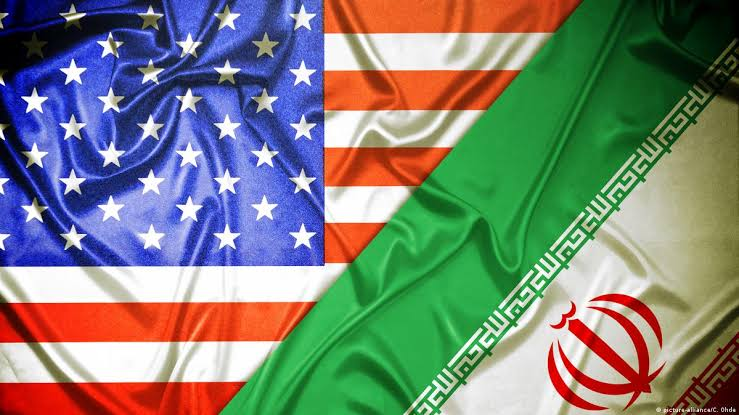
The most immediate and consequential impact of the democratic blue wave will be felt in West Asia. The ongoing US-Israeli military campaign against Iran, which began in February 2026, served as a primary driver for domestic voter dissatisfaction.
More than eight months war with Iran has resulted into highest ever inflationary pressure on the US people with unprecedented rise in the price of gasoline, commodities and utilities. Incoming Democratic leaders such as expected House Speaker Hakeem Jeferees may consider leveraging congressional oversight to restrict defense funding and challenge unilateral executive military deployments and this pushback may significantly weaken Trump’s geopolitical leverage and his escalation plans on Iran.
The change caused by these mid-term elections may also have some silver linings over the evolving geopolitical situation and the US-Iran war. A potential reduction in aggressive US military maneuvers could ease severe maritime instability by opening of the Strait of Hormuz through dialogue and dilomacy which would definitely ease international and regional economies under pressure due to surging energy costs and shipping blockades.
Many analysts are arguing that Pakistan-US relations are also likely to experience a sustainability as the emerging security frameworks spearheaded by regional actors—including Saudi Arabia, Türkiye, Egypt, and Pakistan—will gain traction. These rising middle powers aspiring collective regional security as vital for containing regional warfare are likely to become strategically more important for the US.
Finally, Pakistan’s recent strategic role as a mediator—anchored by the Islamabad Memorandum of Understanding that facilitated initial direct talks between Washington and Tehran—may receive fresh institutional backing from a US Congress eager to find a diplomatic off-ramp.