Since the start of this century, military intervention in foreign countries for regime change has become a central feature of US foreign policy. To describe the results of midterm elections in the United States as an antidote to this problem would be an exaggeration. However, there is at least one newly elected senator who unequivocally challenged this foreign policy principle during his election campaign. Responding to a question from a student at Michigan University, senator-elect Abdul El-Sayed said the United States should not be in the business of regime change. The student who asked this question was an Iranian-American who demanded El-Sayed explain his position vis-à-vis the Iranian regime. “I also don’t believe that we were in the right to go to war to topple the government of Iran. It was not our responsibility to do,” he stated, arguing that political change in Iran should be determined by the Iranian people themselves. This voice deserves the serious attention of American policymakers, intellectuals, and media. The wars the United States has imposed on the world since the start of this century have been extremely brutal and inherently destabilizing for the international political system.
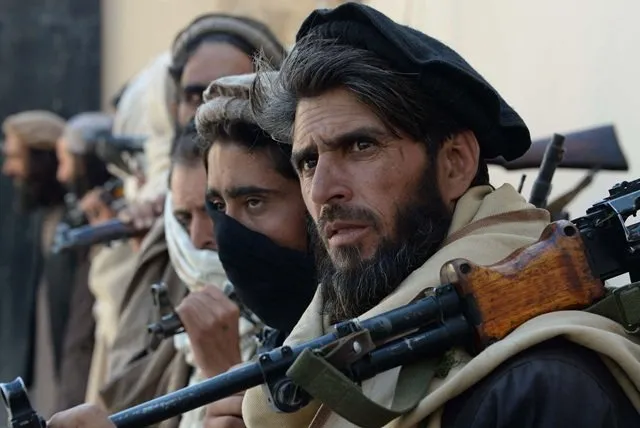
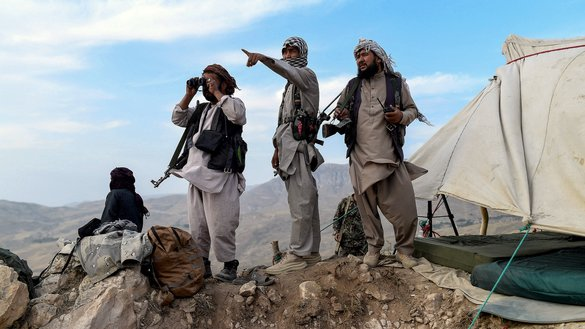
The October 2001 US intervention in Afghanistan led to a 20-year military occupation. In the end, one Taliban regime was merely replaced by another Taliban regime in Kabul when the US military withdrew from Afghan territory in August 2021, leaving over 90,000 people dead in the process. In 2003, the US invasion of Iraq unleashed a catastrophic sectarian civil war and prolonged instability not only within Iraq but across the broader region. American operations to engineer regime change through covert or non-military means have fared no better: the 1953 CIA-backed overthrow of Iranian Prime Minister Mohammad Mossadegh through a palace coup was only temporarily successful. Historians agree that the political uncertainty and resentment generated by that CIA intervention ultimately culminated in the Iranian Revolution of 1979. One enduring lesson for American policymakers is that dislodging a government is considerably easier than establishing a stable and legitimate political order in its wake.
In a liberal democracy, the fate of an elected leader is inherently tied to domestic public opinion. Political leaders have constituencies to appease and cannot afford to alienate their electorate. The structural crisis arises when domestic electoral impulses dictate foreign policy decisions that unleash devastating foreign wars. These wars produce catastrophic consequences for international order and for civilian populations who possess zero voice or vote in the election of the foreign leaders deciding their fate. Afghan citizens cannot vote for the President of the United States, yet successive US presidential decisions transformed Afghan society for the worse, leaving generations to suffer. Iraqis do not participate in American elections, yet their lives were upended by decisions shaped by US domestic political polling. Why should the people of one nation be condemned to destruction because of political pressures inside another?
When Al-Qaeda launched the 9/11 attacks from its sanctuary in Afghanistan, the US invaded and dismantled the Taliban regime hosting Osama bin Laden. For many observers, that campaign appeared driven as much by retributive impulse as by strategic calculation. In 2003, the Bush administration invaded Iraq under the false pretext of weapons of mass destruction, compounded by long-standing vendettas against Saddam Hussein. The dismantling of the Iraqi state and army triggered decades of regional bloodshed.
The pattern has metastasized. On October 7, 2023, Hamas provided Israel with the pretext to launch its own war of retributive vengeance against civilians in Gaza. In its campaign of collective punishment, Israel has devastated the entire Strip—striking hospitals, schools, and civilian infrastructure en masse, and burying thousands of victims in rubble and mass graves. This ongoing war of revenge mirrors the punitive logic of the post-9/11 wars.
A disturbing cycle has taken hold: when a militant or terrorist group launches an attack against a Western-aligned state, the enraged domestic population creates overwhelming political pressure for retaliation. Disproportionate military force is unleashed, and in the process, entire countries or territories—as in Gaza—are pulverized, with hundreds of thousands of innocents slaughtered.
University of Chicago political theorist John Mearsheimer presciently warned that America’s foreign interventionist wars would inevitably foster a secretive, hyper-centralized national security state at home, undermining civil liberties and democratic accountability. He observed that foreign crusades compel liberal elites to align with illiberal forces, eroding democratic values from within. The populist and illiberal currents sweeping American politics today represent the realization of Mearsheimer’s warnings in The Great Delusion.
In the opening years of this decade, war has once again become fashionable as an instrument of state policy: Russia’s invasion of Ukraine, the devastation of Gaza, strikes between Iran and Israel, and US-Israeli military escalations. While conflicts like the Pak-India standoff are driven by secular strategic factors, media and political narratives frequently recast them in civilizational or religious terms, deepening the militarization of public life and eroding democratic governance across societies.
The issue is not whether the Iranian government is above criticism—it should enjoy no free pass. The real question is whether Washington possesses the moral right or legal authority to dictate the political destiny of the Iranian people through military violence. Senator-elect Abdul El-Sayed is entirely correct: the future of Iran belongs in the hands of the Iranian people, and no one else.

Your go-to editorial hub for policy perspectives and informed analysis on pressing regional and global issues.