So finally, the much trumpeted mid-term elections in the US are over with President Trump’s Republican Party, facing one of the worst defeats in its history. Democratic Party now dominates both houses of Congress. As per latest polls upto November 5, 2026, Democratic Party has won 240 seats in the 435-seat ‘House of Representatives’, compared to Republicans’ 139 seats, gaining 31 seats.
Whereas, in the 100 seat US Senate, Democrats are leading with 54 seats, compared to Trump’s 44 seats, gaining 7 seats. For the first time in his two presidencies, Trump, a Republican will have to contend with Democratic-led Congress.
Voters’ anger over fuel pricing (and rising cost of living), Medicare, Trump’s poor and questionable stewardship, the US becoming an Israeli franchise, and war with Iran, could be discerned from the facts that, despite the World Jewry’s efforts and funds, at least 7 Muslims are elected, including the high profile Egyptian-American, Dr Abdul El-Sayed, a Democrat from the Party’s rising left wing’ He won Michigan’s open Senate seat in the hotly contested elections, becoming the first Muslim Senator, defeating Mike Rogers, a former congressman and FBI agent, who was extensively endorsed by Trump.
Lateefah Wahab, an Afghan American and incumbent Congresswoman from California, is currently leading the polls. A black Congressman, Hakeem Jeffries, the Democratic Leader, may be the first black speaker of the House. He promises focus on affordability and accountability, stating that the days of the “House of Representatives functioning like a wholly owned subsidiary of the Trump administration are over.”
Republican Party suffered defeats in its erstwhile strongholds like Texas, the biggest Republican-led state, ending decades-long winning streak. Kansas elected the first Democratic senator since the Great Depression, over 100 years ago. And South Carolina, Trump’s hand-picked Senate candidate lost to his Democratic rival. Alaska and Mississippi remained untallied till Wednesday morning. Vice President JD Vance, Trump’s likely successor in the next election, blamed Trump’s decision to attack Iran in February, as the most significant reason for the loss.
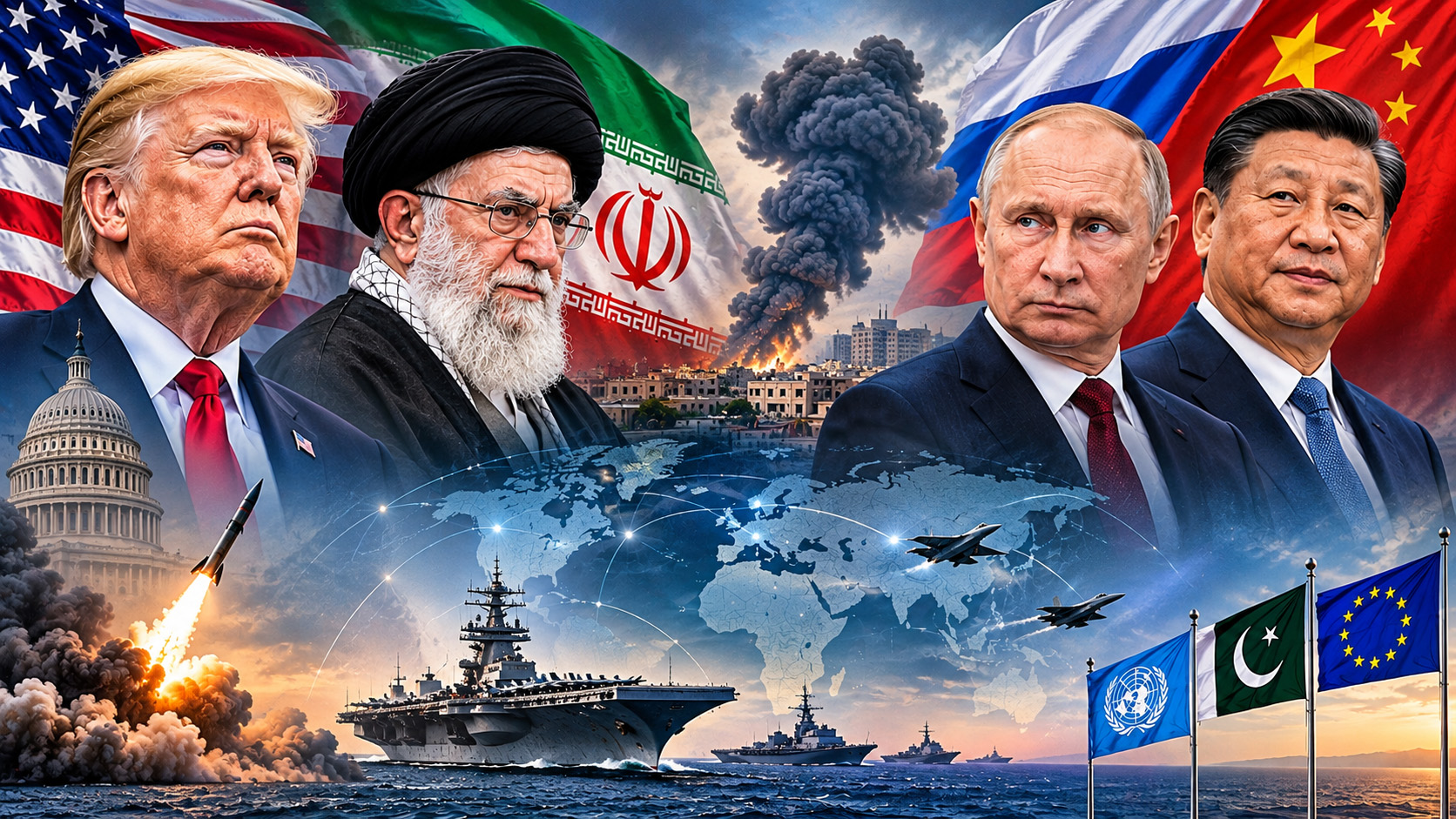
What does this mean for the US, Trump and the World. First in domestic politics, Trump is likely to be a ‘lame-duck President’ who would resort more frequently to ‘Presidential veto’, complicating an already complex political situation. Once sworn in January, Democratic-led Congress is expected to investigate Trump Administration, his family and allies, and demand concessions on major legislation. The new Senate will block Trump nominees, like new Supreme Court justices etc. Investigations about his business ethics and clash of interests, may lead to criminal indictments against him and his family. It will also put him in league with PM Netanyahu, and that might inject the urgency in containing the war with Iran, as a desperate president facing indictment, might resort to perpetual war, in order to avoid criminal prosecution. There might be indications of using ‘disproportionate force’ to win the unwinnable war with Iran. Commentator Tuck Carlson has alluded to possible use of nukes.
Secondly, for our region in particular, there is bi-partisan support in the US Congress about friendship with Arab nations and disarming Iran’s nuclear capability, if any. That is not likely to change, however, Trump-Netanyahu Combine may resort to desperate last-ditch efforts to impose their will on Iran. Congressional veto may be insufficient to stall this drift to renewed hostilities. In the longer run, however, overt conflict with Iran in league with Israel may not be possible.
Third, for the Emerging Global Order (EGO), the US stewardship would only be more forthcoming after the change of Administration, sequel to Presidential Elections in November 2028. Till that time, European allies would have to deal with a mercurial Trump, more bruised, more askance and more unpredictable.
Ukraine conflict will simmer on the back burner, and US will continue to withdraw from Global affairs in keeping with Trump Administration’s propensity for isolationism.
As far as South Asia goes, there is no discernible change in policy possible till the Administration is changed. Given Pakistan’s geostrategy, alliance power, diplomatic clout and military significance, Pakistan will have to contend with policy continuation in Washington, irrespective of the Administration.
There would be a need for policy continuation in Islamabad too. Pakistan’s policy vis-à-vis Afghanistan would be endorsed by any US Administration, given the compellence of geostrategic reasoning and counterterrorism.
I am keeping my fingers crossed!

Maj Gen Inam Ul Haque
Maj Gen Inam Ul Haque (Retd) writes on Global Affairs and Political Sociology. He can be reached at tayyarinam@hotmail.com and his twitter handle @20_Inam.