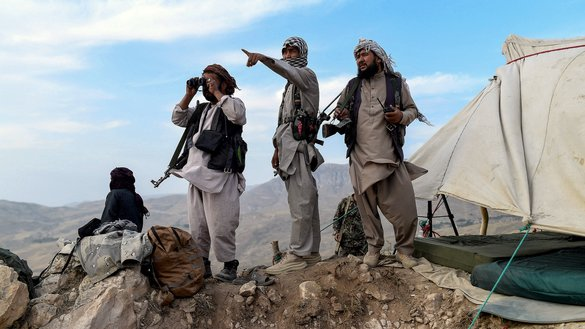
Read first part: Taliban’s Wakhan Road: Security Threat to China
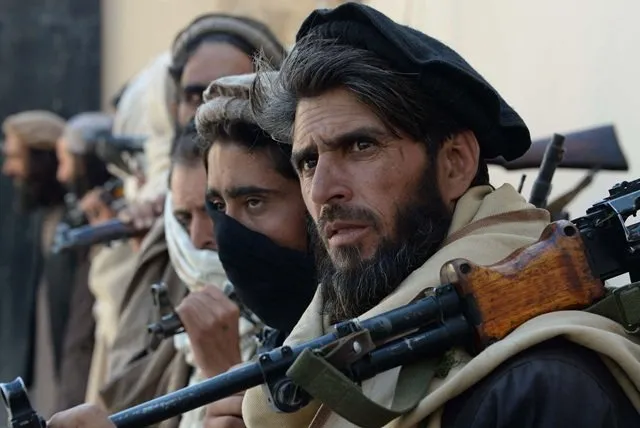
China’s second major security concern, which could create problems for it in the future, is the large-scale recruitment of Al-Qaeda terrorists, including members of the East Turkestan Islamic Movement (ETIM), into Taliban forces and the provision of Afghan identity documents to them.
The Afghan Taliban have begun recruiting thousands of Al-Qaeda terrorists, particularly ETIM militants, into their forces in an effort to address the shortage of trained manpower and provide cover for these foreign fighters. In the first phase, the recruitment of at least 7,000 terrorists into the Taliban army has been approved, and the appointment process has already begun.
According to sources, the Taliban have two major objectives behind recruiting foreign terrorists into their forces. The first is to address objections raised by China, Russia and the international community over the establishment of terrorist training camps in Afghanistan. The Taliban leadership has been attempting to counter these objections.
The second and most significant reason is reportedly the shortage of trained manpower within Taliban forces. Sources claim that the Taliban have suffered heavy casualties as a result of their prolonged conflict with Pakistan. In addition, Taliban members belonging to tribes living along the border have left the forces to avoid fighting Pakistan. On the other hand, a large number of non-Pashtun Taliban members were expelled by the Taliban leadership, or left voluntarily, following the uprising in northern Afghanistan.
Under these circumstances, the Taliban began experiencing a shortage of manpower on the battlefronts in June. To address this problem, a decision was made in June to launch a fresh recruitment campaign and persuade foreign terrorists to support the Taliban voluntarily under the name of the Al-Mansour Group. However, both initiatives failed.
Failure of Taliban Recruitment Campaign
The Taliban recruitment campaign continued from July 1 to August 15 but ended in complete failure. During a meeting held in Kandahar on August 24, 2026, under the chairmanship of Mullah Shireen, it was reported that recruitment campaigns had been launched in at least 11 provinces, including Badakhshan. However, only 547 new personnel could be recruited in seven provinces, while not a single recruit was enlisted in the remaining provinces.
The newly recruited personnel were sent to the Hazrat Abdullah bin Masoud Joint Combat Training Command for military and specialised training.
The Taliban focused most of their recruitment efforts on border provinces, including Kandahar, Badakhshan, Khost, Kunar, Logar, Zabul, Paktia, Paktika, Nuristan, Nangarhar and Nimroz.
According to a source from Kandahar, a report submitted by the General Directorate of Intelligence (GDI) had revealed that 2,300 personnel had left the Taliban forces. Of these, at least 5,000 to 6,000 personnel had joined opposition groups. However, the total number of personnel recruited during the same period stood at only 574, approximately one-quarter of the number of those who had deserted the Taliban.
According to the source, the General Directorate of Intelligence had proposed compulsory recruitment. However, Hibatullah’s secretariat initially instructed the authorities to accelerate recruitment by offering incentives and invoking the slogan of jihad. If the desired results were still not achieved, the option of forced recruitment would also be considered.
The source said that, as part of the incentive programme, local Taliban commanders had been instructed to encourage people to join the Taliban. Tribal elders would be provided with greater incentives and facilities in proportion to the number of people they recruited into the Taliban ranks. On the other hand, new recruits were also being offered higher salaries to persuade them to join the Taliban.
Despite all these efforts, the situation facing the Taliban in securing manpower remains alarming.
According to Source, a meeting was also held on July 26, during which foreign terrorist groups were appealed to voluntarily support the Taliban in their war. The meeting was personally chaired by Mullah Hibatullah. Other participants included the head of Hibatullah’s secretariat and Kandahar Governor Mullah Mohammad Ali Hanafi, alias Mullah Shireen; Mullah Yousaf Wafa; Badakhshan Governor Mawlawi Sheikh Ismail; and Deputy Head of the General Directorate of Intelligence (GDI), Tajmir Jawad. Army Chief Qari Fasihuddin Fitrat participated in the meeting online.
During the meeting, the GDI presented a report stating that opposition groups were receiving additional manpower and that the Taliban needed to launch immediate counterattacks in response, for which additional personnel would be required. According to the source, acting on a proposal by Tajmir Jawad, Mullah Hibatullah agreed that all allied fighters present in Badakhshan, Takhar and Balkh, including Al-Qaeda and ETIM members, should be appealed to to fight in support of the Taliban.
According to the same source, an order was also issued in Mullah Hibatullah’s name, instructing allied mujahideen that no prominent figure from their central leadership should appear on the battlefield. The purpose was to avoid international embarrassment and scrutiny.
According to the source, terrorists belonging to the East Turkestan Islamic Movement (ETIM), the Islamic Movement of Uzbekistan (IMU), the Islamic Movement of Tajikistan (TTT), and Al-Qaeda in the Indian Subcontinent (AQIS) in Badakhshan were ordered to participate in the fighting under Taliban command.
An emergency parallel command-and-control system was announced for this purpose. Under this arrangement, the entire mechanism would operate under the command of the GDI deputy chief, ensuring that no anti-Taliban terrorist could exploit the system to infiltrate or penetrate these organizations. Tajmir Jawad also formed a committee on behalf of the GDI, comprising Mawlawi Akhtar Hashimi, Badakhshan Governor Mawlawi Sheikh Ismail, and Army Chief Qari Fasihuddin Fitrat. The committee would be responsible for deploying members of these terrorist organisations at different locations.
According to the source, the Al-Qaeda in the Indian Subcontinent (AQIS) camp established in Panjshir two months earlier, which was named the Sheikh Abu Omar al-Masri Camp, was also ordered to participate in the fighting alongside the Taliban in Panjshir.
All Al-Qaeda terrorists and members of affiliated organizations, particularly ETIM, in Panjshir were placed under the command of AQIS commander Abdul Qahir Amin, alias Sistani Mujahid, who had previously been in charge of the Sheikh Abu Omar al-Masri Camp.
Terrorists belonging to Central Asian countries had been receiving training at this camp. However, all these individuals have now been ordered to join the Taliban ranks and fight alongside them.
Similarly, Al-Qaeda and East Turkestan Islamic Movement (ETIM) terrorists who had already reached Afghanistan or were in the process of arriving there, and who had been given the name Mansouri Group to conceal their previous organisational identities, were also instructed to join the ongoing war in northern Afghanistan and assist the Taliban.Their deployment will be carried out through the Taliban’s central command.
Members of the Islamic Movement of Uzbekistan (IMU) have been ordered to assist the Taliban under the leadership of their commander, Abdul Raziq al-Marzouq Muhammad. Meanwhile, thousands of East Turkestan Islamic Movement (ETIM) fighters based in Badakhshan will be made available to the Taliban under the command of camp chief Yahya Uyghur.
Terrorists belonging to the Islamic Movement of Tajikistan (TTT) will conduct operations in Badakhshan under their commander, Abdul Rahman Badakhshani.
Similarly, AQIS commander Shafaatullah Rahman (Uzbek), who was in charge of the AQIS camp in Logar, has also been deployed to Takhar along with his fighters.
According to sources, the GDI has not only ordered all these terrorists to fight exclusively inside Afghanistan in support of the Taliban, but has also instructed these organisations to target anti-Taliban groups operating in Central Asia in order to weaken them.
According to sources, the appeal to international terrorist groups to play a role in the fighting, like the recruitment campaign, also failed to address the shortage of manpower. Not a single group launched an attack in support of the Taliban.
Mullah Hibatullah blamed the Taliban leadership for this failure, saying that the appeal had not succeeded because of the lack of interest shown by these groups.
Mullah Umar appointed one of his close associates to the GDI by creating a new position titled Special Task, with the objective of organising foreign terrorists. The mechanism for bringing foreign fighters directly under Hibatullah’s command was implemented on August 15, 2026. As part of this arrangement, his close associate, Mullah Mohammad Zai, was directly appointed to a newly created position within the General Directorate of Intelligence (GDI).
Mullah Mohammad Zai Akhund, alias “Haji Lala,” was appointed Director of Special Assignments at the GDI.
According to Source No. 1, under a new decree issued by Mullah Hibatullah, the process of bringing foreign terrorists under his personal supervision and control has also been initiated to facilitate their participation in the fighting.
For this purpose, a new appointment was made within the GDI. Under the new decree, Mullah Hibatullah Akhundzada’s close associate, Mullah Mohammad Zai Akhund, alias “Haji Lala,” was appointed to the newly created position of Director of Special Assignments.
Before the establishment of the Taliban government, Mullah Mohammad Zai Akhund had served as the Taliban’s shadow governor in Kandahar and Ghazni. Subsequently, he did not hold any official government position and continued to serve informally as an aide at Mullah Hibatullah’s secretariat.
In the past, Mullah Mohammad Zai had informally been responsible for transmitting messages and maintaining communication between Mullah Hibatullah and foreign terrorist groups. However, he has now been formally appointed to a position within the GDI.
Sources say that various administrative structures already exist within the GDI, the Ministry of Interior, the Ministry of Refugees and other institutions to maintain contact with, monitor and coordinate with foreign terrorist groups. However, Mullah Mohammad Zai’s appointment is separate from and superior to all these existing arrangements, and his instructions will take precedence over those issued by all other relevant officials.
All other relevant authorities will continue to perform their respective duties as before. However, Mullah Mohammad Zai will be responsible for coordinating between all foreign terrorist groups and Mullah Hibatullah’s secretariat.
According to reports, Mullah Mohammad Zai also monitors the activities of these groups and submits reports about them directly to Mullah Hibatullah. This new appointment has made him a key link in the communication network between the Taliban leadership and foreign armed groups.
The decree states that a new system is being established under Mullah Mohammad Zai’s leadership to manage the affairs of foreign Taliban fighters and integrate them into the Taliban armed forces. The system will be announced through a separate communiqué.
Decision to Recruit ETIM and Other Foreign Terrorists into Taliban Forces
Sources claim that all of Mullah Hibatullah’s efforts have failed because Afghan and Arab terrorists were unwilling to fight against Pakistan without payment. Consequently, this voluntary recruitment campaign also proved unsuccessful.
To review the overall situation and arrange additional manpower, two meetings of provincial governors were convened, one in Kandahar on October 7 and the other in Kabul on October 10. However, both meetings failed to produce the desired results.
As a result, an important meeting was held in Kandahar on October 13 under the chairmanship of Mullah Hibatullah. The meeting was attended by General Directorate of Intelligence (GDI) chief Mullah Waseq, GDI Deputy Chief Tajmir Jawad, Kandahar Governor Mullah Shireen, Defence Minister Mullah Yaqoob, and Balkh Governor Mullah Yousaf Wafa.
During this brief meeting, Mullah Shireen presented reports on the failure of the two earlier meetings.
Following this, Mullah Hibatullah ordered that fighters belonging to Al-Qaeda and its affiliated terrorist organisations be deployed in northern Afghanistan to fill the vacuum created by the transfer of Taliban military units from northern Afghanistan towards the Pakistani border.
All these fighters would be required to serve under the relevant brigades of the Taliban army rather than under their own organisations. Implementation of this decision has already begun.
According to the source, this is not an entirely new arrangement. During the third week of July, Mullah Hibatullah had already established a committee and ordered that Al-Qaeda and its affiliated organisations’ fighters be deployed in various provinces of northern Afghanistan under the name of “Mansouri Units.”
The committee formed to supervise this arrangement comprised Tajmir Jawad, Mawlawi Akhtar Hashimi, Badakhshan Governor Mawlawi Sheikh Ismail, and Army Chief Qari Fasihuddin Fitrat.
Under this decision, following consultations with Al-Qaeda’s leadership, different commanders were appointed as coordinators and assigned the responsibility of registering terrorists in their respective areas. These included:
- For Al-Qaeda in the Indian Subcontinent (AQIS): Terrorist commander Abdul Qahir Amin, alias Sistani Mujahid.
- For the Islamic Movement of Uzbekistan (IMU): Abdul Raziq al-Marzouq Muhammad.
- For the East Turkestan Islamic Movement (ETIM): Yahya Uyghur.
- For Jamaat Ansarullah / Tehrik-i-Taliban Tajikistan (TTT): Commander Abdul Rahman Badakhshani.
- For the Islamic Movement of Uzbekistan (IMU): Commander Shafaatullah Rahman (Uzbek), who is in charge of the AQIS camp in Logar.
In the second phase, during the third week of August, Mullah Hibatullah appointed his close associate, Mullah Mohammad Zai Akhund, alias Haji Lala, as Director of Special Assignments at the General Directorate of Intelligence (GDI).
He was assigned responsibility for supervising and managing all matters relating to Al-Qaeda and its affiliated terrorist groups. (This development was reported on August 15, 2026.)
According to the source, the order issued following Mullah Hibatullah’s latest decision expanded the committee established in July. Mullah Mohammad Zai and all the liaison commanders appointed to register the terrorists have also been included in this committee.
The committee has been instructed to complete the deployment of all 6,000 terrorists within the Taliban army in northern Afghanistan before October 20.
The order clearly states that these foreign terrorists, once inducted into the Taliban army, will operate under the Taliban army’s command-and-control structure rather than under their former organisations.
Their liaison commanders will be appointed as advisers to different brigades, while after October 20, all these individuals will become part of the Afghan army.
Copies of the order have been sent to all provincial governors, the Ministry of Defence, the Ministry of Interior, the Ministry of Refugees, and all departments of the General Directorate of Intelligence (GDI).
Mullah Shireen has been assigned by Mullah Hibatullah to supervise the entire process.
Note: The translation preserves the original text, including its source attributions, figures, repeated passages and references to dates. The reference to “Mullah Umar” in the section concerning the August 15 appointment has also been retained as written in the Urdu source rather than silently corrected.
Saifullah Khalid
A senior journalist, editor, security analyst, and columnist with 35 years of experience. Since 2001, he has extensively covered political and strategic developments in Afghanistan and Central Asia since 1991. He has authored 4 books , 2 on Afghanistan. In 1994, he authored a book on Afghanistan titled Main Ne Kabul Jaltay Dekha (I Saw Kabul Burning), and in July 2026, he published his book Taliban Ka Asli Chehra (The Real Face of the Taliban) in Urdu.