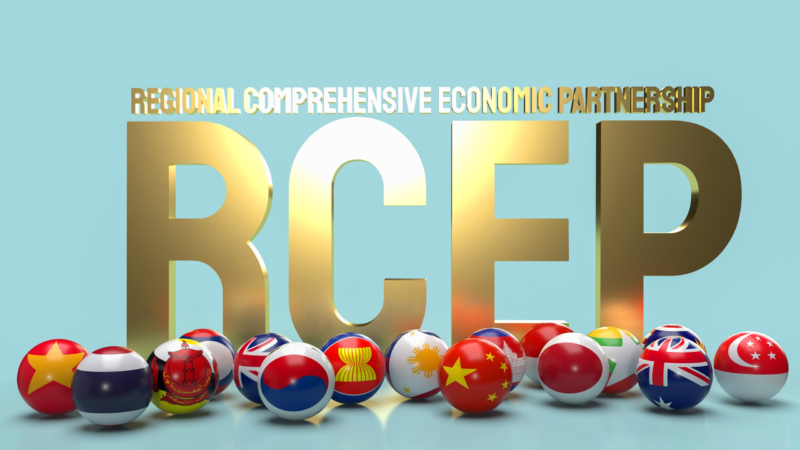
Bangladesh is moving toward a new economic opportunity through the Regional Comprehensive Economic Partnership (RCEP). If Bangladesh joins the agreement, it could create new employment opportunities. At the same time, it could create new opportunities to increase exports.
RCEP is a major trade agreement involving 15 countries. These include the 10 ASEAN countries, China, Japan, South Korea, Australia, and New Zealand. The agreement was signed in 2020 and came into effect in 2022. Together, these countries represent around 30 percent of the global economy.
Bangladesh’s process of joining RCEP has also reached an important stage. At the fifth RCEP Ministers’ Meeting, held in Manila on September 21, 2026, the ministers approved the formation of an Ad Hoc Accession Working Group for Bangladesh. This working group will help move forward the next discussions and technical work related to Bangladesh’s accession process.
If Bangladesh joins RCEP, it could get new opportunities to enter some of Asia’s major markets. Markets such as China, Japan, South Korea, Australia, and New Zealand could become important destinations for Bangladeshi exports. This will become even more important as Bangladesh prepares for its post-LDC period.
This is also important for Bangladesh’s garment industry. Vietnam is already an RCEP member and is a major competitor of Bangladesh in the garment sector. If Bangladesh becomes part of the same regional trade framework, it could create new opportunities for Bangladeshi businesses to compete in international markets.
RCEP is not only about trade in goods. It is also connected to investment and regional supply chains. If Bangladesh joins, companies from Japan, South Korea, Australia, and other RCEP countries may consider Bangladesh as a place for production and business.
More foreign investment could bring new technology, skills, and modern production methods to Bangladesh. This could increase the productivity of local industries and create new employment opportunities. At the same time, Bangladesh could become more closely connected to Asian regional supply chains.
However, joining RCEP also has some risks. The agreement could increase competition between foreign products and Bangladeshi companies in the domestic market. If small and less-developed local industries are not prepared, they may face greater pressure from larger and more competitive foreign companies.
The agriculture sector could also face competition. If more foreign agricultural products enter the Bangladeshi market, some local farmers could face difficulties. Therefore, Bangladesh needs to provide farmers with better technology, support, and opportunities to improve productivity.
In some industries, greater foreign competition could also put pressure on employment. For this reason, Bangladesh needs to carefully assess the possible impact on different sectors before joining RCEP.
India’s experience is also important in this discussion. India withdrew from the RCEP negotiations in 2019. The country had concerns about increasing imports, pressure on domestic industries, and trade issues, particularly with China. Bangladesh and India have different economies. However, India’s experience shows that the possible risks of joining a large trade agreement need to be carefully evaluated.
Bangladesh is now preparing for the period after its graduation from the LDC category. Some of the trade advantages Bangladesh currently receives may gradually change. Therefore, it is important for Bangladesh to develop new markets and strengthen its international trade relations.
RCEP could provide an opportunity in this area. However, joining RCEP alone will not solve all of Bangladesh’s trade problems. Before joining, Bangladesh needs to make its industries and economy more competitive.
Local industries should be prepared to compete in international markets. Farmers should receive technology and support to increase productivity. Bangladesh also needs to develop a skilled workforce and improve infrastructure and the business environment to reduce production costs.
At the same time, Bangladesh should diversify its exports instead of depending heavily on a few major sectors. The country needs to develop the capacity to take new products and services to international markets.
Joining RCEP could create an important economic opportunity for Bangladesh. It could provide opportunities to enter new markets, increase exports, attract foreign investment, and become more connected to Asian regional supply chains. At the same time, it could increase competitive pressure on domestic industries, agriculture, and employment.
However, these risks should not be a reason for Bangladesh to stay away from RCEP. Instead, Bangladesh needs to prepare in advance. Strengthening local industries, supporting farmers, developing skilled workers, and increasing productivity will be essential.
Therefore, Bangladesh should join RCEP-but not without proper preparation and safeguards. RCEP is not just a trade agreement for Bangladesh. If used properly, it could become an opportunity to diversify the country’s trade and economy in the post-LDC period.