The most important question emerging from the Iran war is not simply who inflicted greater damage. It is what the conflict has changed in the strategic calculations of the states surrounding the Persian Gulf.
For years, deterrence in the region was largely discussed in terms of missiles, air defenses, military bases and the ability to retaliate. The recent conflict has added another dimension: the ability to create uncertainty around the economic and strategic infrastructure on which the regional order depends.
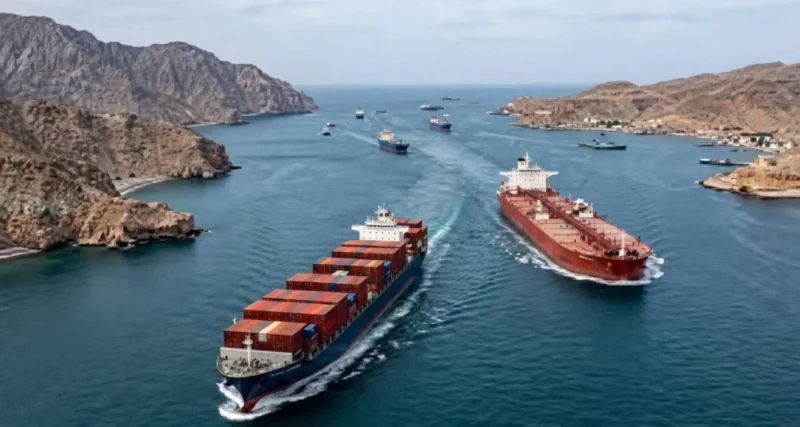
The Strait of Hormuz is at the center of this new equation.
Nearly 20 percent of global crude and liquefied natural gas flows have historically passed through the Strait. Yet its importance is not only about the volume of energy crossing it. It is about the consequences of uncertainty. When commercial operators cannot confidently predict whether a vessel can pass safely, the strategic value of the waterway changes.
Recent developments illustrate this problem. Middle Eastern oil exports recovered to above pre-war levels in September, according to shipping and analytics data cited by Reuters. At the same time, attacks on commercial vessels increased, while the security environment around the Strait remained unpredictable.
This creates an important distinction between physical closure and strategic disruption.
A waterway does not necessarily have to be completely closed to become a source of leverage. If shipping companies face higher insurance costs, longer routes, naval escorts and greater uncertainty, the strategic consequences can emerge even while some vessels continue to transit.
That is where the meaning of deterrence begins to change.
Iran’s deterrence strategy has traditionally relied on a combination of ballistic missiles, drones, asymmetric capabilities and regional partnerships. These tools were designed to make an attack on Iran costly and difficult to contain.
The recent war tested that model under direct confrontation.
Iran demonstrated an ability to absorb major attacks while retaining the capacity to respond. But the conflict also showed that deterrence based primarily on the threat of retaliation has limitations once direct military confrontation has already begun.
The next stage is therefore not necessarily about preventing every attack. It is about shaping what the opponent can realistically achieve after launching one.
This is a different form of deterrence.
If an adversary can destroy military infrastructure but cannot restore normal regional conditions afterward, its tactical success may not translate into strategic victory.
The Strait of Hormuz provides Iran with an unusually important source of leverage in this regard.
The waterway is geographically narrow, but its strategic consequences are global. This makes it different from a conventional battlefield. A missile strike against a military facility may have a limited geographical effect. Disruption around Hormuz can immediately affect shipping, insurance, energy prices and the calculations of governments far beyond the Gulf.
Reuters reported in July that control over Hormuz had become an increasingly important strategic issue for Tehran, with negotiations increasingly linked to the future management and security of the waterway.
This development creates a difficult calculation for Saudi Arabia, the United Arab Emirates, Qatar, Kuwait and Bahrain.
These states require American military protection, but they also require predictable relations with their neighbors. Their economies depend on energy exports, maritime trade and international investor confidence.
The lesson for Gulf governments is therefore not necessarily that they should choose between Washington and Tehran.
It is that they cannot afford to depend entirely on either side’s ability to control escalation.
Saudi Arabia’s recent efforts to develop additional defensive arrangements illustrate this changing calculation. Reuters reported in August that Riyadh was pursuing regional defensive alliances as it sought to reduce its vulnerability to being drawn into conflicts it did not choose.
This points toward a broader trend: Gulf states are likely to continue strengthening their relationship with Washington while simultaneously seeking greater strategic flexibility.
That is not necessarily alignment with Iran. It is hedging.
And hedging may become one of the defining characteristics of the next Gulf security order.
The strategic importance of Hormuz also changes the nature of negotiations.
The central question is no longer simply whether the Strait is open or closed. It is whether all sides can establish a level of confidence that commercial traffic will remain secure tomorrow, next week and next month.
That distinction matters enormously to markets.
On October 4, Iranian officials said the Strait would remain closed until specific conditions connected to the June interim agreement with Washington were fulfilled. The issue was therefore presented not simply as a military matter but as part of a broader diplomatic and security equation.
At the same time, commercial traffic has not disappeared entirely. Qatar and other Gulf exporters have continued sending LNG cargoes through the Strait despite the risks. September saw the highest monthly level of LNG shipments through Hormuz since the beginning of the Iran war, according to shipping data cited by Reuters.
This contradiction is revealing.
The Gulf cannot simply stop functioning because of insecurity. Iran cannot indefinitely ignore the economic consequences of disrupting a waterway that is also vital to neighboring states. And the United States cannot easily impose a security order on the Strait without considering the costs of a prolonged confrontation.
All three realities create space for bargaining.
The emerging lesson is that deterrence should not be measured only by the ability to destroy targets.
It should also be measured by the ability to influence the opponent’s choices after the first exchange.
This is where Iran’s geography becomes strategically important.
Iran does not need to match the United States in conventional military power to impose strategic constraints on American decision-making. Nor does it need to permanently dominate the Persian Gulf.
It needs to preserve enough capability to convince an opponent that military superiority does not guarantee political freedom of action.
That is a much narrower objective—and potentially a more sustainable one.
The same principle applies to the Gulf states.
Their objective is not to defeat Iran militarily. Their priority is to prevent their territory, energy infrastructure and maritime routes from becoming permanent extensions of the Iran-U.S. confrontation.
This could encourage a more diversified regional security architecture in which military alliances, diplomacy, economic interdependence and crisis-management mechanisms operate simultaneously.
The United States is unlikely to disappear from the Gulf security equation. Iran will remain geographically central to it. Gulf Arab states will continue to rely on American capabilities while attempting to preserve their own strategic autonomy.
The result may therefore be neither an American-dominated order nor an Iranian sphere of influence.
It may be a more competitive and fragmented security environment in which no single actor can completely control escalation.
That may sound unstable.
It is.
But instability does not automatically mean strategic failure.
In some circumstances, mutual vulnerability can create incentives for restraint.
The real test will be whether the states involved can convert that vulnerability into rules, understandings and mechanisms that reduce the risk of uncontrolled escalation.
The future of the Gulf will therefore depend less on who claims victory in the last exchange and more on who adapts most effectively to the strategic environment that follows it.
The question is no longer simply whether Iran’s deterrence survived the war.
The more important question is what deterrence means after the first war has already changed the rules.

Mohammad Mahdi Dara
Mohammad Mahdi Dara is an Iranian journalist, visual journalist and writer specializing in conflict, defense, security and West Asian affairs. His work combines field reporting, visual journalism and strategic analysis, with reporting experience in Iraq and Lebanon. He writes on military affairs, regional security, deterrence and the changing geopolitical order of West Asia.