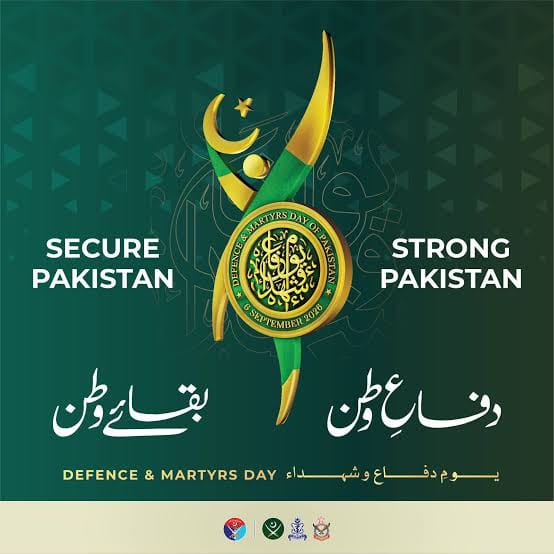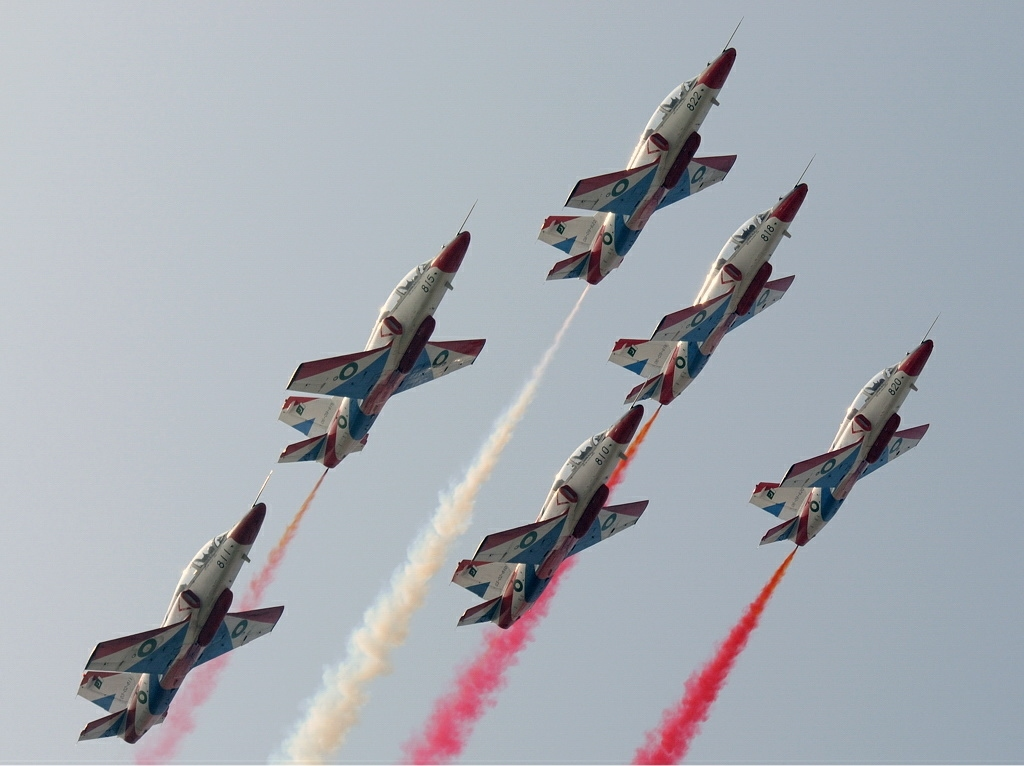
Every September 7, Pakistan marks PAF Day, the anniversary of the 1965 war. In that war, a young air force, flying a fraction of the aircraft fielded by its much larger neighbour, held the skies over Sargodha, Lahore, Karachi and Sialkot.
The mythology around that war has grown over six decades. The underlying fact, though, has aged well: a numerically outmatched force, better trained and more aggressively led, denied air superiority to an adversary that expected to have it.
That single lesson, that airpower is decided by proficiency and doctrine rather than by the size of an order of battle, has remained the organizing idea of the Pakistan Air Force ever since. It is worth revisiting on a year when the PAF’s relevance has been demonstrated rather than merely asserted.
It has become almost a cliché to describe the PAF as punching above its weight. The cliché persists because Pakistan has never matched India aircraft for aircraft, and it will not in the foreseeable future. What it has done instead is invest in the things that actually decide modern air combat.
That means a layered, indigenously assembled fleet built around the JF-17 Thunder and the J-10C, a functioning network of airborne early warning aircraft, and a training culture that treats the pilot, the sensor and the weapon as one system rather than three separate procurements.
Airpower in the 2020s is not primarily a contest of squadron counts. It is a contest of who can find, identify and engage a target first, at range, inside a contested electromagnetic environment, and who can do that without losing coherence when the other side tries to jam, spoof or overwhelm the network.
That is the arena in which the PAF has chosen to compete. It is also the arena in which quantity buys comparatively little.
That doctrine was not left untested for long. The four-day confrontation with India in May 2025, which Pakistan’s military has referred to as Marka-e-Haq, gave the PAF its first large-scale combat experience in decades. It was fought largely as a beyond-visual-range engagement involving well over a hundred aircraft on both sides.
Islamabad’s account of that encounter, repeated by senior air force and military officials on its first anniversary, is that the PAF shot down multiple Indian aircraft, including Rafales, without a loss of its own. The episode forced the PAF’s kill chain, its command and control resilience, and its pilots’ nerve to be tested under real conditions rather than in exercises.
For a force that had spent decades preparing for a war it hoped never to fight, that was the proof of concept no air show could have provided.
That resolve now matters for reasons that go beyond the subcontinent. Since late February, the region to Pakistan’s immediate west has been consumed by a widening war between the United States and Israel on one side and Iran on the other.
The conflict has drawn in strikes across the Gulf, hitting Saudi Arabia, the UAE, Kuwait, Bahrain and Oman, and it has unsettled the Strait of Hormuz itself. Gulf capitals that once simply assumed American air cover would be there if needed are now absorbing missile and drone salvos of their own.
In that kind of neighbourhood, an air force with recent, tested combat credibility and a demonstrated ability to defend contested airspace carries a different kind of weight than it did a decade ago. Pakistan is sits at the hinge between a burning Gulf and a nuclear-armed South Asia, and the PAF’s proven competence is precisely the kind of asset regional capitals now have reason to value.
That value has not gone unnoticed. In August, Saudi Arabia, Türkiye and Pakistan signed the Makkah Joint Defence Agreement, a mutual defence pact built on the bilateral Strategic Mutual Defence Agreement Islamabad and Riyadh had concluded the previous September.
Commentary on the pact has rightly noted that Pakistan brings a rare combination to the table: the Muslim world’s only nuclear arsenal, decades of training relationships across the Gulf, and now a documented, recent record of air combat performance.
The PAF gave Pakistan a credibility that its air power is not theoretical. Pakistan’s security prestige abroad has always rested partly on its nuclear status. Marka-e-Haq gave it a conventional complement, proof that its air force can perform under fire and not just deter in the abstract.
However, the character of air warfare is shifting again, this time toward artificial intelligence. Sensor fusion is compressing the find-to-fire timeline to seconds.
Autonomous and semi-autonomous unmanned systems are increasingly flying alongside crewed fighters. Electronic and cyber operations can now blind or mislead an adversary’s network before a single missile is even fired. Pakistani officials have already pointed to cyber disruption of Indian communications as part of the Marka-e-Haq playbook, an early sign that the PAF understands where this contest is heading.
The air force that defended Pakistan in 1965 did so with courage and superior flying. The one that must hold Pakistan’s skies in the coming decade will need all of that, plus algorithms, data links and autonomous wingmen. PAF Day, in the end, is a celebration of continuity. The same institutional instinct that turned a numbers disadvantage into a legend in 1965 is what Pakistan will need again, in a very different kind of war.

Your go-to editorial hub for policy perspectives and informed analysis on pressing regional and global issues.