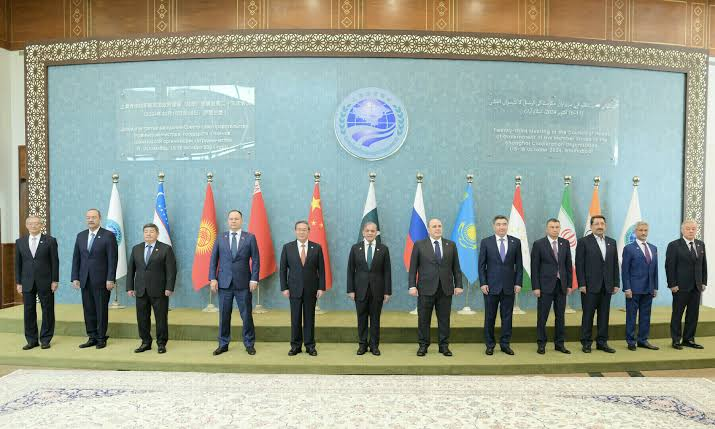
Shehbaz Sharif lands in Bishkek on 31 August. Two days of summit talks follow. Then something quieter but arguably more consequential happens: Pakistan takes over the presidency of the Shanghai Cooperation Organisation.
A bilateral stop in Kyrgyzstan on 2 September rounds out the trip. On paper it reads like routine diplomatic calendar filler. In practice, it hands Islamabad a year-long chance to reshape how it talks to, and works with, its northern neighbours.
Central Asia has long sat at the edge of Pakistan’s foreign policy imagination rather than the centre of it. The region gets mentioned in speeches about connectivity and “Look North” ambitions, but concrete follow-through has been thin.
An SCO presidency changes the incentive structure. Pakistan will chair meetings, set agenda items, and host working groups. That is not the same as building a railway line, but it does mean Islamabad gets to decide, for once, what gets discussed and prioritized among a bloc that includes China, Russia, and all five Central Asian republics.
Trade is the obvious prize. Kazakhstan, Uzbekistan, Kyrgyzstan, Tajikistan, and Turkmenistan are landlocked. They need sea access, and Pakistan has ports sitting idle relative to their potential. Gwadar and Karachi could, in theory, become the shortest route between Central Asian goods and global shipping lanes.
The word “could” is doing heavy lifting there, because roads through Afghanistan remain unreliable and rail links are patchy at best. Still, a presidency year gives Pakistan diplomatic cover to push these projects up the agenda rather than let them gather dust in feasibility studies nobody reads.
Energy tells a similar story. Central Asia sits on gas and mineral wealth that Pakistan, chronically short on both, would love to tap. CASA-1000 and TAPI have been discussed for so long that the acronyms feel almost nostalgic. But hosting the SCO gives Pakistan a recurring reason to keep these deals in front of the very leaders who can unstick them. Momentum in diplomacy is often just about who keeps showing up with the agenda item still on the table.
The Kyrgyzstan bilateral on 2 September deserves its own mention, separate from the summit noise. Bishkek is a smaller partner in raw economic terms, but symbolism matters in this part of the world. A leader who flies in for a summit and then stays an extra day for one-on-one talks signals that the relationship is not just transactional. It tells Kyrgyzstan, and by extension the wider region, that Pakistan sees value beyond photo opportunities.
Then there is 2027. Islamabad hosting the SCO summit itself, with Chinese, Russian, and Central Asian leadership walking through the city, is the kind of moment that either cements Pakistan as a serious regional connector or exposes, rather starkly, how far the connectivity talk still is from connectivity reality. Security will be the first test, given Pakistan’s own troubled record with hosting large international gatherings safely. But if it goes well, the optics alone could shift how the region perceives Islamabad’s reliability as a partner.
None of this guarantees results. SCO presidencies rotate yearly, and one year is a short runway for infrastructure projects that take a decade to build. Bureaucratic inertia, security concerns along the Afghan corridor, and Pakistan’s own fiscal constraints will all push back against ambition. Diplomatic platforms are necessary but not sufficient; someone still has to lay the track and sign the contracts.
Yet the framing matters. Pakistan gets to position itself, for a full year, as the bridge between South Asia, Central Asia, and the Arabian Sea. That is a narrative worth owning even before a single new trade route opens. Whether Islamabad turns this platform into pipelines and rail cars, or whether it becomes another chapter in the long history of unrealized Central Asian connectivity dreams, will depend less on the summit itself and more on what happens in the quieter months that follow it.

SAT Commentaries, a collection of insightful social media threads on current events and social issues, featuring diverse perspectives from various authors.