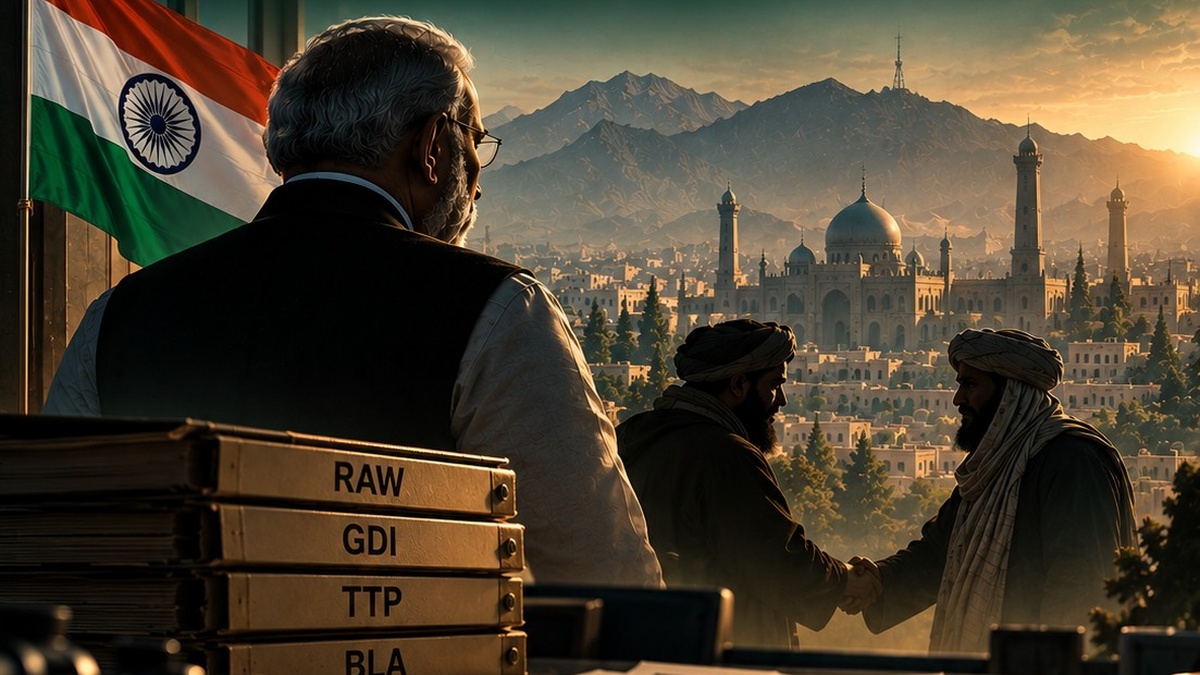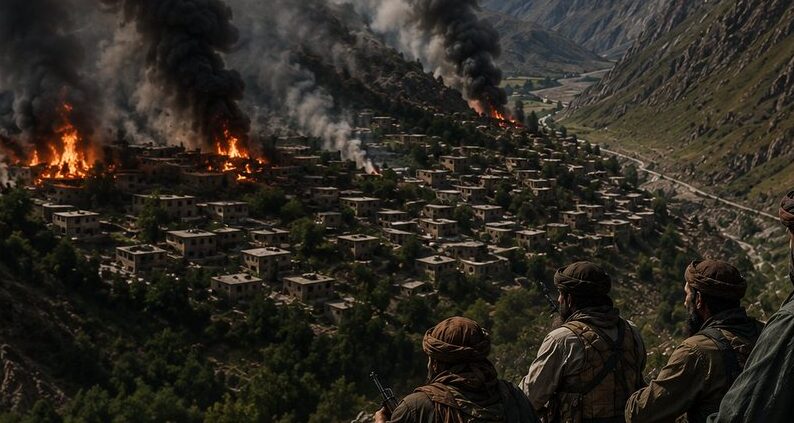
According to ground sources in Badakhshan, the province is witnessing a clear expansion of anti-Taliban activity, fueled by public dissatisfaction over governance, resource control, particularly mining contracts, and the growing influence of the Kandahar leadership over provincial affairs.
Ground sources indicate that senior figures associated with the Kandahar leadership have tightened oversight of provincial governance and negotiations involving international mining companies. Rather than consolidating authority, this increasing centralization has reportedly intensified resentment in the predominantly Tajik province, where many residents believe political decision-making and economic management have become increasingly detached from local interests. According to local accounts, public frustration is no longer confined to political grievances but is increasingly translating into organized armed resistance, suggesting that Taliban authority is facing mounting challenges at the local level.
Ground sources distinguish two distinct but mutually reinforcing currents of resistance.
The first centers on Juma Khan Fateh, a local commander and former Taliban figure who reportedly broke ranks over political influence and control of Badakhshan’s mining sector. According to ground sources, Taliban authorities attempted to retain his loyalty by offering him senior appointments, including the governorship of Zabul Province and later a deputy ministerial position in Kabul. These efforts reportedly failed, as Fateh’s primary objective remained influence over negotiations with international mining companies operating in Badakhshan.
According to local accounts, by late June and into July 2026, Fateh had rejected reconciliation efforts, reorganized his fighters in the Darwaz area, and placed them on alert. These developments reportedly prompted the Taliban to deploy reinforcements, increase military activity across parts of Badakhshan, and attempt to disarm local fighters associated with his network.
Ground sources, however, describe a second development as significantly more consequential. According to local accounts, approximately 150 local young men independently organized themselves and moved into the surrounding mountains, forming what sources characterize as a grassroots resistance movement driven by community grievances rather than competition for political office or economic influence.
Ground sources identify this force as Sepahian-e Mihan (“Soldiers of the Homeland”), reportedly led by Qayum Malang, a former Afghan National Army commando from the district. According to local accounts, in the early hours of 17 July 2026, the group launched a coordinated assault on the Yaftal-e-Payeen district headquarters. The fighters reportedly disarmed Taliban personnel, seized weapons, ammunition, and military equipment, lowered the Taliban flag, raised their own banner, and temporarily took control of the district headquarters and surrounding positions before withdrawing into the mountains as Taliban reinforcements arrived.
Ground sources state that while the Taliban eventually re-established control of the district centre, they were unable to neutralize the fighters after their withdrawal into the mountainous terrain. Local accounts further suggest that Taliban authorities subsequently conducted house-to-house searches, detained relatives of suspected fighters, deployed senior military commanders, and reinforced the area with additional personnel, measures that reportedly deepened resentment among local communities rather than restoring confidence.
Ground sources further point to a broader escalation beyond localized attacks. On 23–24 July 2026, the Afghanistan Freedom Front (AFF) reportedly launched a coordinated operation against Taliban positions in Zebak district, targeting bases and highland border posts from multiple directions. According to local accounts, the operation inflicted significant Taliban casualties, including field commanders, forced Taliban units to abandon several elevated positions, and demonstrated an increasing capacity for coordinated operations across Badakhshan.
Taken together, these developments suggest that Badakhshan is evolving beyond sporadic security incidents into one of the Taliban’s most persistent governance and security challenges. The convergence of disputes over mineral wealth, growing public dissatisfaction, ethnic dynamics, and increasingly organized armed resistance indicates that the Kandahar leadership is encountering growing difficulty translating centralized political authority into durable local control.
According to ground sources, efforts by the Kandahar leadership to expand administrative and economic influence in Badakhshan have not produced greater stability. Instead, they have reportedly intensified local grievances, strengthened resistance networks, and exposed the limits of centralized authority in one of Afghanistan’s most strategically important northeastern provinces. If these trends continue, Badakhshan is likely to remain a critical barometer of how localized resistance, competition over natural resources, and ethnic dynamics continue to constrain Taliban authority in Afghanistan’s northeast.
The situation in Badakhshan now warrants closer regional and international attention. As armed resistance expands, governance becomes increasingly centralized, and ethnic grievances deepen, a critical question emerges: Is Badakhshan becoming the first major test of whether the Taliban can govern Afghanistan’s diverse communities through political accommodation rather than coercion?
The trajectory of events in the province may prove to be one of the earliest indicators of how the Taliban manages, or fails to manage, Afghanistan’s ethnic diversity.

Your go-to editorial hub for policy perspectives and informed analysis on pressing regional and global issues.