The historic Islamabad Talks, held between the United States and Iran on April 11–12, 2026, represent far more than a mere diplomatic pause between two archrivals, who have been at odds with one another on a variety of issues since 1979. While the global media remained fixated on the high-stakes deliberations at the Serena Hotel, a profound transformation was unfolding behind the curtains, one that signals the birth of a new regional architecture with Pakistan at its core. This was not a localized event of convenience, but the unveiling of a grand strategy that suggests Pakistan is no longer merely a “frontline state” in others’ conflicts, but a central architect of the emerging Global South.
The evidence of this strategic ascent is both unprecedented and multifaceted, signaled by a series of “shocker” developments that have redefined regional expectations. While headlines were preoccupied with the diplomatic dance between Washington and Tehran, Saudi Arabia declared the arrival of substantial military support from Pakistan, signaling Islamabad’s transition into a primary security provider for the Kingdom. Simultaneously, the finalization of a $10 billion Aramco oil refinery in Gwadar—partnering with PSO, OGDCL, PPL, and GHPL—has provided the definitive momentum needed to realize the full potential of the China-Pakistan Economic Corridor (CPEC). This project alone promises to transform Gwadar into a global refueling hub. Moreover, according to analysts, it can potentially offer Pakistani consumers a projected 20 percent cut in oil prices.
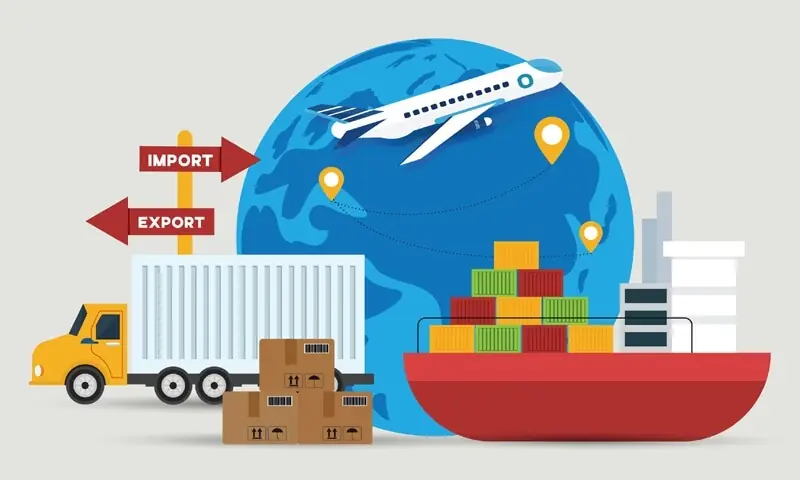
These shifts indicate that the regional players were already measuring their moves for integration into a new order, waiting for the right moment to pivot away from traditional dependencies. The opening of the Pak-Iran-Uzbekistan route, marked by Pakistan sending its first export container to Uzbekistan via Iran, further illustrates this. By linking the Persians, the Arabs, and the Central Asian republics through its soil, Pakistan is weaving a web of economic interdependence that makes regional stability a shared financial necessity. This points to an increasingly deepening strategic alliance between Pakistan, the Arabs, and the Persians, a triad that appears ready to manage its own neighborhood without external dictation.
One must understand that this emerging security architecture is designed to be self-sustaining. In the lapse of the first round of these talks, it has become evident that Pakistan is positioning itself as the security guarantor for the Peninsula, a service that will likely soon be sought by other Gulf states. Crucially, this security framework is bolstered by Pakistan’s strategic allegiance with China, with whom it shares critical technology, reconnaissance, and intelligence. This synergy suggests that the Peninsula may soon move toward a historic departure from Western defense mechanisms, replacing US fighter jets and satellite coverage with a Sino-Pakistani alternative that is more aligned with the sovereign interests of the Global South.
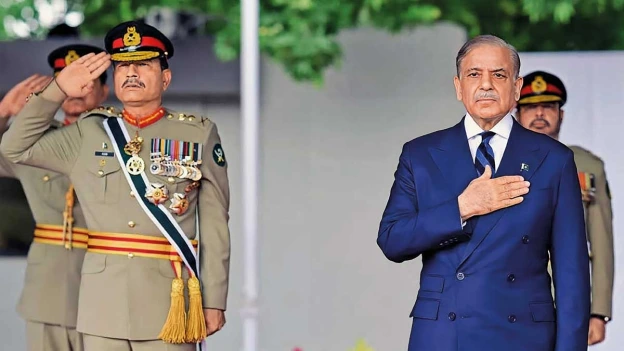
The military-diplomatic synergy was further cemented by the recent extraordinary visit of Field Marshal Syed Asim Munir to Tehran. As the first official visit to Iran by a foreign military chief since the beginning of the war, the trip yielded dividends that months of relentless bombing by the US and Israel could not deliver: the conditional reopening of the Strait of Hormuz. This breakthrough has paved the way for the highly anticipated “Islamabad Talks 2.0,” which promises to be a momentous step toward the resolution of outstanding issues between the US and Iran, and which can potentially deliver a long-lasting peace in the region.
While the military leadership secures the maritime and defense frontiers, Prime Minister Shehbaz Sharif remains on a marathon diplomatic circuit across Saudi Arabia, Qatar, and Turkiye to build a robust regional consensus. This synchronized effort between the civil and military leadership has elevated Pakistan’s stature to an all-time high. By successfully hosting old rivals and simultaneously securing its own economic and military future, Islamabad has proven that the road to a long-lasting peace in the Middle East and Central Asia now runs directly through the heart of Pakistan.

Your go-to editorial hub for policy perspectives and informed analysis on pressing regional and global issues.